
Modern Black Accent Wall Bedroom Inspiration

A black accent wall in the bedroom isn’t just a trend—it’s a clever design move that adds depth, drama, and instant sophistication. Done right, it grounds the room, frames the bed, and creates a restful, cocoon-like vibe perfect for sleep. Think of it as your backdrop for style: a focal point that makes everything else—art, lighting, linens—look intentional and elevated.
The secret is balance. Matte or satin black, charcoal, or soft off-black shades play beautifully with warm wood, linen bedding, and brass or blackened metal details. Add texture through board-and-batten, slat paneling, shiplap, or grasscloth to keep the wall visually rich. Layer lighting—sconces, pendants, or picture lights—to highlight the wall and keep the room bright and inviting.
Whether your style leans modern, Scandinavian, industrial, or cozy farmhouse, a black bedroom accent wall adapts easily—even in small rooms or rentals with peel-and-stick options. Ahead, we’ll break down smart, real-life ideas and styling moves so your space feels intentional, moody, and unmistakably elevated.
Designing a Black Accent Wall Bedroom: Colors, Finishes, and Layout Strategy
Color and Finish Choices
A Black Accent Wall Bedroom can feel dramatic, refined, and surprisingly cozy when planned intentionally. Choose the wall behind the headboard to anchor the bed and create a natural focal point. Evaluate natural light, window placement, and ceiling height; north-facing rooms and low ceilings benefit from warmer blacks and softer edges. Select finish strategically: matte absorbs light and hides imperfections, while eggshell or satin adds gentle bounce that highlights texture. Always test oversized swatches across corners and near trim, observing color shifts from daylight to lamplight. Decide whether to wrap black onto baseboards or keep crisp white trim lines to emphasize architectural contrast.
- Matte Black Paint: Absorbs light, hides imperfections, and creates a soft, velvety backdrop ideal for bedrooms; pair with warm bulbs and tactile textiles to prevent the space feeling flat.
- Soft Charcoal or Off-Black: Offers depth without harshness, especially in small rooms; its subtle undertones play nicely with oak, rattan, and linen, delivering moody contrast that remains restful.
- Textured Treatments: Limewash, plaster, or microfiber paint add movement and diffusion; brushstrokes and soft sheen variations keep black dynamic, disguising scuffs and reflecting light gently across surfaces.
Furniture and Decor Pairings
- Warm Wood Tones: Walnut, white oak, or teak introduce richness and balance; their visible grain breaks up darkness, complementing black with organic warmth and a timeless, grounded presence.
- Metallic Accents: Brushed brass, burnished bronze, or blackened steel add shimmer and structure; use thin profiles, linear lines, and repeat finishes to create cohesive rhythm without overwhelming.
- Patterned Bedding and Rugs: Pinstripes, herringbone, or micro-geometrics introduce scale and softness; limit palettes to two or three hues, anchoring prints with solids to maintain calm, sophisticated harmony.
Lay out furnishings to respect negative space and maintain sightlines, allowing the wall’s depth to read as intentional architecture. A low, upholstered headboard keeps the composition cozy; a taller wood or caned headboard introduces striking silhouette against black. Balance the bed with nightstands sized at roughly one-third the bed width, leaving three to six inches of breathing room from the wall. Anchor the composition with a rug large enough to extend at least eighteen inches beyond the sides and foot, softening acoustics and echo. Choose one commanding artwork or a tight grid rather than scattered frames, keeping lines aligned with headboard height. Finish with drapery that either matches the wall for enveloping mood or contrasts lightly to frame daylight without visual clutter.
Choose the Right Black (and Finish) for a Luxe, Restful Backdrop
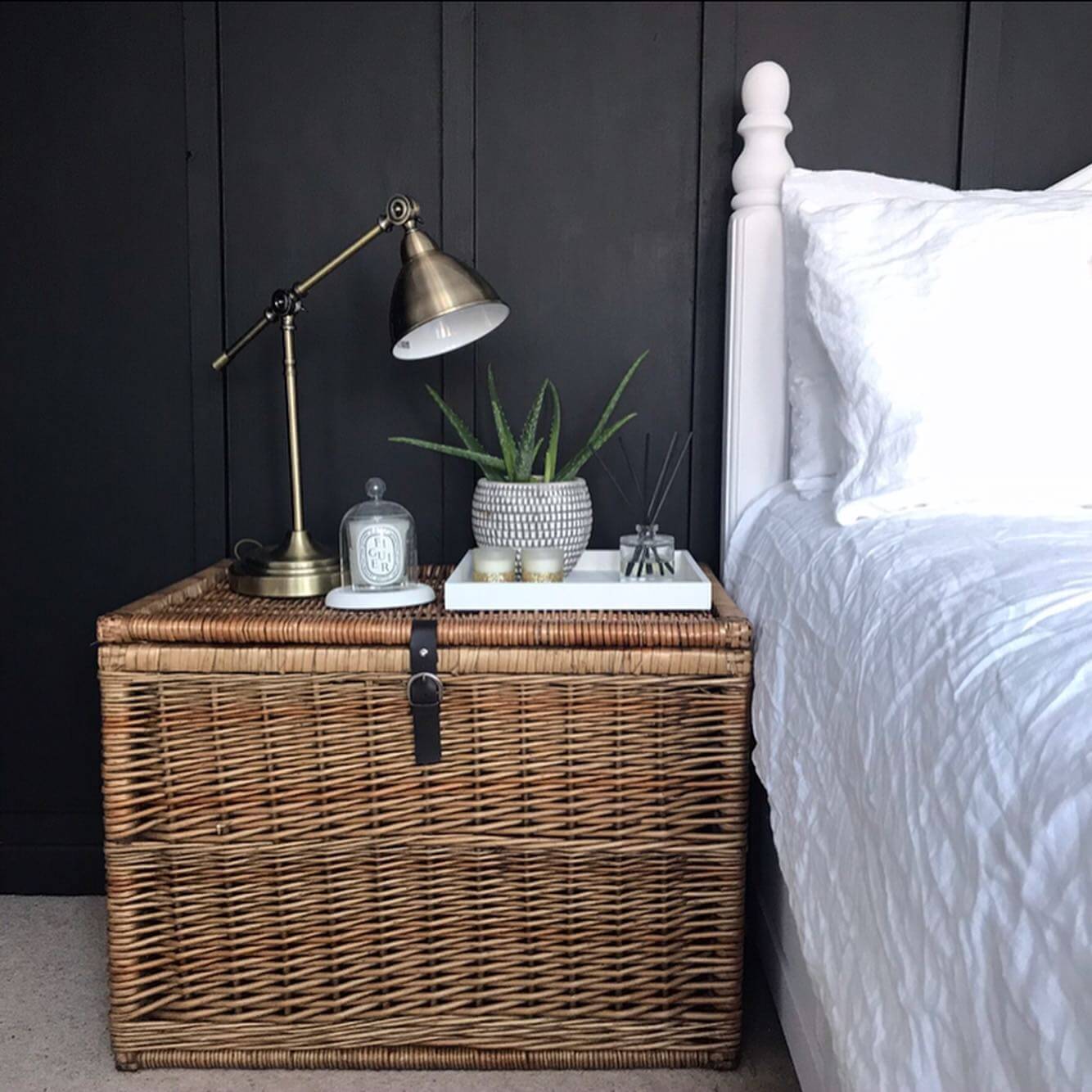
The most persuasive black accent wall bedrooms start with the right shade and sheen. Black isn’t one note—undertones matter. North-facing rooms favor warmer blacks (think Benjamin Moore Black Panther or Farrow & Ball Off-Black) to counter cool light. South-facing spaces handle inky, cooler blacks like Sherwin-Williams Tricorn Black or BM Onyx. Always test large swatches across morning, midday, and evening; black shifts dramatically with lighting.
Finish sets the vibe: matte or dead-flat hides drywall imperfections and delivers a soft, cocoon-like mood, while eggshell lends subtle light bounce without glare. In kid- or pet-friendly rooms, satin’s wipeability is a practical upgrade. Prep counts: a quality primer and a roller with a fine nap prevent texture lap lines that can telegraph under dark paint.
Calibrate your lighting to 2700–3000K to maintain warmth, and dimmers are nonnegotiable for a moody bedroom. If you’re nervous about committing, start with a charcoal like Farrow & Ball Railings; it reads black at night and softer by day. This thoughtful foundation ensures everything layered on top—wood tones, linen bedding, brass accents—looks intentional and elevated instead of heavy.
Balance the Drama with Warm Woods and Soft Neutrals
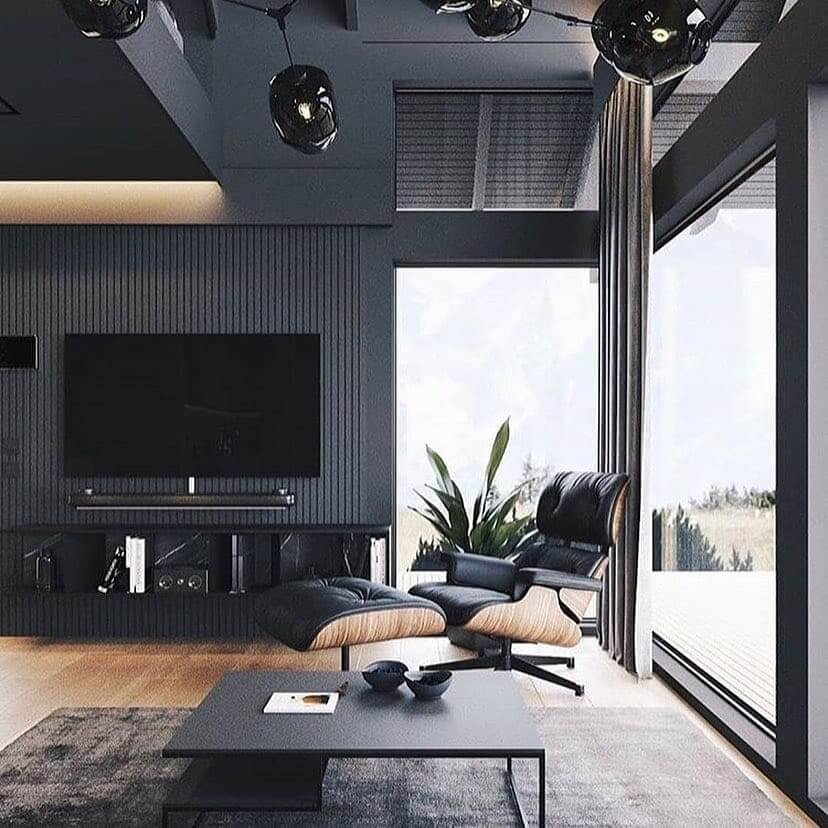
A black accent wall shines when it’s balanced by tactile warmth. Introduce wood tones—white oak, walnut, or ash—to mellow the drama and add organic texture. Nightstands, a slatted bench, or a wood-framed headboard dial in coziness without visual clutter. Keep textiles breezy: ivory linen sheets, a nubby bouclé throw, and a textural wool rug to soften acoustics and absorb light.
Metal accents steer the style. Brass or bronze hardware and sconces bring glow and sophistication; matte black fixtures keep things sleek and modern; chrome reads crisp in contemporary spaces. Try a 70/30 ratio—70% lighter neutrals to 30% black—to keep the room airy while honoring the moody intent. White or ecru bedding against black amplifies contrast and makes the bed feel like a curated focal point.
Add a whisper of color through clay, putty, or greige pillows that pick up the warmth of wood. Plants or olive-toned branches lend life without fighting the palette. This balance-first approach prevents a dark-and-moody bedroom from feeling flat, and it’s the easiest way to make an everyday space feel magazine-worthy.
Texture That Talks: Slats, Battens, and Limewash
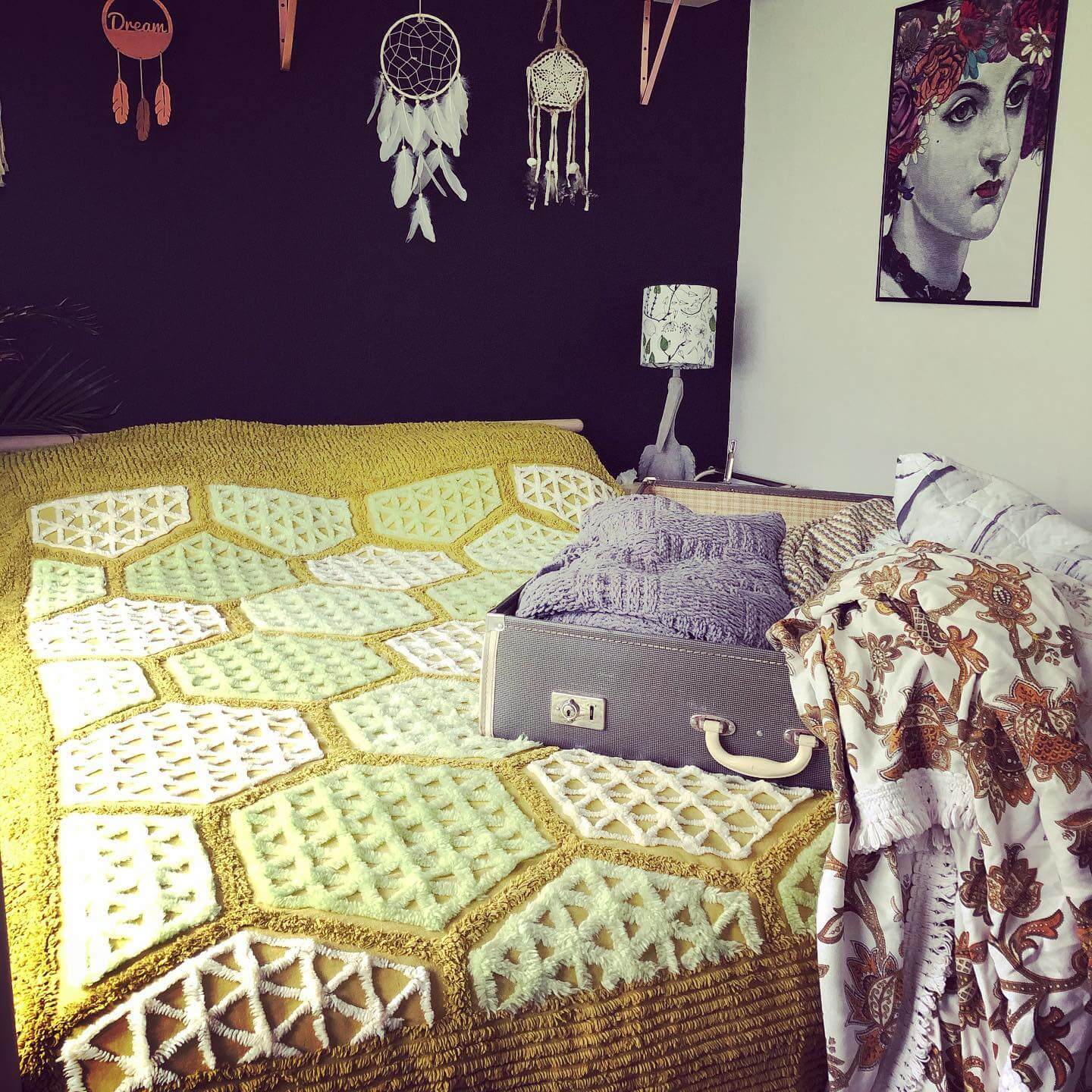
When your black feature wall includes texture, light and shadow do the styling for you. Vertical slat paneling (1x2s spaced 1/2–3/4 inch) elongates walls and adds a refined, acoustic quality—paint it all the same black to keep the look streamlined while the shadows create depth. Board-and-batten or picture-frame molding introduces classic architecture; in satin black, it reads tailored and substantial.
Prefer subtle movement? Limewash or mineral paint delivers soft, tonal variation—perfect if you want depth without hard lines. Microcement or a Venetian plaster finish adds a luxe, stone-like feel that’s surprisingly restful in a bedroom. Texture also solves for imperfect walls, since matte blacks can highlight flaws on smooth drywall.
Keep the rest of the room edited so the surface treatment is the star. Simple bedding, restrained art, and a single statement light are enough. If you’re going slatted, consider running battens behind wall-mounted sconces to integrate wiring and make lighting feel built-in. Texture transforms a black accent wall bedroom from “painted” to “architectural,” and that’s the secret sauce behind designer-level restraint.
Light the Wall, Not Just the Room: Sconces, Grazers, and Dimmers
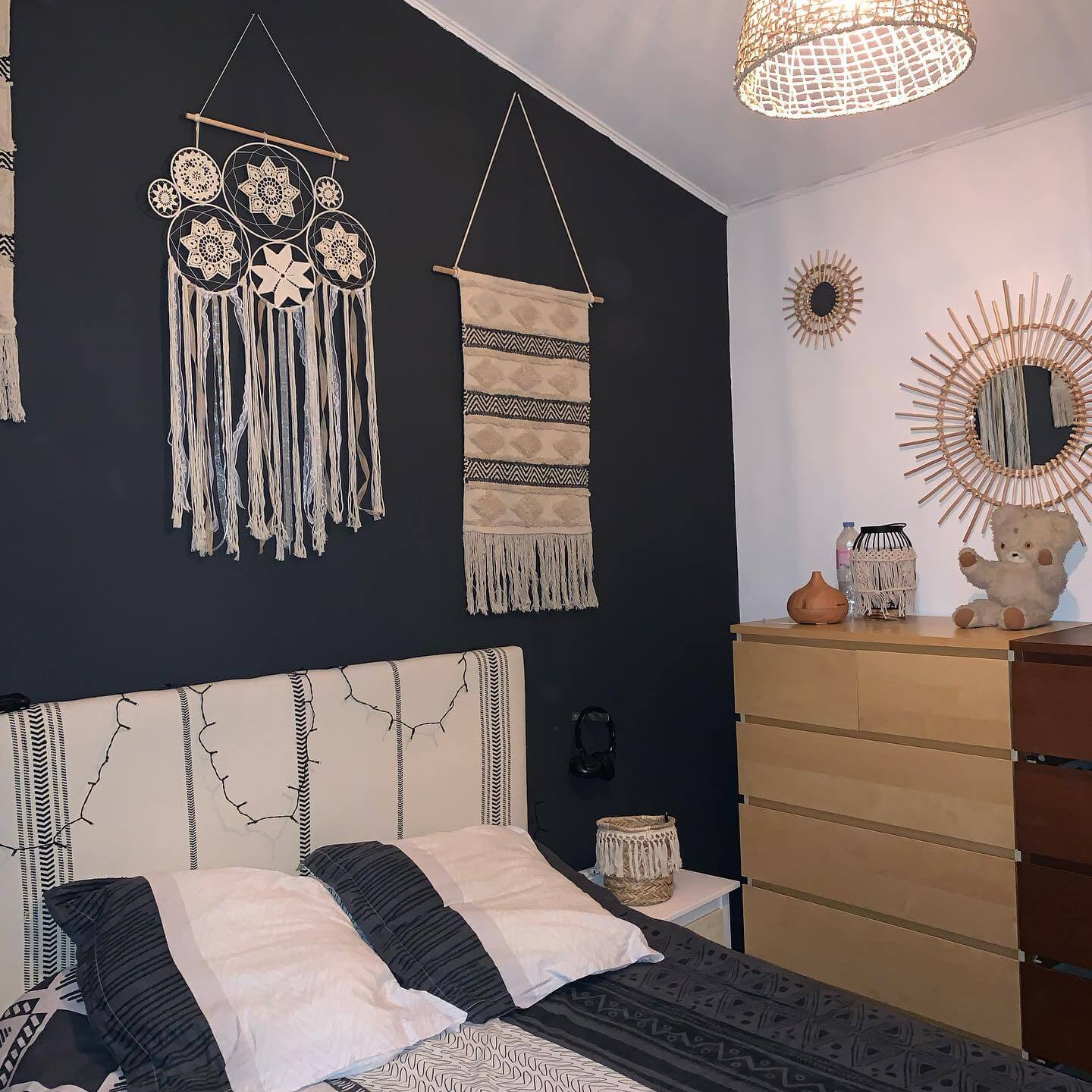
Lighting is what makes a black accent wall look intentional rather than just dark. Think in layers: ambient (a flush mount or pendant), task (bedside sconces), and accent (picture lights or wall grazers). Aim two to three sources per zone. Wall-mounted sconces free up nightstand space and create flattering pools of light; plug-in models are great for rentals and prevent hardwiring hassles.
To highlight texture, use directional fixtures that graze the wall; ribbed plaster, battens, or slats will pop with soft raking light. Picture lights above art or a headboard add gallery polish. Always add dimmers—control is the difference between moody and gloomy. Warm bulbs (2700K) preserve the cozy tone of black and wood; smart bulbs let you tune brightness and warmth through the day.
Mind proportions: sconces typically mount 56–60 inches from the floor and 6–8 inches above mattress height for comfortable reading. Matching metals to hardware creates cohesion, but mixing black and brass can add depth. With lighting that flatters the wall, your black bedroom feels nuanced, layered, and undeniably luxe.
Style the Bed Like a Focal Point Against Black
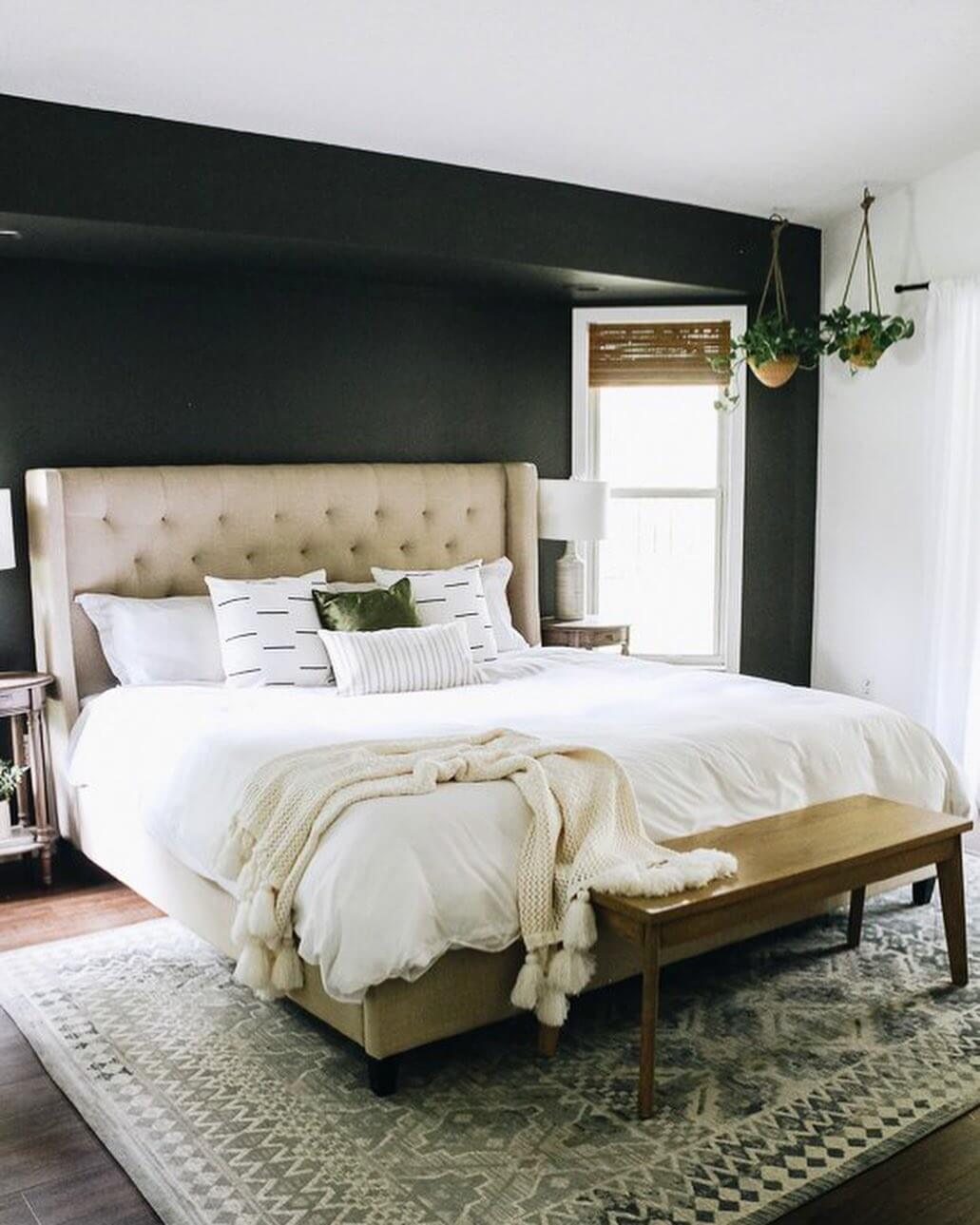
Your bed is the hero in a black accent wall bedroom; style it to anchor the view. A tall, upholstered headboard softens the contrast and invites texture—linen, velvet, or channel tufting all feel elevated. Prefer wood? A medium-tone walnut or oak frame warms the palette and bridges dark wall to light bedding. If the headboard is dark, add a substantial white or ivory euro stack to keep the silhouette crisp.
Keep bedding tailored: a clean duvet, two to three pillow layers, and a single throw or quilt in a tonal neutral. Limit pattern to one statement element (a striped lumbar, a herringbone throw) to avoid visual noise against black. Flank the bed with symmetrical nightstands for calm, or choose mismatched tables in the same tone for collected charm.
Underfoot, a generously scaled rug (8×10 under a queen, 9×12 under a king) frames the bed and prevents the dark wall from overpowering. A bench or pair of ottomans brings softness and function. The result: a focal point that reads cohesive and restful, not busy.
Monochrome, But Make It Layered: Tone-on-Tone Depth
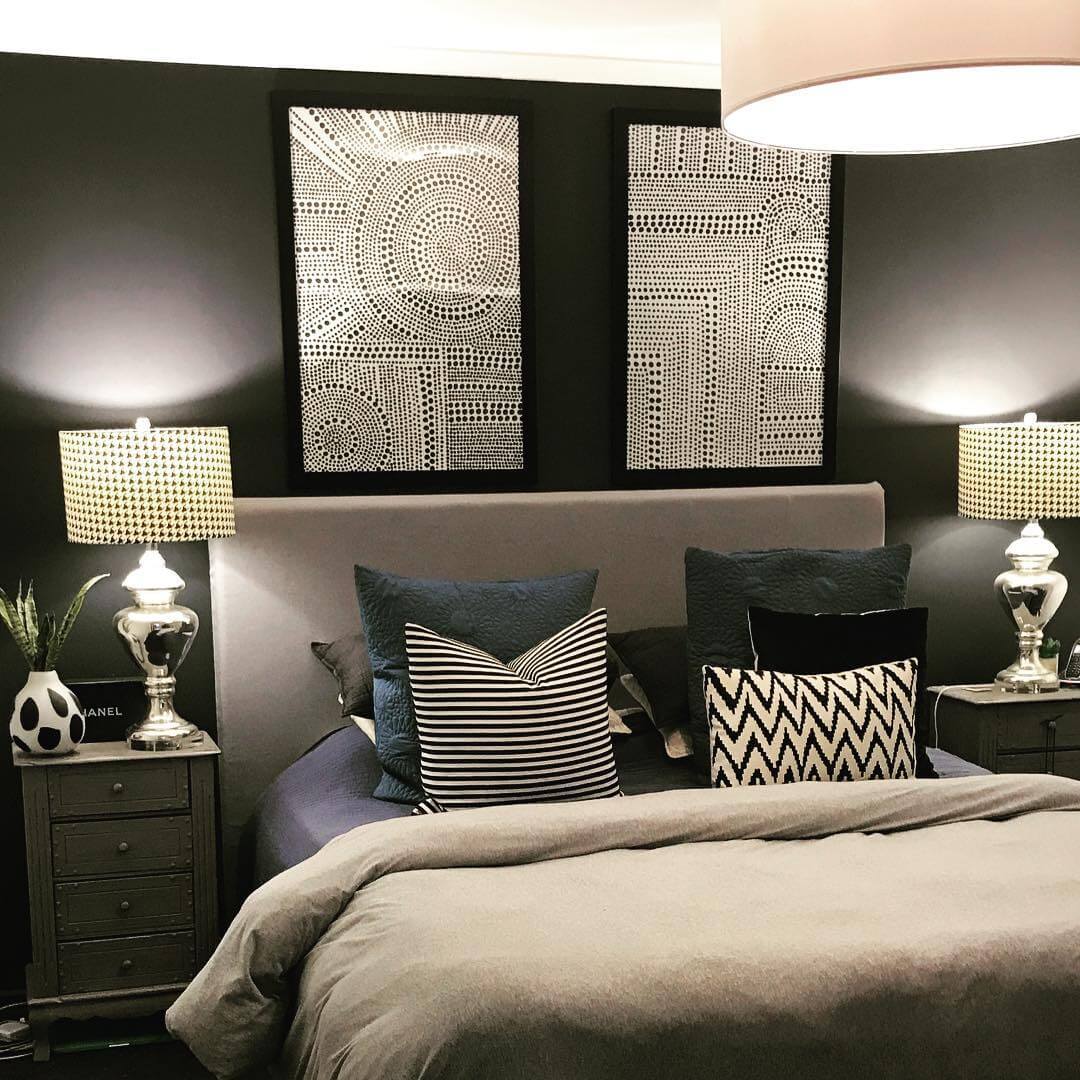
If you love a moody bedroom, go monochrome with intention. Layer blacks, charcoals, and graphite to build depth rather than one flat note. Start with a rich black accent wall, then dial in adjacent linens in smoky gray, anthracite, or dark taupe. Choose paint siblings—Farrow & Ball Railings for the wall, with Off-Black on trim—for a quiet shift the eye can feel more than see.
Vary materials for interest: matte wall, velvet throw, leather catchall tray, and blackened steel lamp. Use sheen sparingly—satin or semi-gloss on picture frame molding or a nightstand surface adds highlight without glare. Window treatments can go tone-on-tone too: blackout linen in deep gray keeps the palette tight and the sleep quality high.
To avoid the “cave,” include reflective moments. A brass picture light, smoked mirror, or glass globe pendants bounce light in a controlled way. Keep your accent colors muted—eucalyptus green, oxblood leather, or clay ceramics—so the monochrome story stays sophisticated. This approach feels intentional and high-end, especially in modern or Japandi-inspired spaces.
Trim Tactics: Frame the Feature Wall Like a Pro
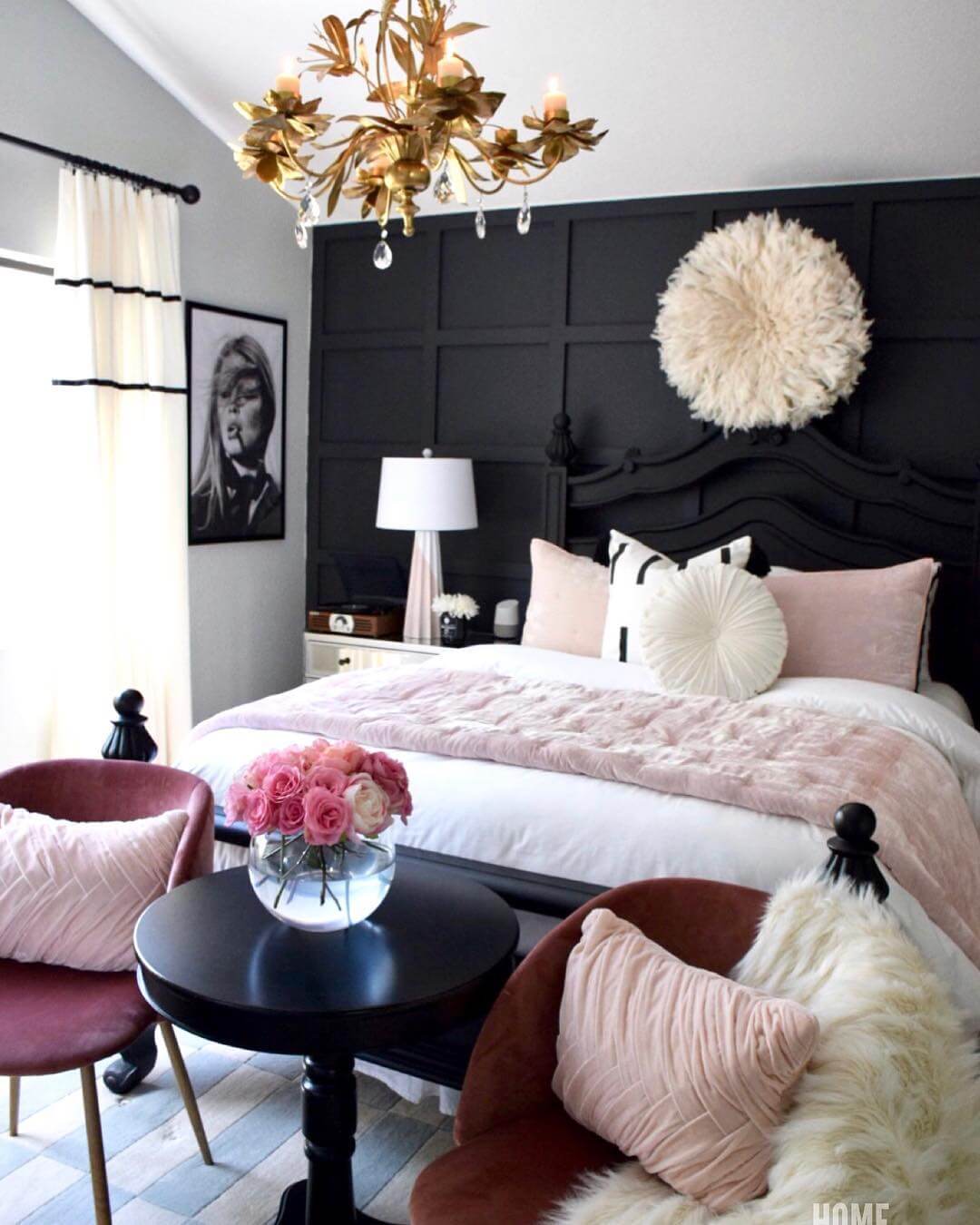
Trim strategy can make or break a black feature wall. Painting the baseboards, window casings, and crown the same black creates a seamless, enveloping backdrop that feels custom and modern. Prefer contrast? Crisp white trim outlines the architecture and looks classic, especially in transitional homes. Either route is valid—choose based on your room’s proportions and natural light.
Wainscoting is a smart hybrid: paint the lower third black (or clad it in battens), and keep the upper wall light to visually lift the ceiling—ideal for small bedrooms. A picture-rail height of 54–60 inches flatters most spaces. For tall rooms, add a simple crown to “cap” the darkness and prevent the eye from drifting upward.
Details matter: paint outlet covers to match the wall, keep caulk lines clean, and ensure miters are tight—imperfections show in black. If your door sits on the accent wall, painting it black with the wall makes the plane read larger and calmer; leaving it white turns the door into a design element. Framing the wall with intention makes your black accent feel built-in, not tacked on.
Rental-Friendly Moves: Removable Panels, Wallpaper, and Clever Workarounds
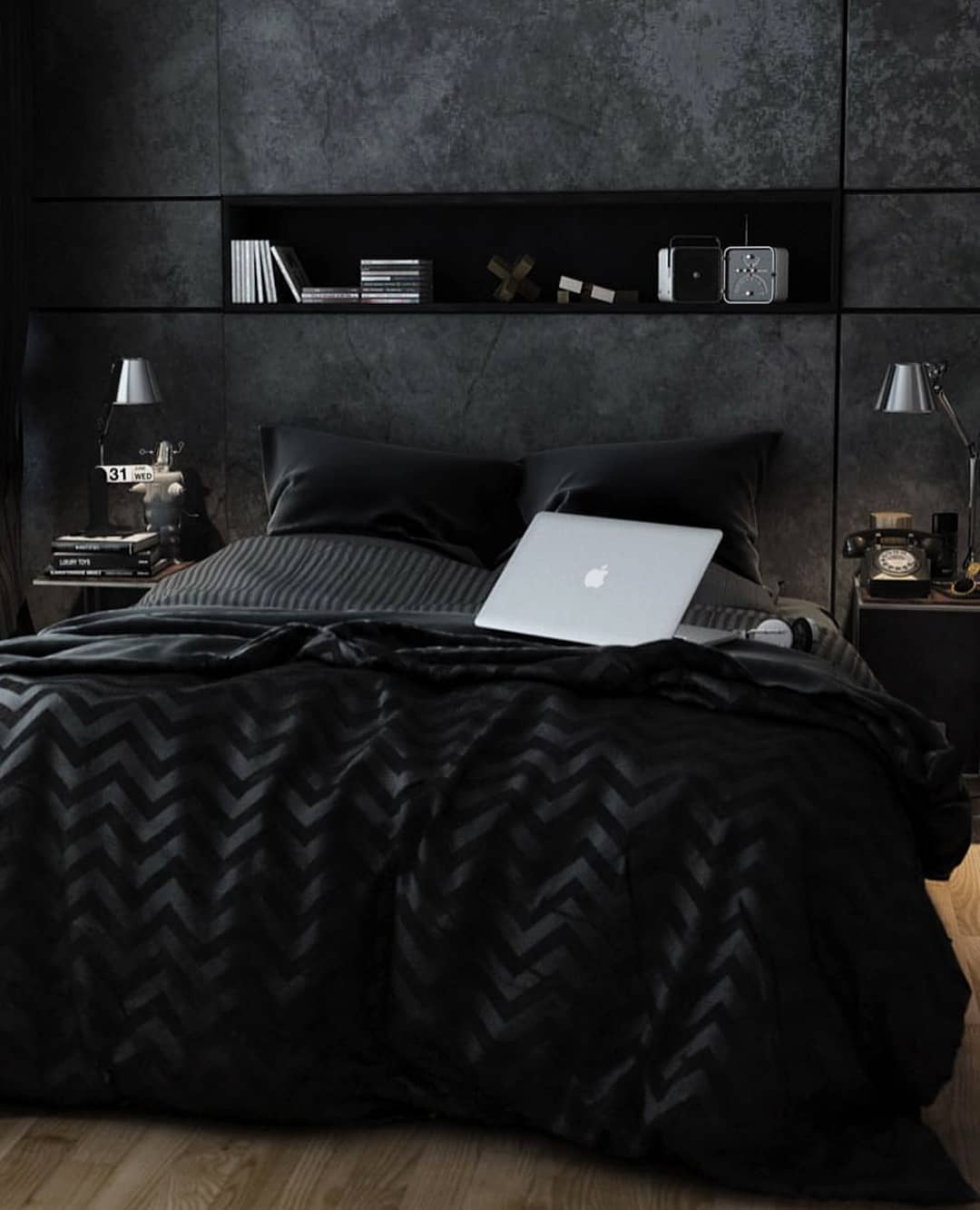
No paint? No problem. A rental-friendly black accent wall bedroom is totally doable with removable solutions. Peel-and-stick wallpapers in matte black, grasscloth textures, or faux slats deliver depth without damage. For a 3D look, mount thin poplar battens to a painted plywood panel and attach the panel with heavy-duty Command strips—the whole piece removes cleanly when you move out.
Create the effect of a feature wall with oversized canvas art painted in off-black or with a DIY limewash finish. Lean it behind the headboard and flank with plug-in sconces for a custom vibe. Removable picture ledges in black hold curated art with white mats, adding contrast and flexibility.
Swap in black lamp shades, a charcoal linen bedskirt, and a dark curtain wall behind the bed to mimic the drama of paint. Remember to patch-test adhesives and respect weight ratings. With these tricks, you get the mood, texture, and polish of a black wall—minus your landlord’s panic.
Curate Art and Mirrors to Pop Against Black
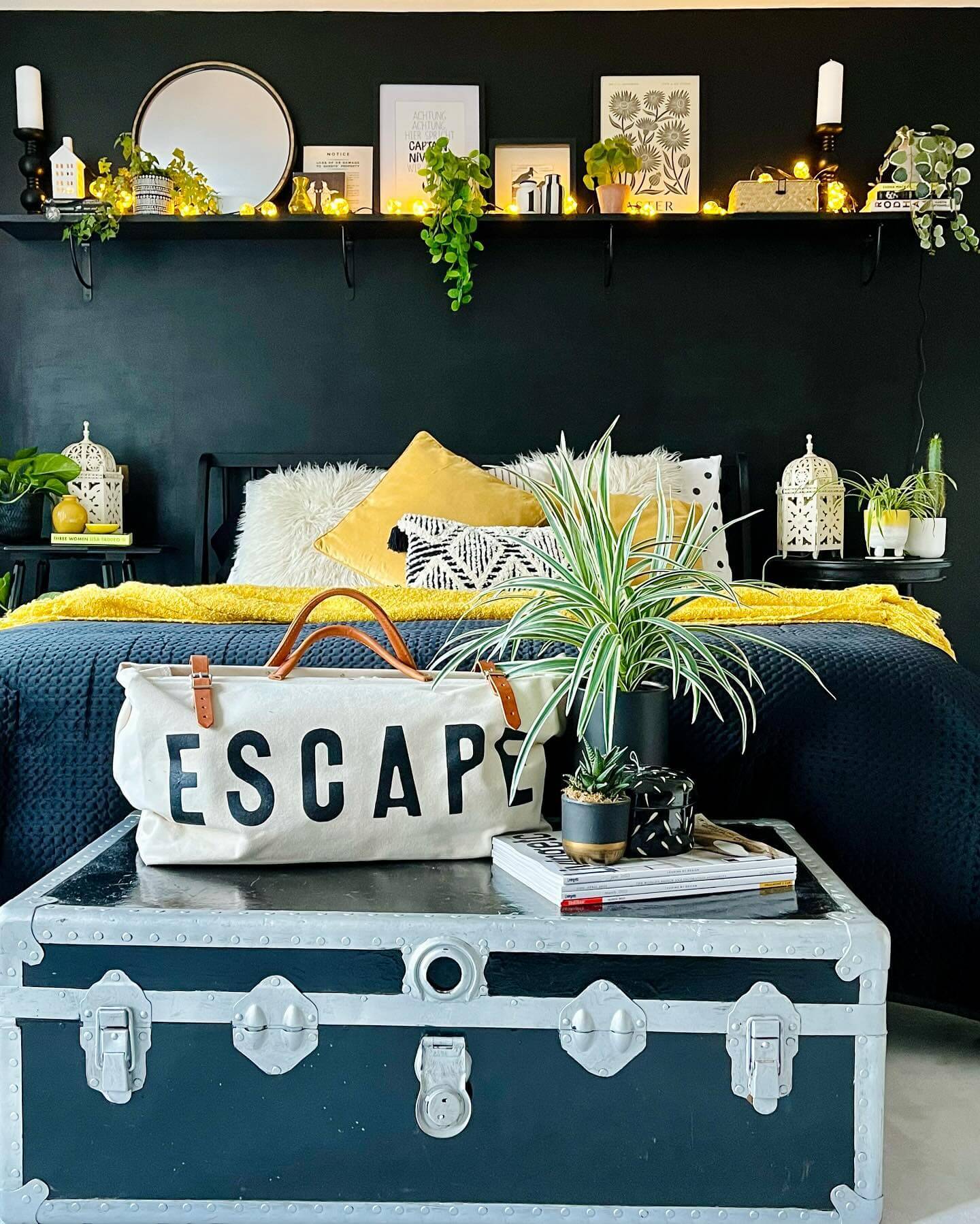
Black makes art sing, but curation is key. Choose pieces with negative space or light grounds—photography with white borders, line drawings, or abstract canvases—so they breathe against the wall. Overscale art above the headboard (about two-thirds the bed width) feels intentional; pair with a slim brass picture light for gallery-level sophistication.
White mats and wood or brass frames offer crisp edges that stand off the dark wall. If you love a collected look, install a low-profile picture ledge and overlap frames for dimension without excessive holes. Want to amplify light? A softly rounded mirror or smoked bronze mirror brings glow and counters hard angles.
Keep spacing consistent—2 inches between frames in a grid, 3–4 inches above the headboard. Let one “hero” piece anchor the composition and keep the rest supportive. Avoid busy, high-contrast patterns in bedding if your art is bold; let the wall and art do the talking. This thoughtful layering turns your black accent wall bedroom into a personal gallery that still feels calm.
Make Small Bedrooms Feel Bigger with Strategic Contrast
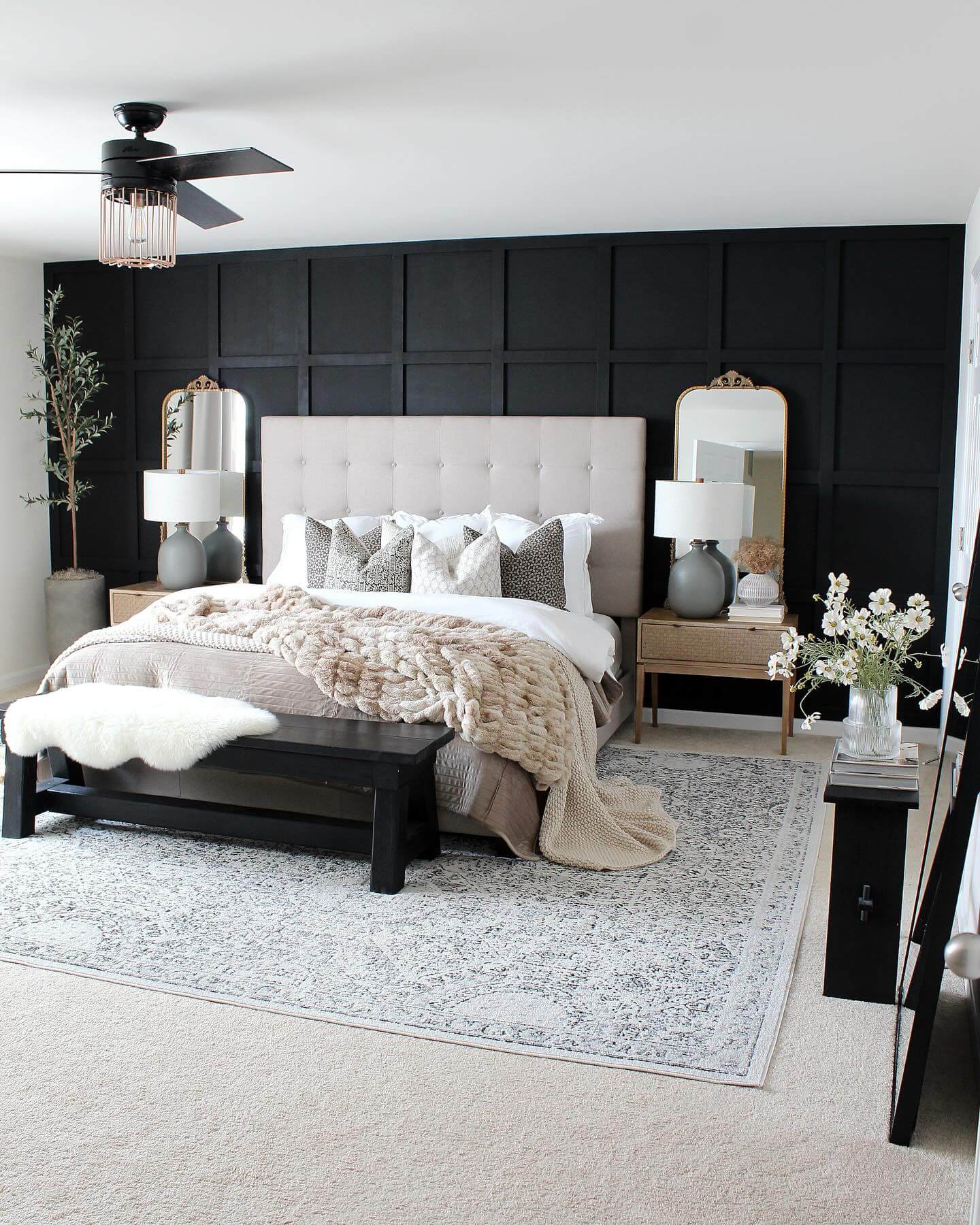
Yes, you can absolutely use a black accent wall in a small bedroom—and make it feel larger. Anchor the bed on the dark wall to create depth; the wall recedes visually, pushing the plane back. Keep adjacent walls light and bright to maximize contrast and reflectivity. Hang curtains high and wide in a soft neutral to elongate height and width.
Scale matters: choose a low-profile bed and streamline nightstands to reduce visual bulk. Floating shelves or wall-mounted sconces free floor space. Vertical slats or tall picture-frame molding pull the eye upward, while a large rug under the bed unifies the layout and reduces visual fragmentation. Mirrors placed opposite a window bounce daylight, softening the drama.
Stick to a tight palette—black, warm white, and one wood tone—to avoid visual noise. Edit accessories to a handful of substantial pieces rather than many small items. With smart contrast, clean lines, and layered light, a compact room gains the cozy, boutique-hotel vibe of a dark-and-moody bedroom without feeling cramped.
Earthy Contrast: Pair a Black Accent Wall with Olive, Clay, and Linen
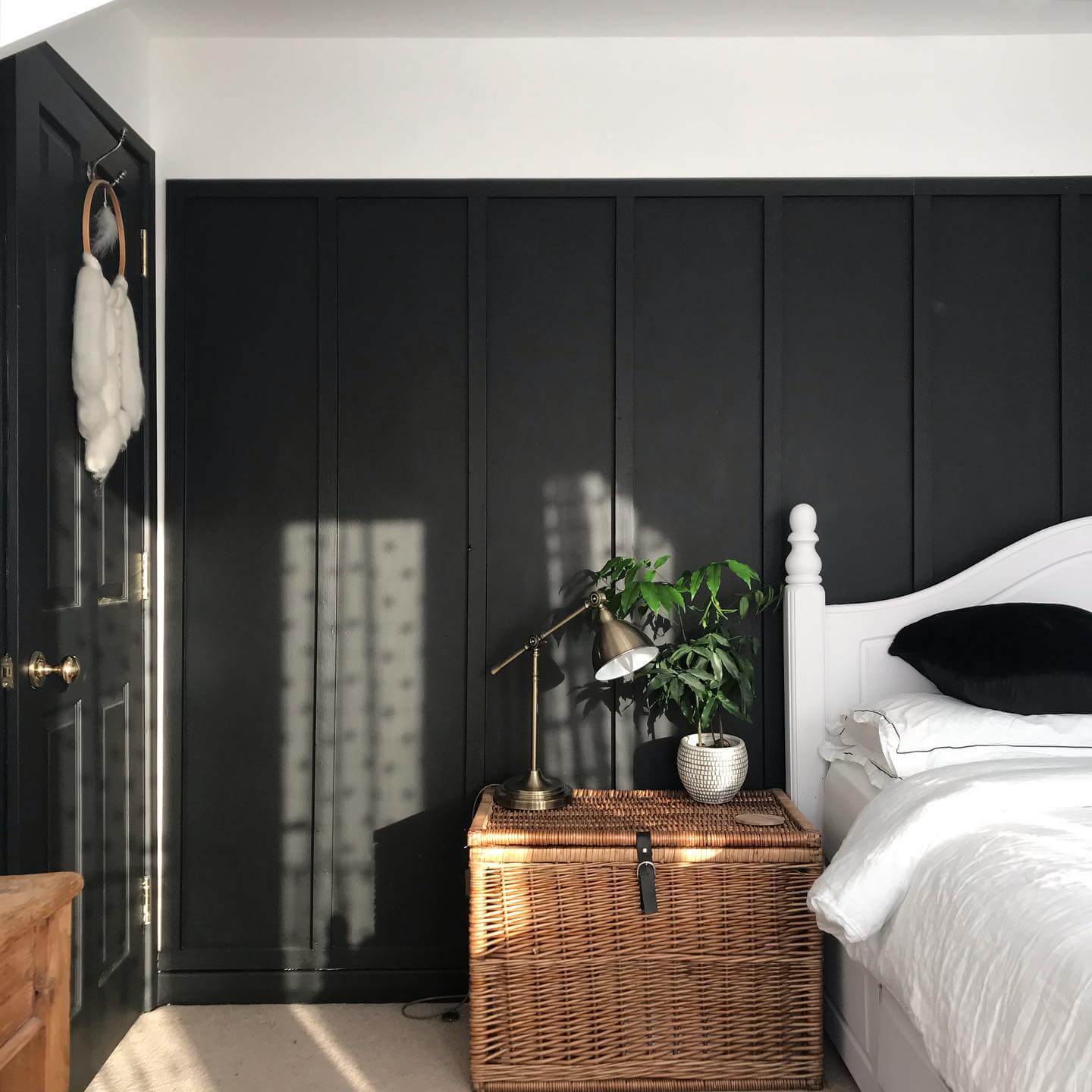
A black accent wall bedroom doesn’t have to feel cold—lean into an earthy palette to warm it up and make it feel high-end. Start with a matte or soft charcoal black behind the bed, then layer olive green pillows, clay or terracotta accents, and natural linen bedding. The combination tempers the moody backdrop while introducing organic calm. Add a caramel leather bench or woven cane details to bridge the dark wall with lighter elements in the room. Choose tactile pieces—stoneware lamps, wool throws, and raw wood—to bring depth that reads luxurious rather than heavy. Keep your whites creamy (not stark) so the contrast feels restful. If you love color, try a muted, nature-inspired scheme: sage, rust, and sand all sing against black without shouting. The result is a grounded, grown-up space that photographs beautifully by day and feels cocoon-like at night. For cohesion, repeat olive or clay in small doses (planters, art mats, or a lumbar pillow) across the room so the black wall looks intentional and curated, not isolated.
Hotel-Style Symmetry: Anchor Your Black Wall with Balanced Bedside Moments
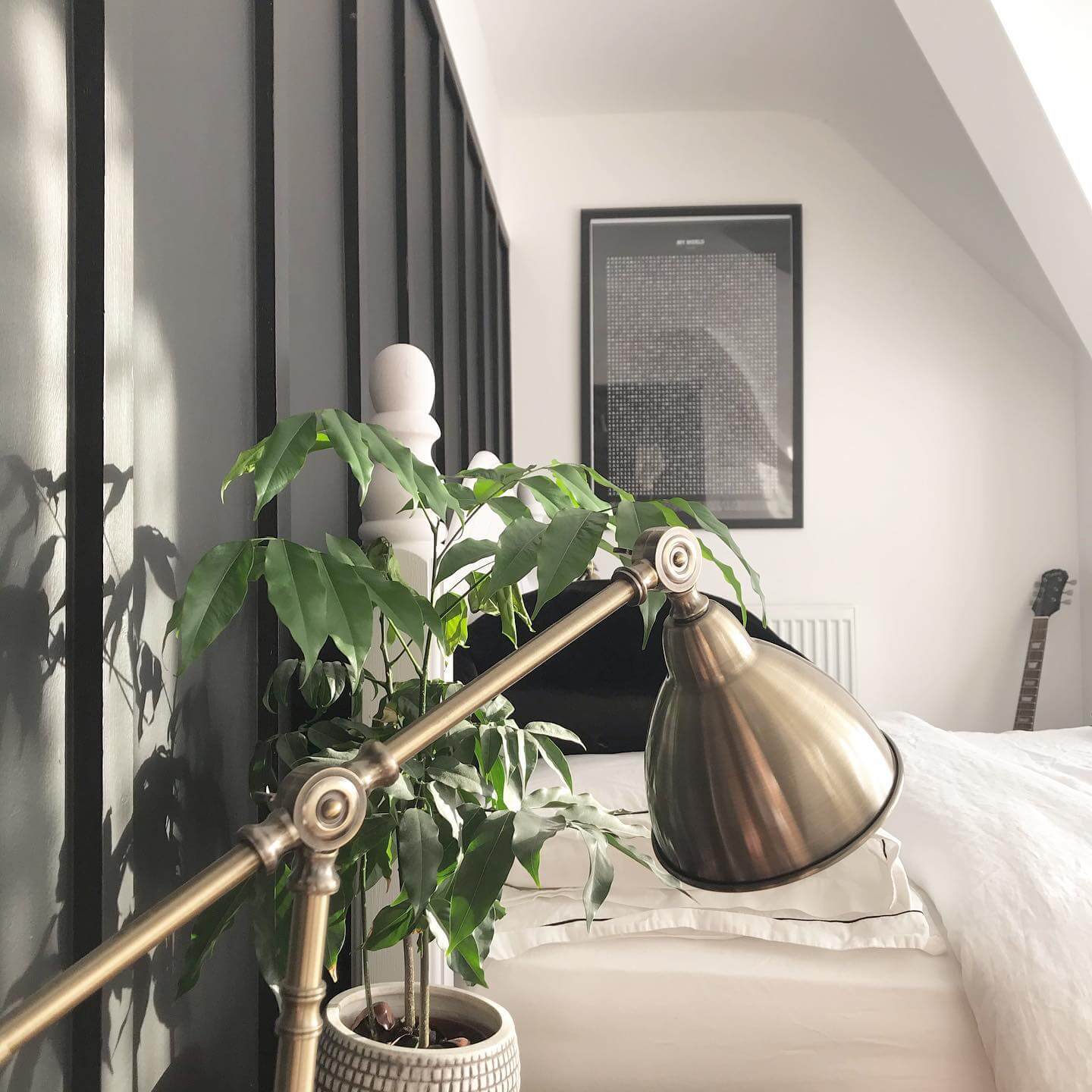
To make a black bedroom accent wall feel polished, think like a boutique hotel: establish a strong centerline and build satisfying symmetry around it. Align the headboard precisely to the midpoint of the wall, then mirror the essentials—nightstands, lamps or sconces, and artwork. Matching doesn’t mean boring; vary finishes to add character (walnut nightstands with blackened brass sconces, for example). Mount sconces 6–8 inches above the nightstand surface and about 5–7 inches to either side of the headboard edge for comfortable task lighting and a clean look against black. Keep tabletop clutter edited: a single stack of books, a ceramic catchall, and a low vase are enough. If you prefer a more collected vibe, balance visual weight rather than identical items—pair a closed nightstand on one side with a slim pedestal table on the other, but keep lamp heights within an inch. The black wall becomes a frame for your composition, turning the bedscape into a focal point that feels restful and refined.
Half-Painted Magic: Two-Tone Black Wainscot for Airy, Elevated Proportion
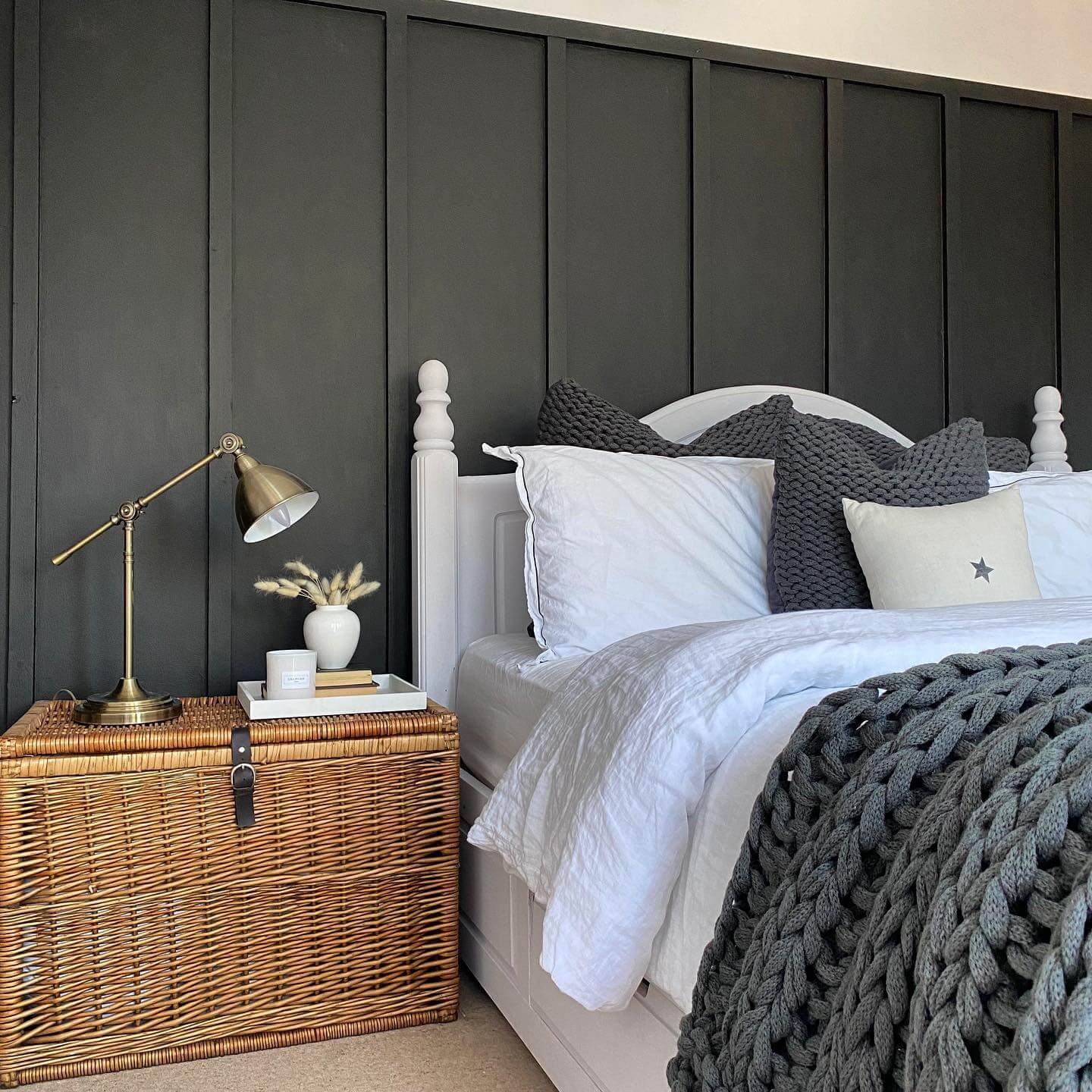
If you love the drama of a black accent wall but worry about light or scale, try a two-tone treatment. Paint the lower two-thirds in matte black or charcoal and the upper third in a warm white or cream to lift the visual ceiling. Add a slim chair-rail molding—or even a simple taped paint line—for a crisp transition. This approach is especially effective in small bedrooms: the black grounds the bed and art, while the lighter upper portion bounces light. Align the paint break with the top of your headboard (or 2–4 inches above) so the bed feels integrated, not floating. Style the darker section with picture ledges or low-profile sconces; keep the upper wall more minimal to maintain the airy effect. If your ceilings are low, go slightly under two-thirds black; if they’re tall, stretch the black up for cozy, enveloping mood. The result reads custom and architectural—like built-in wainscoting—without the cost or commitment.
Let the Bedding Pop: Rust, Blush, and Saffron Against Matte Black
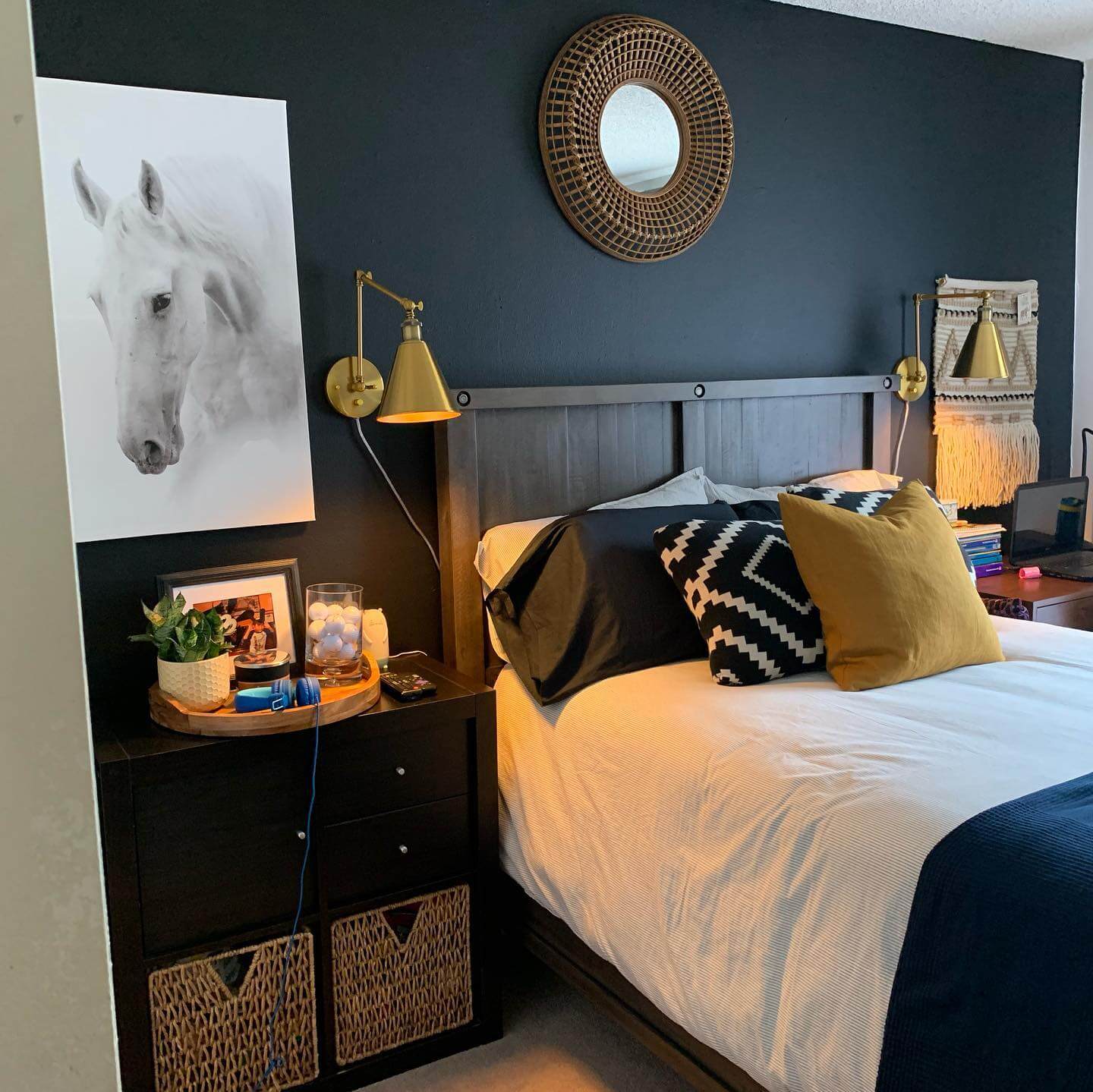
A black bedroom accent wall makes color feel richer and more intentional, so let your bedding do the talking. Earthy brights—rust, blush, saffron, ochre, and deep teal—look luxe against a matte black backdrop. Keep sheets neutral (bone or warm white) for balance, then layer a colored duvet or quilt and a textured throw at the foot. Anchor with a long lumbar pillow to elongate the bed and simplify your pillow game. If you’re mixing patterns, repeat one color in different scales: a fine stripe with a larger block print feels curated and calm. Metals matter here—brushed brass or blackened steel bedside lights echo the wall’s sophistication without stealing the show. For a cohesive palette, repeat your hero color in small accents around the room—candles, art mats, or a ceramic vase—so the bed looks connected to the space. The key is contrast with restraint; a few saturated moves go further on black than a dozen small gestures.
Drape and Ground: Floor-Length Curtains and a Big Rug to Soften the Mood
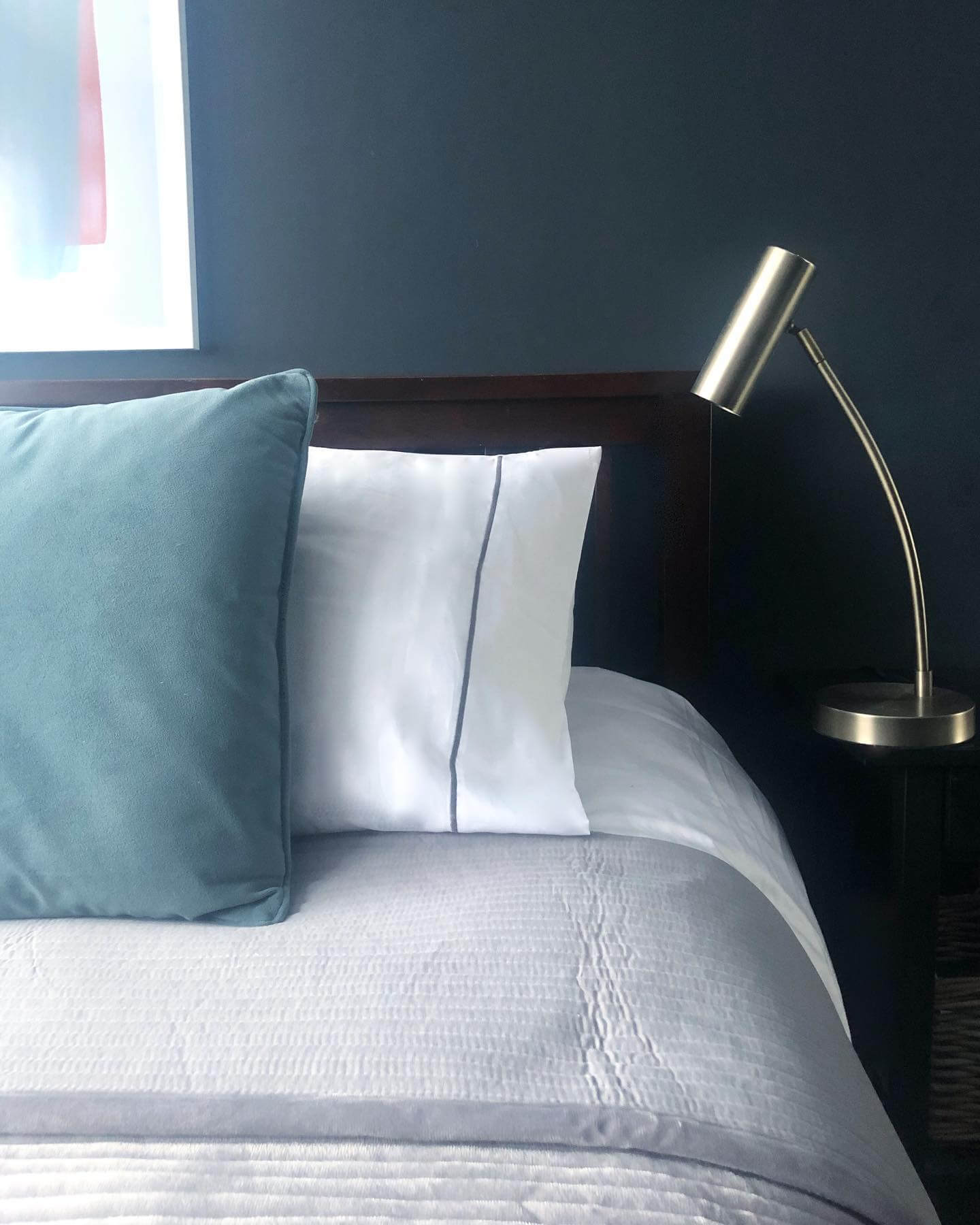
Textiles are how you make a moody black accent wall bedroom feel plush rather than stark. Hang curtains high and wide—mount rods 4–6 inches above the window trim and extend 8–12 inches beyond each side—to let in maximum light by day and create an elegant frame by night. Opt for textured linen, cotton-linen blends, or bouclé in warm neutrals; blackout liners support better sleep without reading “heavy.” On the floor, choose the largest rug you can: at least 8×10 under a queen or 9×12 under a king, with the front legs of nightstands sitting on the rug. This visually unifies the bed zone and softens footfall. Layer if you need budget flexibility: a natural jute base plus a cozier wool or tufted rug on top adds depth and seasonal adaptability. Echo the rug’s tones in throw blankets or accent pillows to tie the scheme together—your black wall stays dramatic, while the room feels quiet and inviting.
Greenery Glow-Up: Plants that Thrive Against a Black Bedroom Wall
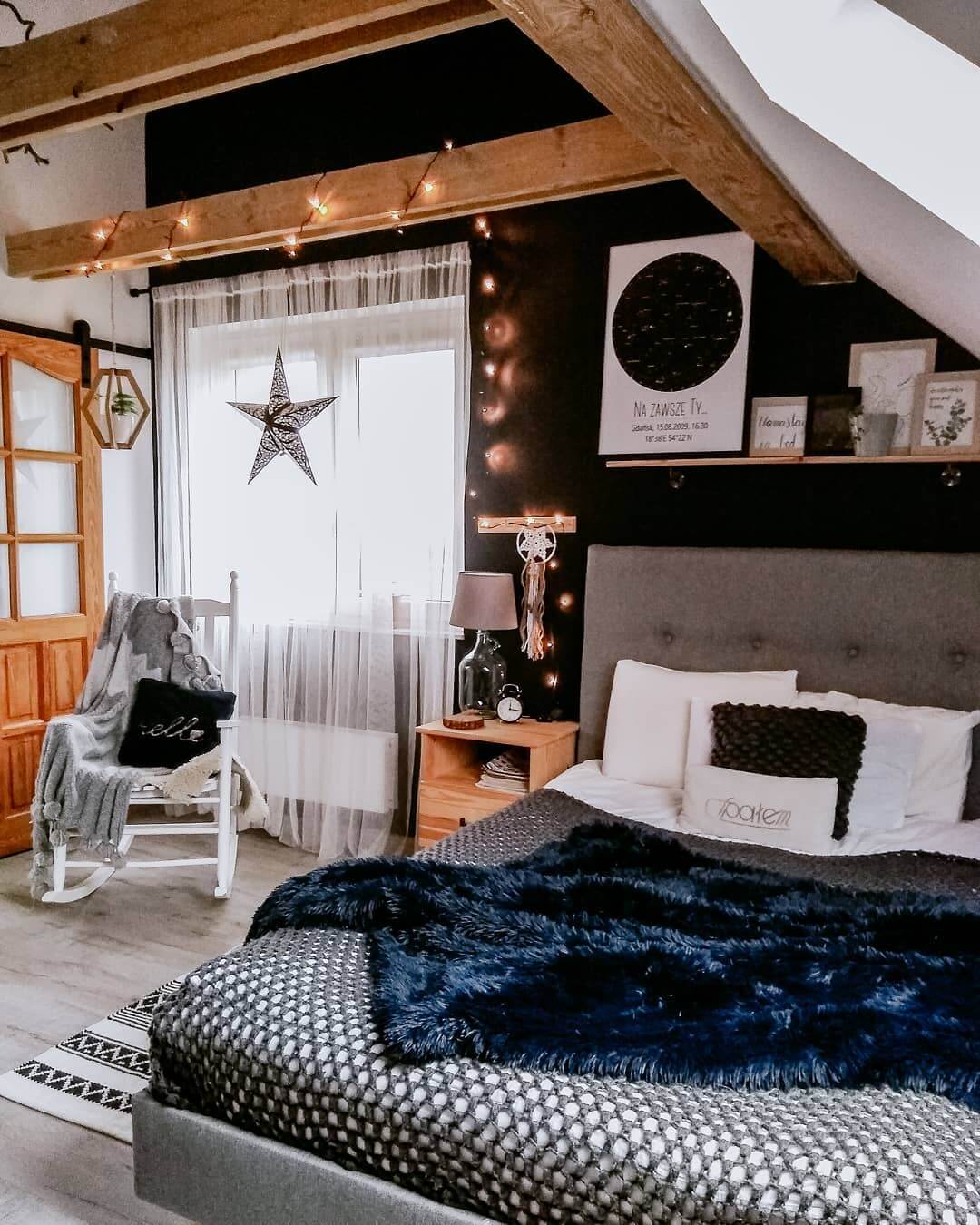
Nothing flatters a black bedroom wall like fresh greenery—the contrast is crisp, and the vibe is instantly serene. Choose sculptural plants that read well in silhouette: rubber plant, ZZ plant, bird of paradise, or a trailing pothos on a wall-mounted shelf. Against matte black, variegated leaves and glossy textures pop without additional color. Keep planters simple—ceramic in sand, stone, or charcoal—so the foliage stays the hero. If floor space is tight, add a tall plant in a corner to visually “lift” the ceiling line, or flank the bed with small, air-purifying varieties on nightstands. Mind the light: black absorbs brightness, so position plants where they’ll get the window exposure they need, or consider a discreet grow bulb in a sconce if your room runs dim. The goal isn’t a jungle; it’s a few well-placed pieces that echo the organic materials in your bedding and furniture, softening the moody palette while keeping the look sophisticated.
Built-In Look on a Budget: Picture Ledges, Thin Shelves, and Niche Moments
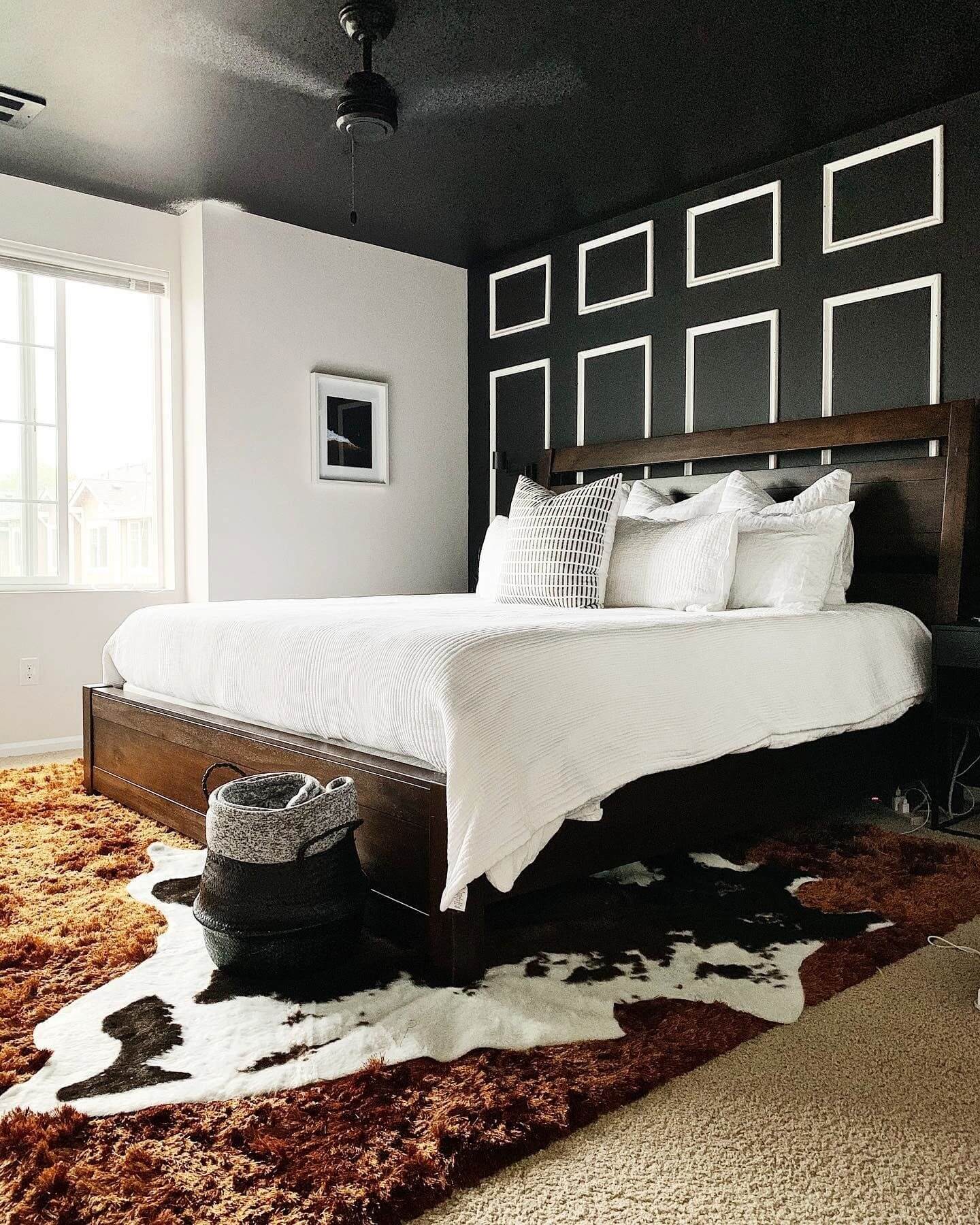
A black accent wall makes styling look gallery-grade—especially if you add slim storage that feels custom. Install a low-profile picture ledge (1.5–3 inches deep) above the headboard to layer frames, small canvases, and a taper candle or two. Keep frames in a tight palette—natural wood, black, and brass—to avoid visual noise. If you’re worried about safety, mount the ledge just above pillow height and use security hardware. For more function, flank the bed with narrow wall shelves or create a shallow niche between studs to hold bedtime essentials without bulky nightstands. Integrated, hardwired sconce cords can be concealed in the same cavity for a seamless look. The matte black wall recedes, letting these architectural moves shine. Curate sparingly—one or two books, a ceramic vessel, a small plant—so the negative space reads intentional. You’ll get the tailored feel of built-ins without the cost, and the styling flexibility to refresh with the seasons.
Work the Angles: Using Black on Sloped Walls and Odd Alcoves
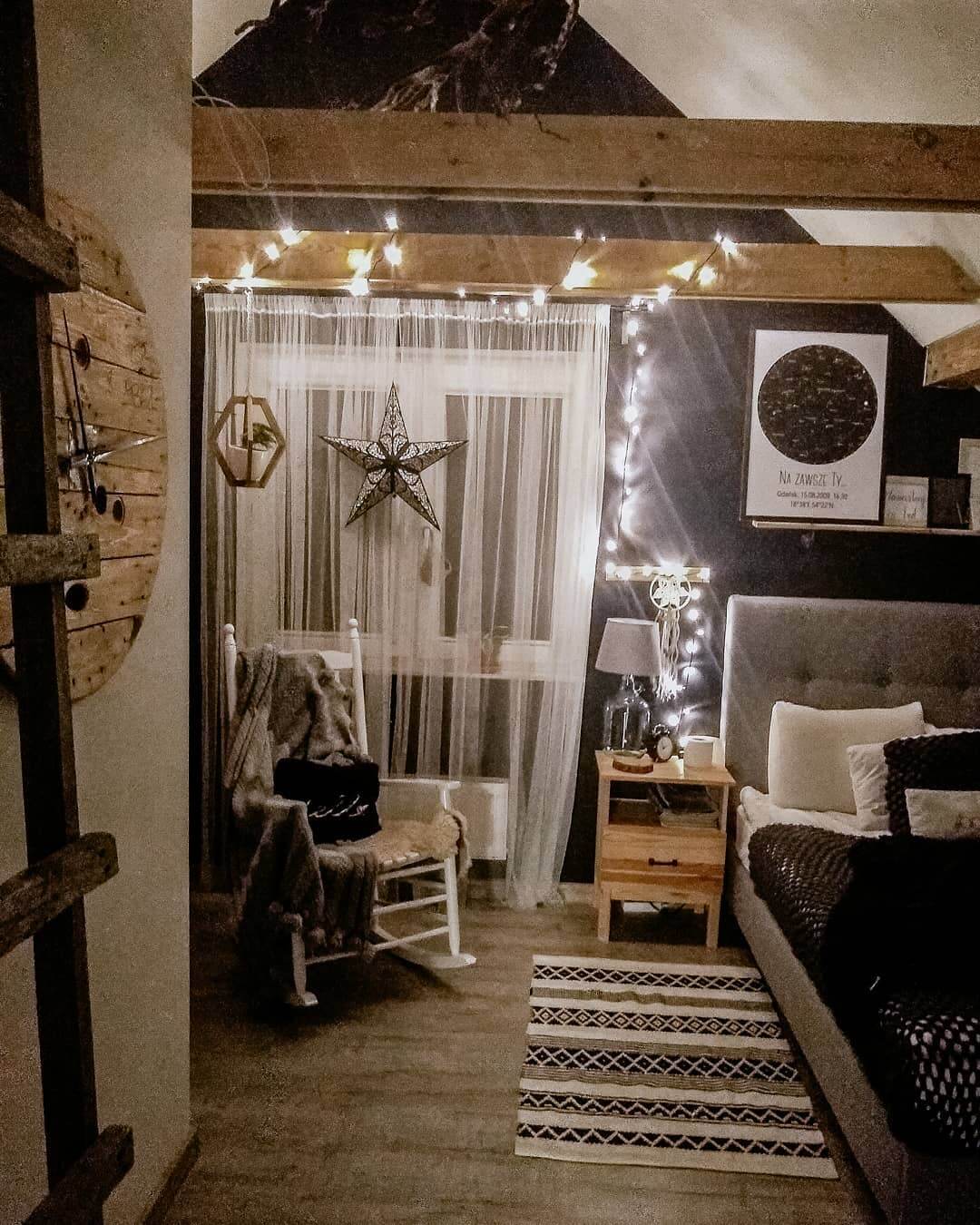
Quirky architecture can be your superpower. In rooms with sloped ceilings, dormers, or off-center windows, a black accent wall clarifies the geometry. Paint the full headboard wall—even if it’s shortened by a slope—to ground the bed and make asymmetry feel intentional. If the slope cuts into the headboard area, consider wrapping the black 6–12 inches onto the ceiling to create a modern “header” that frames the bed. In alcoves, carry the black into the recess to emphasize depth, then float a shelf or mount sconces to turn it into a cozy niche. Keep adjacent walls lighter to preserve openness, and use vertical elements—tall drapery panels, a high headboard, or a skinny floor lamp—to counterbalance low angles. Mirrors placed perpendicular to the accent wall bounce light into tricky corners. The goal: simplify the read of the room so the eye lands on a calm, composed focal point, while the black visually edits away awkward bits.
Frame the Drama: Canopy Beds and Tall Headboards on Black
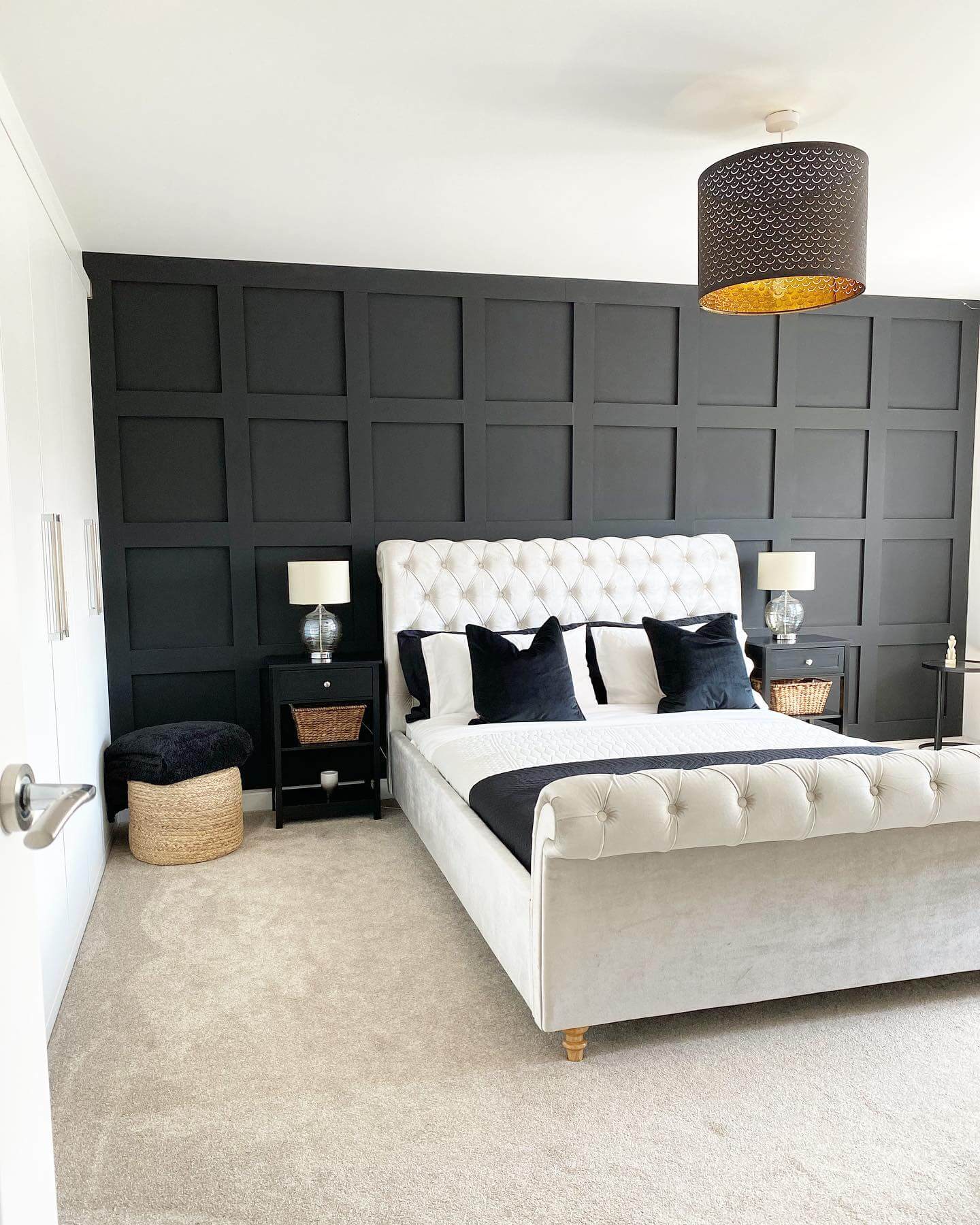
A black bedroom accent wall is the perfect stage for statement beds. A slim, modern canopy or a tall, upholstered headboard creates striking negative space against dark paint, instantly elevating the room. Choose materials that contrast in feel—linen or bouclé against matte black; warm wood against satin charcoal; blackened metal against soft off-black for a subtle silhouette. Keep bedding tailored to let the bed’s architecture shine, and repeat a finish from the bed in your nightstands or lighting for cohesion. If your canopy is hefty, balance it with lighter bedding tones; if it’s airy, go moodier with deeper linens. Mind the scale: allow at least 6–8 inches between canopy top and ceiling to avoid a cramped look. Consider a centered art piece above a lower headboard, but skip art if the headboard is tall—let texture and form be the focal point. The result is editorial-level drama that still reads serene and sleep-ready.
Seasonal Styling on a Black Backdrop: Light in Summer, Luxe in Winter
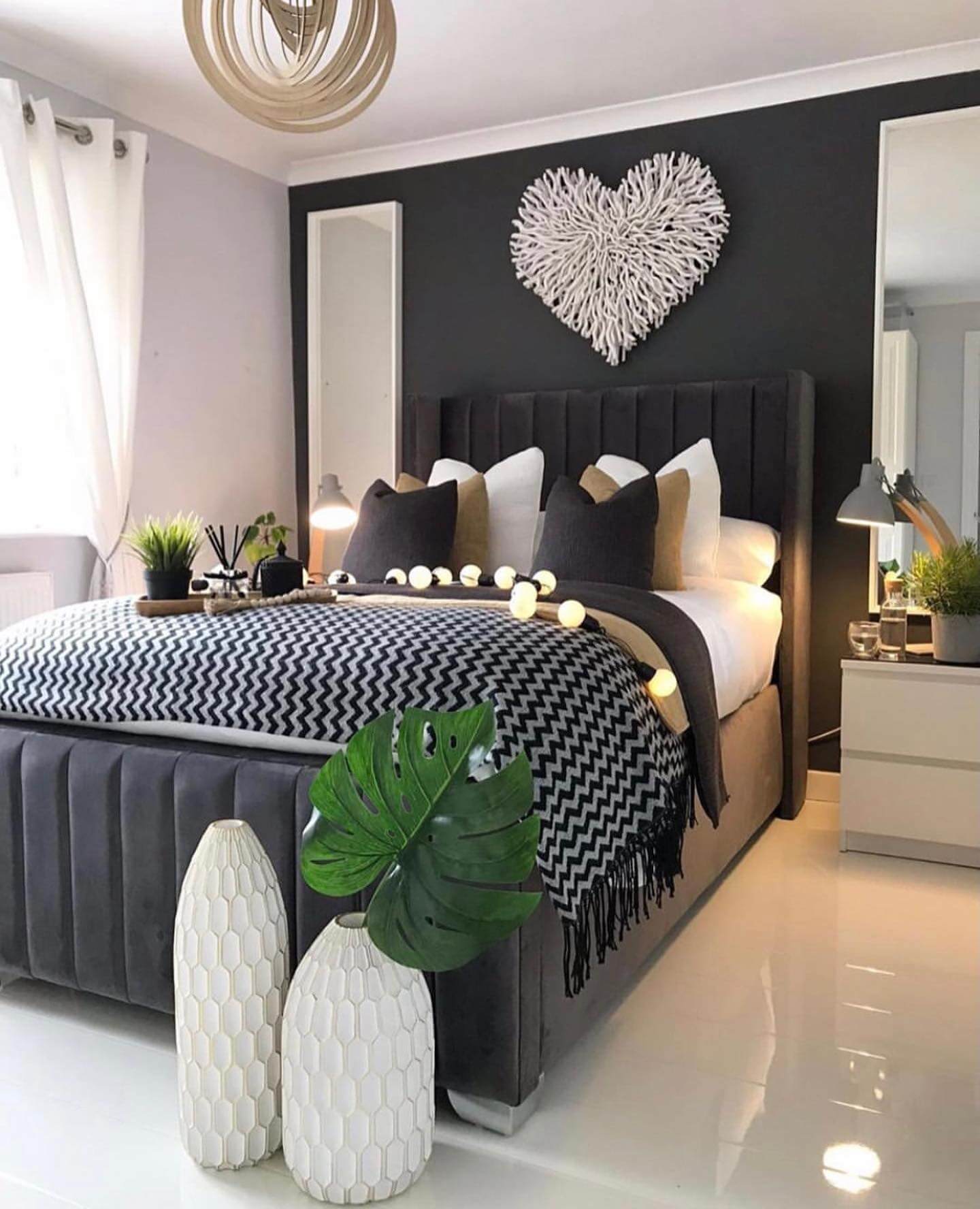
One perk of a black accent wall bedroom is how easily it adapts with the seasons. In warmer months, lighten the palette with flax linen sheets, gauzy curtains, and woven textures—seagrass trays, rattan accents, and a pale, lightweight throw. Swap in art with airy negative space and introduce greenery for a fresh edge. When temperatures drop, pivot to plush: velvet or wool blankets, a chunkier knit throw, and heavier drapery panels with blackout liners for a cocoon vibe. Layer warm metal accents (aged brass, bronze) and deeper earth tones—cognac, oxblood, forest green—to enrich the black without overwhelming it. Keep your core pieces neutral so these swaps feel effortless; store off-season textiles in underbed bins to streamline changes. A moody wall is like a little-black-dress for your bedroom—timeless, versatile, and elevated with just a few thoughtful accessories.
Layer the Light: Sculpt Warmth on a Black Accent Wall
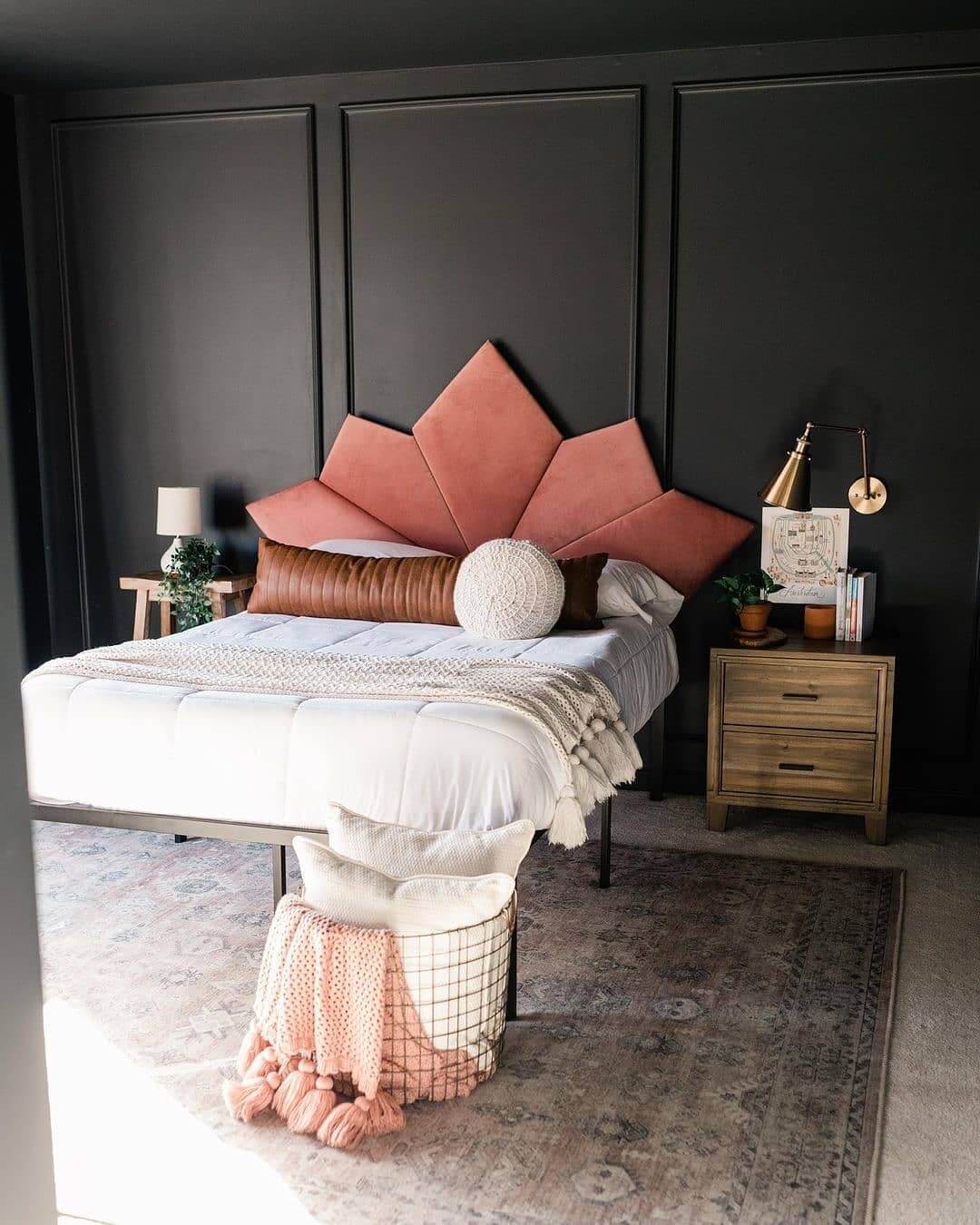
A black accent wall is only as good as the lighting that shapes it. Prioritize layers: ambient (a dimmable overhead or cove glow), task (bedside sconces or pendants), and accent (a picture light or wall washer). Warm color temperature is key—2700K bulbs flatter skin tones and soften the dark paint so your bedroom reads moody, not murky. Wall-mounted sconces keep nightstands clear and cast beautiful shadows across matte or textured black, while a small uplight tucked behind a plant or headboard adds quiet depth. If you love art on a black wall, aim a slim picture light to graze the surface and make colors pop without glare. Keep finishes intentional: blackened steel disappears; aged brass adds a gentle sparkle that feels luxe. Pro tip: place sconce backplates about 60 inches from the floor and center them just outside your headboard to frame the bed. Finish with dimmers on every circuit; the ability to dial down brightness is what turns a dark wall from dramatic to deeply restful on command.
Go Vertical: Slim Slat Panels for Shadow and Sound
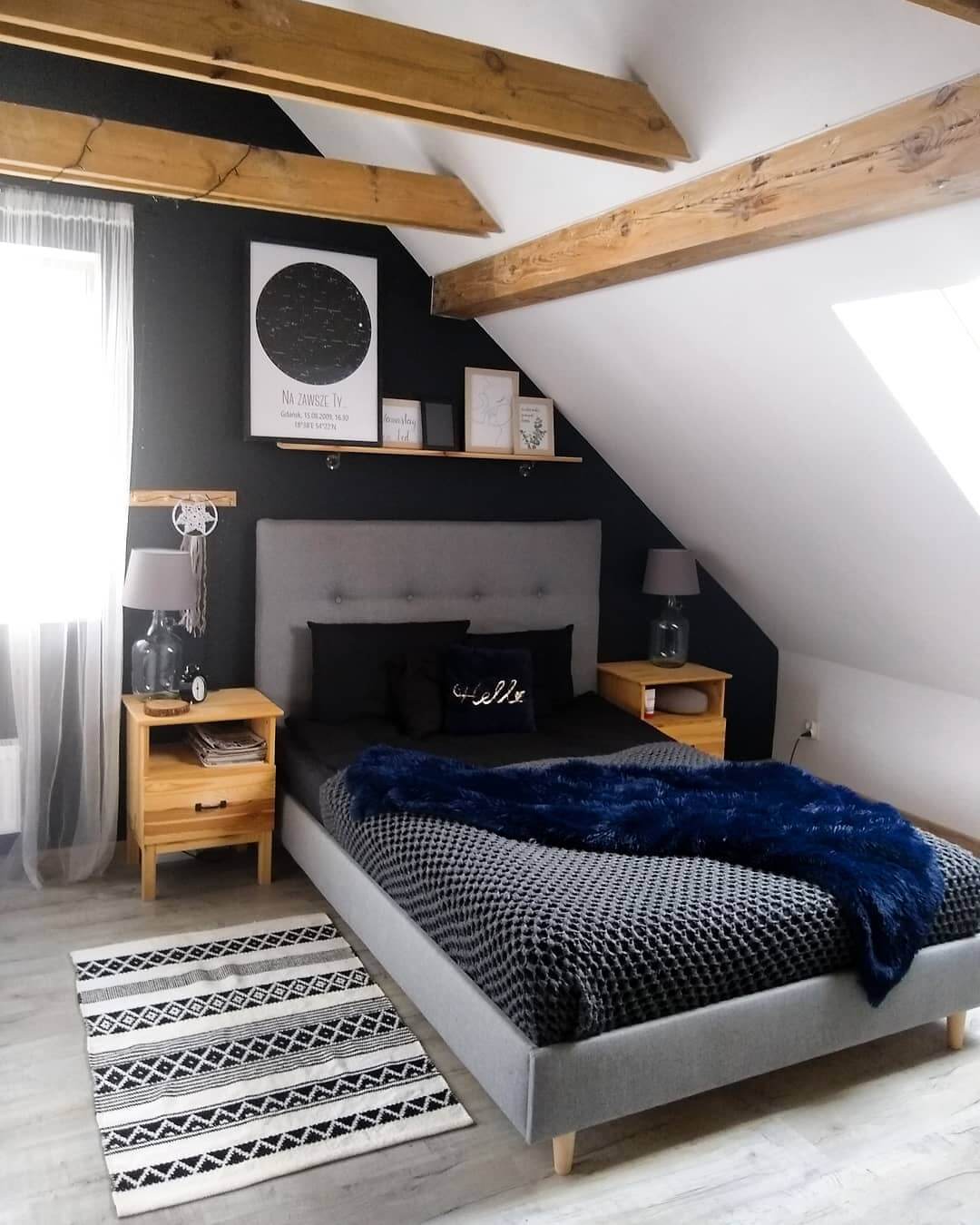
If you want texture without visual clutter, vertical slats painted black are your best friend. The linear rhythm elongates walls and ceilings, creating the illusion of height—especially powerful in small bedrooms. Use 1×2 or 1×3 strips with a consistent reveal (try 1/2 inch) over a smooth substrate, then spray in matte or satin black for even coverage. The result: subtle shadow play by day and a sculptural backdrop at night when sconces wash across the ridges. Bonus, wood slats lightly diffuse sound and make a black bedroom feel hushed and cocooning. Keep the rest of the palette simple—linen, oak, and a textured rug—to let the wall’s micro-shadows do the talking. A low, upholstered headboard sits beautifully in front of slats without visually fighting the lines. If you’re renting, look for peel-and-stick slat panels or create the look with painted tape lines and thin MDF you can remove later. Finish with a narrow picture ledge to display art that can move with your mood.
Curves + Cozy: Round Forms That Soften a Black Bedroom
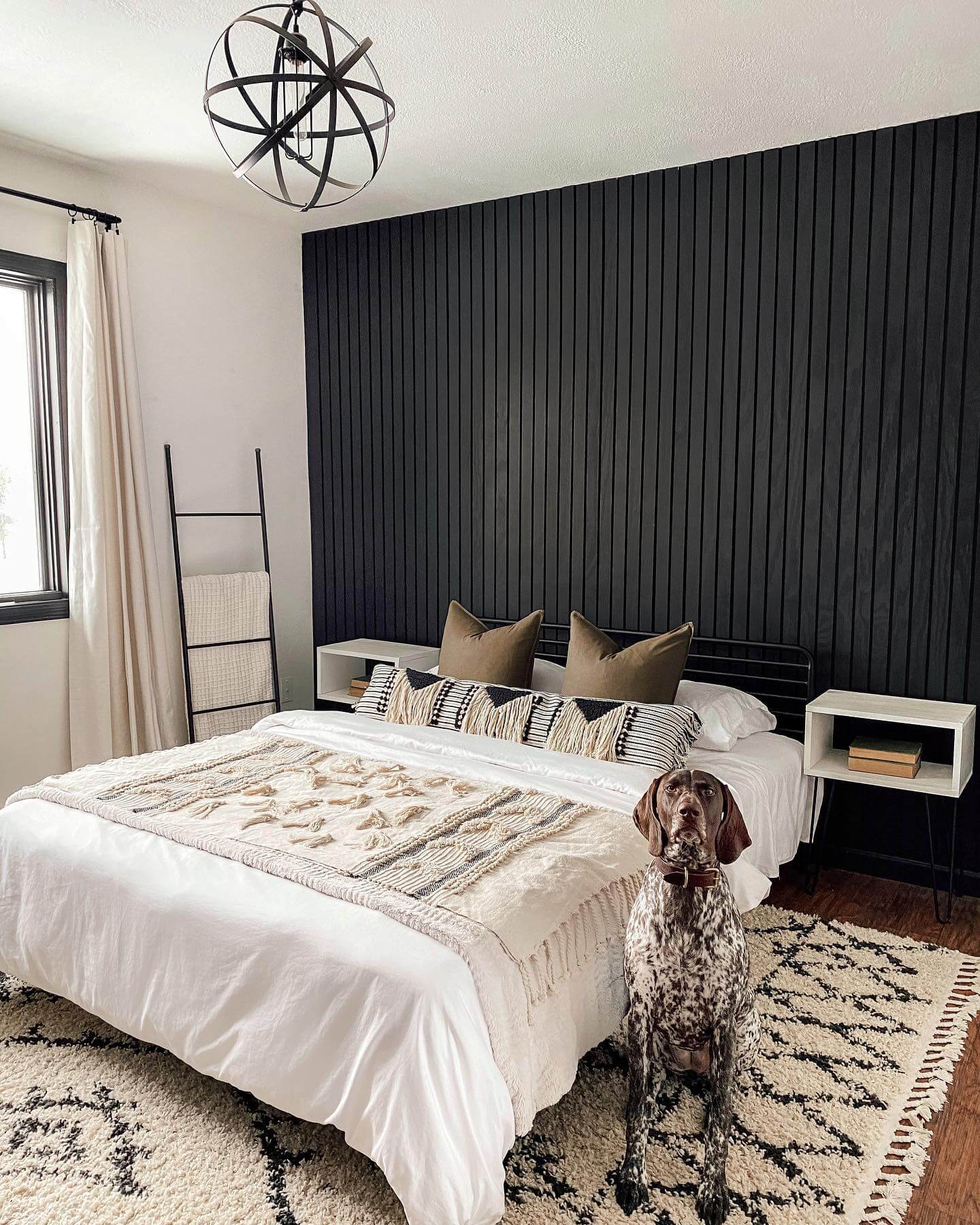
Black reads strong and architectural—balance that energy with round silhouettes so the room feels inviting. Start with a curved or channel-tufted headboard; soft edges skim the wall and keep the composition from feeling boxy. Add globe sconces or mushroom bedside lamps to echo the curve and bounce warm light across matte paint. Round mirrors are especially effective on a black accent wall: they catch highlights during the day and add depth at night without introducing harsh angles. Layer tactile fabrics—bouclé, slub linen, wool throws—to amplify the cocoon factor. On the floor, choose a rug with an organic motif or a soft, rounded corner silhouette to reinforce the theme. Even a simple arched niche, curved bench, or drum side table goes a long way toward softening the scene. The mix of moody black and gentle geometry creates a calming, high-design bedroom that feels tailored but never severe—proof that “soft” and “dark” can absolutely coexist.
Full-Height Board-and-Batten in Black for Quiet Drama
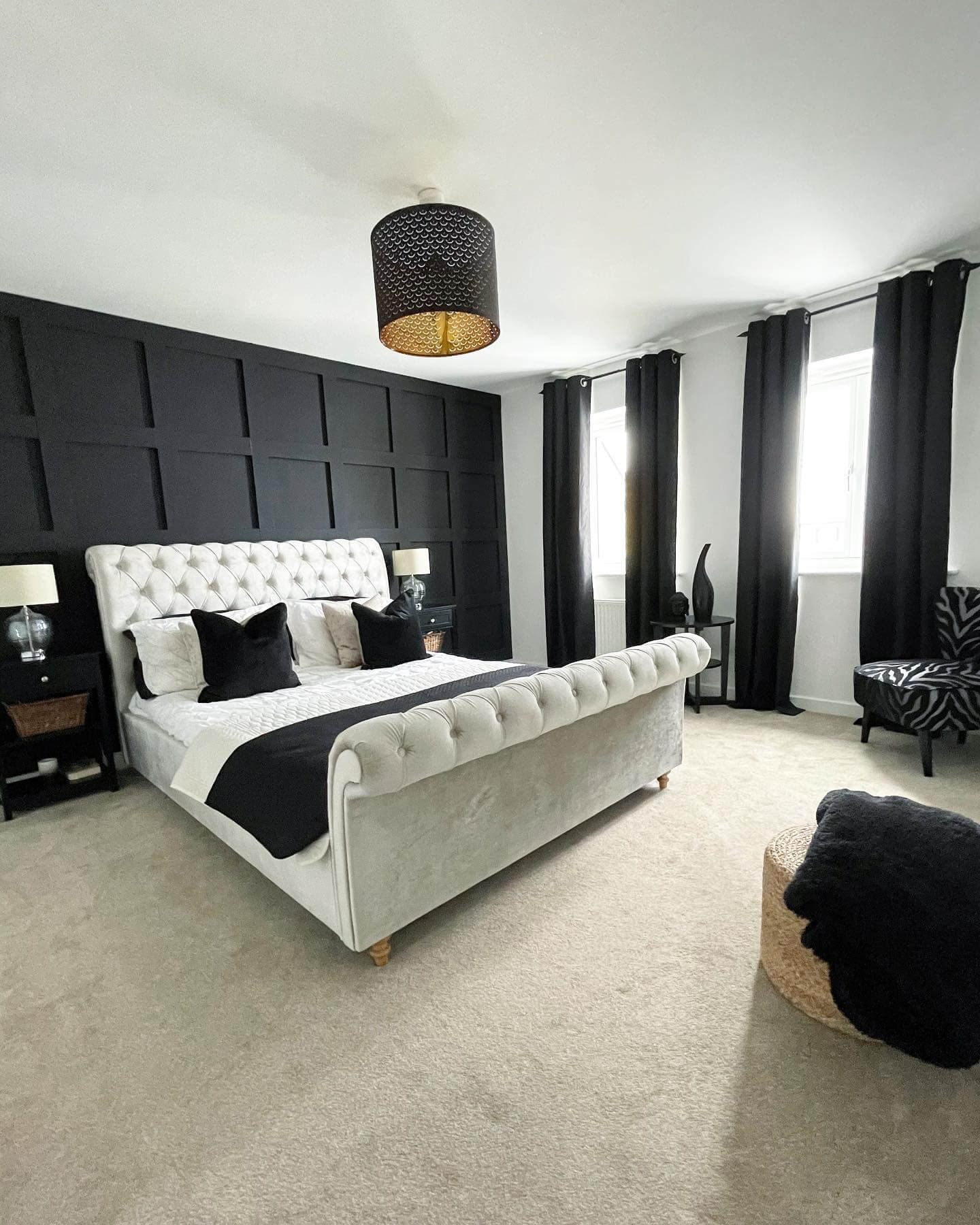
Love wainscot but want more impact? Take board-and-batten all the way up and paint it black. Full-height paneling adds architectural presence and shadow depth without introducing pattern, so the wall still reads serene. Aim for slimmer battens at a tight rhythm for a refined, hotel-like feel; wider spacing leans modern farmhouse. Use a matte or low-sheen finish to keep the texture legible and prevent glare on the high points. Detail matters: align battens with the bed width or nightstand edges to make the composition feel intentional. If your room is compact, consider a soft off-black or charcoal with a higher LRV so the planes don’t close in, and counterbalance with light bedding and warm wood tones. This approach is especially good behind a simple upholstered headboard—no tufting or heavy pattern needed—because the wall provides the interest. Add slim picture lights or uplights to exaggerate the shadows and you’ve created quiet drama that still supports rest.
Nightstand Moments: Style Vignettes That Pop on Matte Black
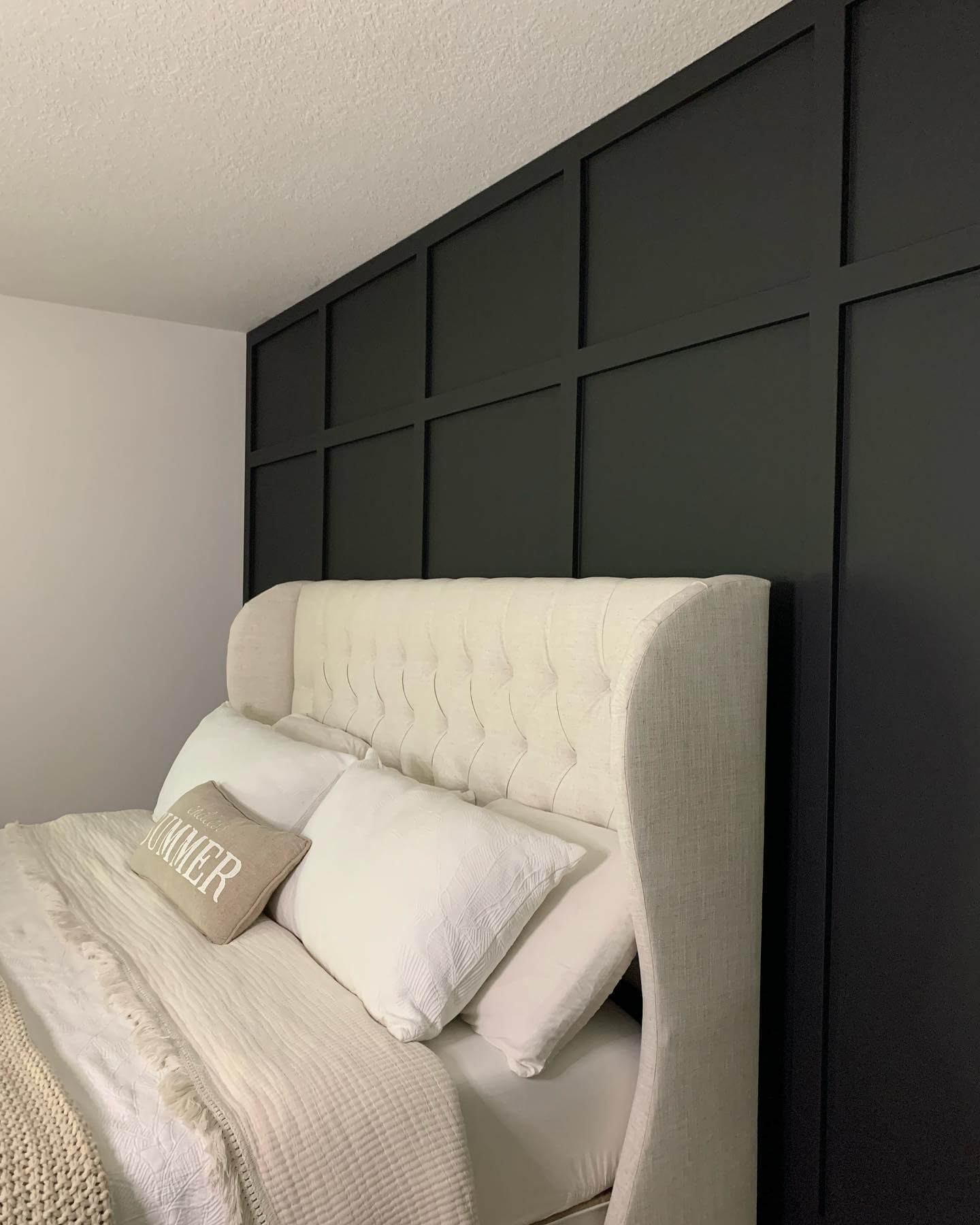
A black accent wall is a gallery backdrop—use your nightstands to curate a layered, lived-in moment. Start with height via a sculptural lamp or sconce, then add a stack of books to bridge the gap between lamp and tabletop. Introduce a tactile element—a ceramic bowl, stone box, or woven tray—to corral essentials and bring earthy warmth against the dark wall. Keep finishes mixed but restrained: one reflective piece (brass, smoked glass) is enough to catch light without turning fussy. If you lean art on the ledge or directly on the nightstand, vary scale and orientation but limit your palette to two to three tones pulled from bedding or rug. Edit ruthlessly: negative space reads luxe on black. Cord discipline matters too—clip or route cables down the back to keep the silhouette clean. The goal is a vignette that feels personal yet calm, where every object earns its place and the wall makes it all feel intentional.
Pick Your Black Wisely: Sheen, Undertone, and LRV
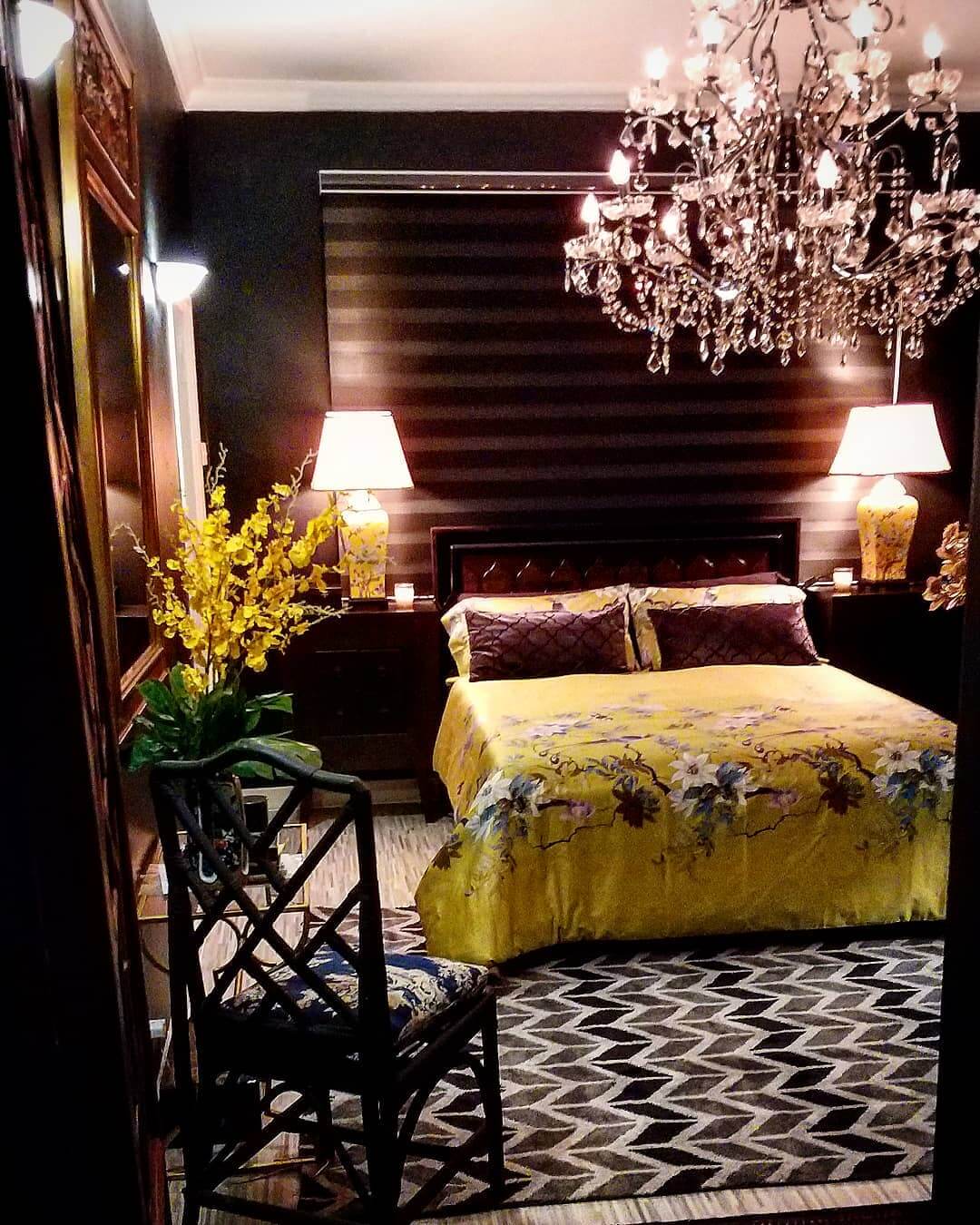
Not all blacks behave the same. For bedrooms, matte or flat finishes deliver that velvety, light-absorbing calm, while eggshell or satin adds a touch of durability and wipeability—great behind frequently touched headboards. Pay attention to undertone: warm blacks with brown or olive notes pair beautifully with oak, cane, and linen; cooler blacks with blue or graphite undertones skew crisp and modern alongside chrome or concrete. Look at Light Reflectance Value (LRV) too—soft blacks and charcoals in the 6–12 range keep small rooms from feeling compressed, whereas near-true blacks (LRV 0–3) create maximum drama in spaces with generous natural light. Always test swatches on the actual wall and view them morning, afternoon, and evening; black shifts more than you think. If you’re nervous, color-drench just the accent wall and repeat the hue in a small accessory or frame across the room so the choice feels integrated, not isolated.
Consider the Fifth Wall: Extending Black Onto the Ceiling
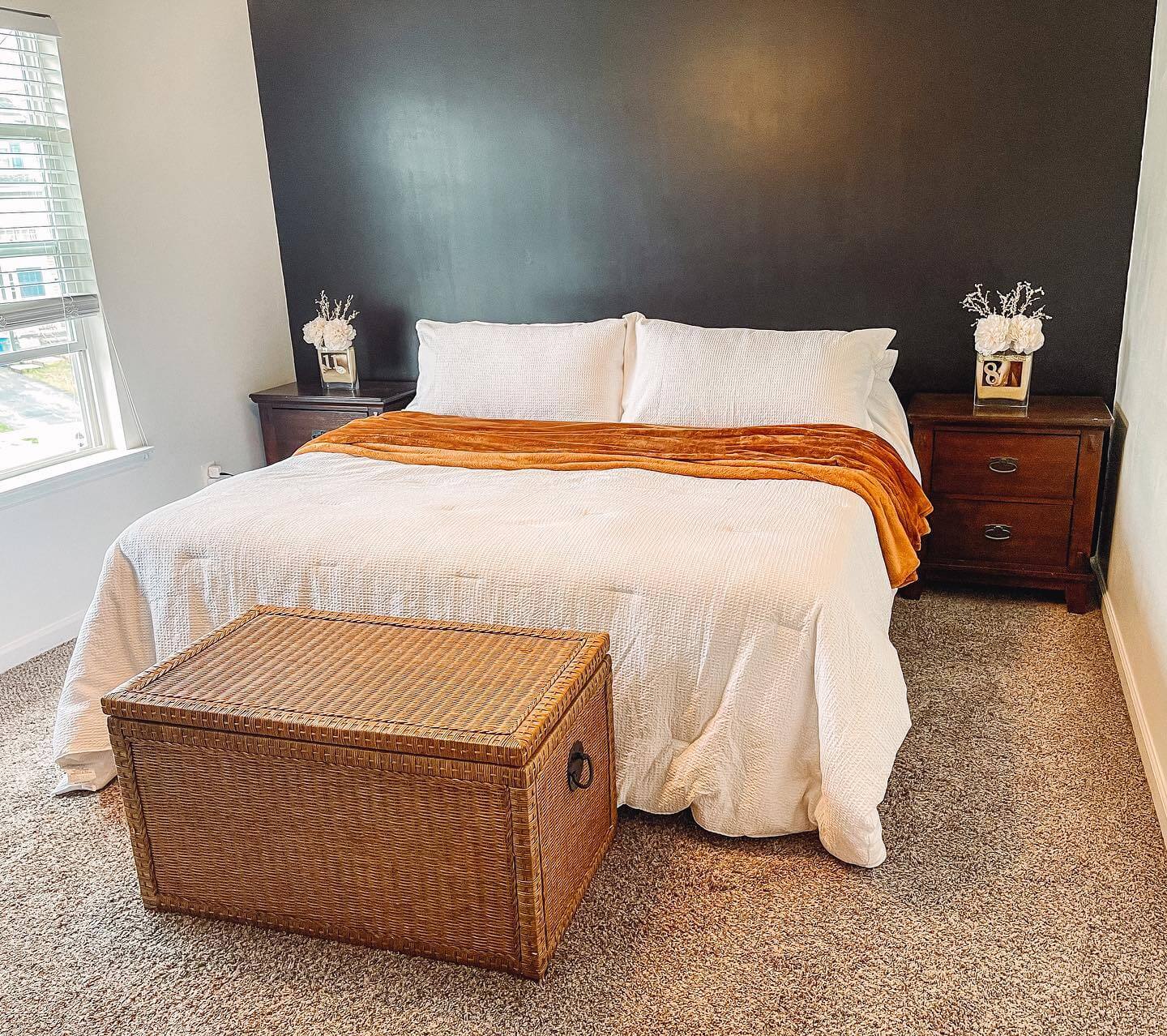
When done thoughtfully, carrying black from the accent wall onto the ceiling can transform your bedroom into a true retreat. In rooms with tall ceilings, painting the ceiling the same black as the headboard wall compresses visual height slightly, making the space feel intimate and cocooned. In lower rooms, try a softer approach: wrap just 12–24 inches of the ceiling above the accent wall (a “soffit band”) or choose a lighter charcoal overhead to avoid the cave effect. Another smart move is zoning—extend black across the ceiling only as wide as the bed and nightstands to create a canopy-like frame without darkening the entire room. Keep trim crisp in a contrasting off-white to outline the architecture, or color-drench baseboards and crown for a seamless envelope. Balance the move with pale bedding, a textured rug, and warm, dimmable lighting so the space reads cozy, not heavy. The result is enveloping, cinematic calm that supports deeper rest.
Lighting, Textiles, and Styling Tips for a Black Accent Wall Bedroom
Lighting determines whether black reads plush or oppressive, so build layers that sculpt rather than flatten. Start with diffuse ambient light, then add bedside task beams aimed downward to limit glare on dark paint. Include a soft backlight or cove glow behind the headboard to separate bedding from the wall and enhance depth. Favor warm 2700K–3000K bulbs with high CRI to preserve fabric color and wood warmth. Use opaque shades, ribbed glass, or fabric diffusers to soften hotspots and reduce reflections. Complement illumination with tactile textiles—linen, bouclé, and wool—which absorb light and add dimensional comfort.
- Layered Lighting Plan: Combine ambient ceiling light, bedside task sconces, and low accent glow behind the headboard to sculpt depth, eliminate shadows, and flatter black without glare.
- Statement Sconces or Pendants: Mount adjustable fixtures in matte brass or black; align centerline with pillow height for reading comfort and even illumination that frames the accent wall.
- Dimmable, Warm Bulbs: Choose 2700K–3000K LEDs at high CRI; dim at night for coziness, brighten mornings, and avoid blue cast that can flatten texture on black surfaces.
- High-Contrast Bedding: Layer crisp white percale, charcoal linen, and a textured throw; alternate matte and subtle sheen to catch light and prevent the bed from disappearing into the wall.
- Natural Textures: Introduce jute, wool, cane, and raw wood to soften acoustics and shadows; tactile surfaces add comfort, reduce echo, and complement black’s architectural crispness.
- Art and Mirrors Placement: Hang one large focal piece, or a tight grid; position mirrors to bounce window light, not reflect clutter, maintaining calm sightlines and perceived spaciousness.
Styling details make the scheme livable and serene day to night. Choose nightstands with closed storage to hide chargers, keeping surfaces clear for a carafe, a candle, and a small vase of greenery. Coordinate hardware finishes across lights, drapery rods, and drawer pulls to establish a steady rhythm against the black wall. Keep cords invisible with cable channels or dark wraps, and conceal outlets with low-profile covers painted to match. Refresh seasonally by swapping throw pillows, adding a woven bench, or switching duvet textures while maintaining the same limited palette. Finish the ceiling a whisper lighter than adjacent walls to maintain lift without breaking the cocooning effect.
Answers for Crafting a Confident, Cozy Feature Wall
Will a black accent wall make my bedroom look smaller?
Not if you balance contrast, light, and scale. Keep adjacent walls lighter, add layered lighting, and use a large rug to define the floor plane, preserving openness and depth.
What paint finish works best behind the bed?
Matte or washable matte is most forgiving and restful. If you need wipeability, choose a low-sheen eggshell with high-quality pigments to avoid unwanted glare and highlight subtle texture.
Which colors pair best with a black accent wall bedroom?
Warm woods, creamy whites, camel, and muted greens create a cozy, timeless palette. For drama, add brushed brass or burgundy accents, grounding everything with natural textures like wool and linen.
Can renters achieve the look without painting?
Yes—use removable peel-and-stick panels, oversized black fabric panels, or a floor-to-ceiling screen behind the bed. Anchor the look with dark drapery and art to complete the focal wall.
Final Verdict: A Black Accent Wall That Elevates, Not Shrinks
A black accent wall in the bedroom is less about moody drama and more about smart, grounding design. When you choose the right undertone and sheen, layer texture, and plan lighting, black becomes a backdrop that makes everything else look curated—wood tones richer, bedding softer, metals warmer, and art more impactful. From modern and Scandi to industrial and farmhouse, it flexes across styles and room sizes, including small bedrooms where strategic contrast, half-painted wainscoting, or tone-on-tone detailing keeps the space feeling open. Renters can get the look with peel-and-stick panels, removable wallpaper, or freestanding headboard walls that deliver dimension without commitment.
Ready to try it? Start by sampling two to three blacks (matte or satin) and view them in day and evening light. Add character with slat panels, full-height board-and-batten, or limewash, then light the wall—sconces, picture lights, or grazers on dimmers—to sculpt warmth. Dress the bed as the hero with layered linens and a tall headboard or canopy, ground the room with an oversized rug, soften edges with floor-length curtains, and add mirrors and plants for contrast and life. If you’re feeling bold, extend black onto the “fifth wall” or carry it into a niche for seamless drama. With a few focused choices, your black accent wall will look luxe, intentional, and timeless.
