
Transform Your Space with Moody Living Room Ideas

Ready to trade bright and breezy for rich and irresistible? Moody living room ideas blend deep color, layered lighting, and plush textures to create a space that feels intimate, cocooning, and undeniably stylish. Think charcoal walls, inky blues, forest greens, and luxe fabrics that invite you to sink in and stay awhile.
The secret is contrast and layering: matte paint against gleaming brass, velvety sofas with nubby knits, warm wood beside cool stone. Add ambient light with sconces and floor lamps, then punctuate with a statement fixture to dial up the drama without sacrificing comfort.
Whether your style leans modern, vintage, or somewhere in between, a moody palette can elevate your living room with depth and character. From gallery walls to oversized rugs and heavy drapes, these ideas help you craft a cozy, sophisticated retreat that feels curated—not dark or dreary.
Dark Paint Colors and Wall Treatments for Moody Living Rooms
Moody living rooms begin with intentional color decisions that control light and shadow. Choose paints with low light reflectance values—generally LRV 5–25—to absorb glare while preserving dimension. Undertones matter: green-based charcoals, blue-black navies, and wine-tinted purples yield depth without turning muddy or brown. Use matte or eggshell finishes on walls to reduce hotspots, and satin on trim for a subtle frame that still recedes. Paint ceilings and radiators in the same tone for enveloping calm, or drop the ceiling one shade lighter to lift height without breaking mood. Add architectural detail—paneling, picture rail, or limewash—to catch shadows and visually ground the seating zone.
- Deep Charcoal + Soft Black: Choose charcoals with green or blue undertones and blacks around LRV 5–10; drench walls, trim, and doors for seamless depth that minimizes visual clutter.
- Inky Navy + Slate: Balance north-facing cool light with inky navy walls and slate trim; pair with aged brass hardware and cream textiles to keep the scheme crisp, tailored, and luminous.
- Forest Green + Olive: Layer forest walls with olive millwork, espresso woods, and blackened metals; the green undertone flatters foliage, leather, and rattan, delivering organic warmth without losing sophistication.
- Aubergine + Fig: Use aubergine on walls and a fig or plum on trim; warm it with antique brass, smoked oak, and soft ivory accents to avoid heaviness and enrich contrast.
- Limewash Plaster: Apply layered limewash for movement and shadow; its mineral variation softens dark tones, making walls read cocooning rather than flat, especially in evening, lamp-lit settings.
- Board-and-Batten Paneling: Add tall board-and-batten or shaker paneling painted to match walls; it casts shadow lines, elevates scale, and frames art while preserving a minimalist, moody profile.
- Charcoal Grasscloth: Hang charcoal or black grasscloth for tactile depth; the subtle sheen catches lamplight, breaks up large expanses, and instantly reads tailored, luxurious, and serene.
- Roman Clay or Microcement: Finish a focal wall in Roman clay or microcement; the velvety, stone-like surface diffuses highlights and looks architectural without heavy materials or complicated carpentry.
Always sample generously, painting 24-by-24-inch swatches on multiple walls and viewing them morning, afternoon, and under lamps at night. North light cools colors; compensate with warmer undertones, while south light can handle inky blacks or greens. Color-drenching trim, doors, and vents eliminates choppy sightlines, making compact rooms feel intentional, not claustrophobic. If ceilings feel low, carry the wall color onto crown moldings and lift drapery close to the ceiling line. In open plans, use a darker shade to zone the lounge while keeping adjacent spaces lighter for contrast and flow. Balance the palette with textured rugs, stone, and patinated metals so the scheme reads layered rather than severe.
Color-Drench the Shell for Instant Atmosphere
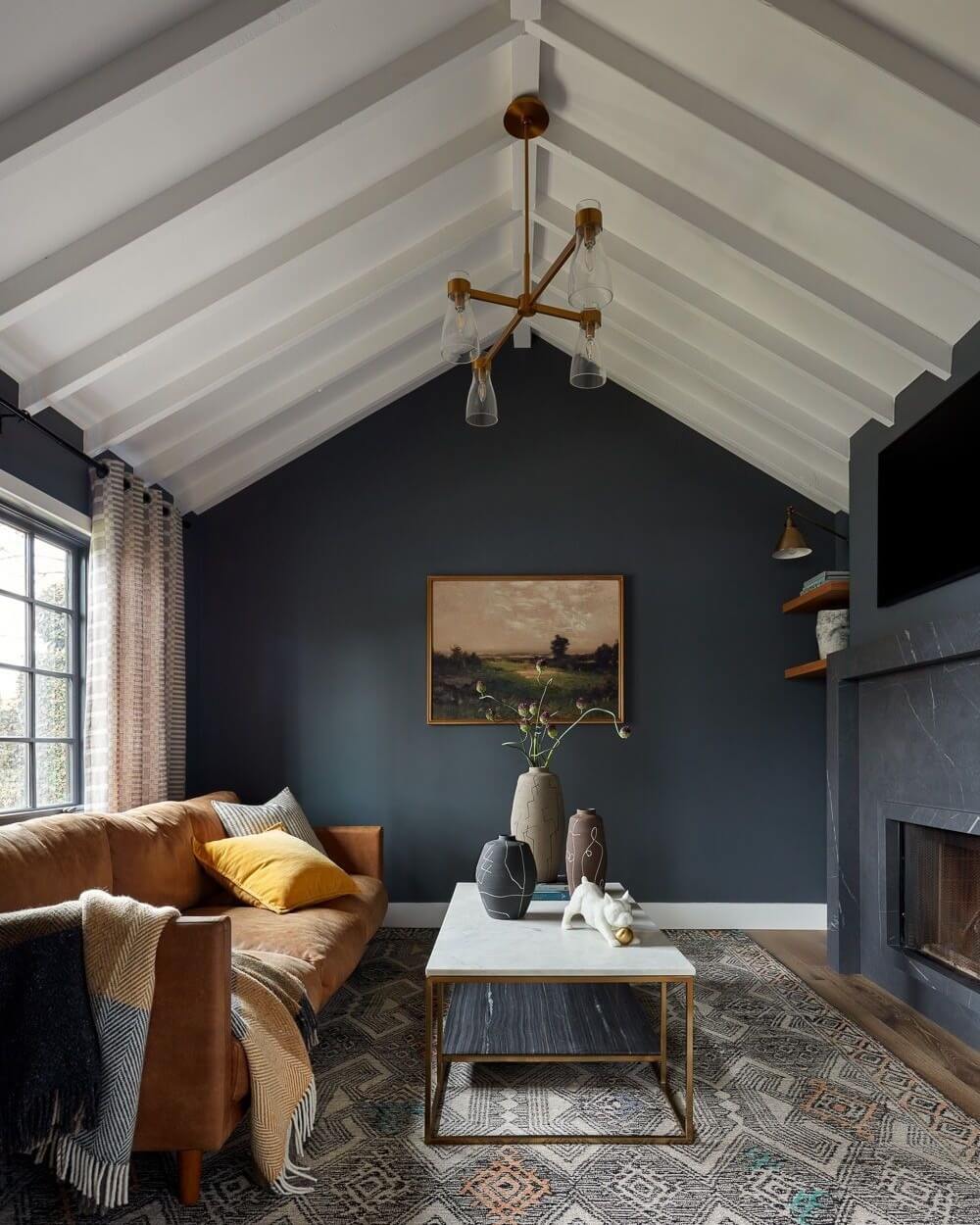
If you want a living room that feels immersive and intimate, start by color-drenching the room—walls, trim, doors, and even the ceiling—in a deep, saturated shade. Charcoal, inky blue, aubergine, and forest green read sophisticated while absorbing just enough light to soften edges. Choose a matte or eggshell finish to minimize glare and let texture take center stage. Painting the ceiling a half-shade darker than the walls adds cocooning depth; painting it the same color creates a seamless envelope. For movement without busyness, consider limewash or mineral paint—subtle tonal shifts keep the room from feeling flat. Carry the hue onto built-ins and radiators for a custom, grounded look. If you’re hesitant, test large swatches at different times of day to see how natural light affects the pigment. The goal is a tonal foundation that supports everything else—art, textiles, and metallic accents—so your moody palette reads rich, not gloomy. Once the envelope is set, the rest of your design choices snap into place.
Layered Lighting That Glows, Not Glares
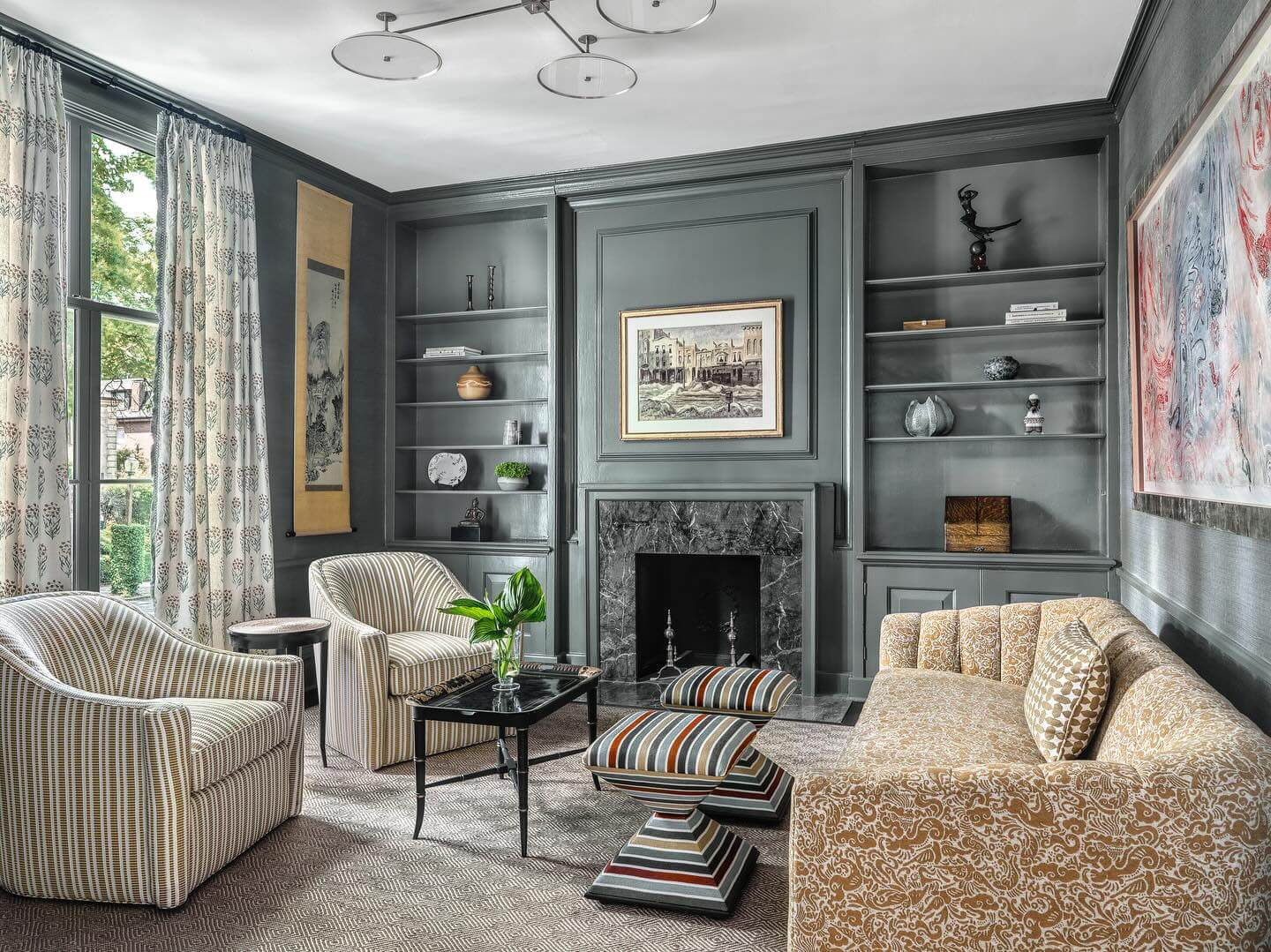
Moody living rooms shine—literally—when light is layered thoughtfully. Trade a single overhead for a mix of sources at different heights: wall sconces for ambient wash, a floor lamp near seating for reading, and a table lamp to warm shadowy corners. Add a dimmable statement fixture or chandelier to anchor the room without blasting brightness. Warm white bulbs (2700–3000K) enhance deep paint colors and make fabrics feel plush; smart dimmers let you shift from day to night seamlessly. Backlighting shelves, tucking LED strips under mantels, and using candles or flameless tapers create a flicker that flatters skin tones and softens hard lines. Aim for at least three layers of light in every functional zone to avoid hotspots. In a moody palette, the glow is the jewelry—small, intentional highlights on art, textured walls, and metallic details build drama while keeping the vibe calm and livable.
Velvet, Leather, and Bouclé: Texture You Can Feel
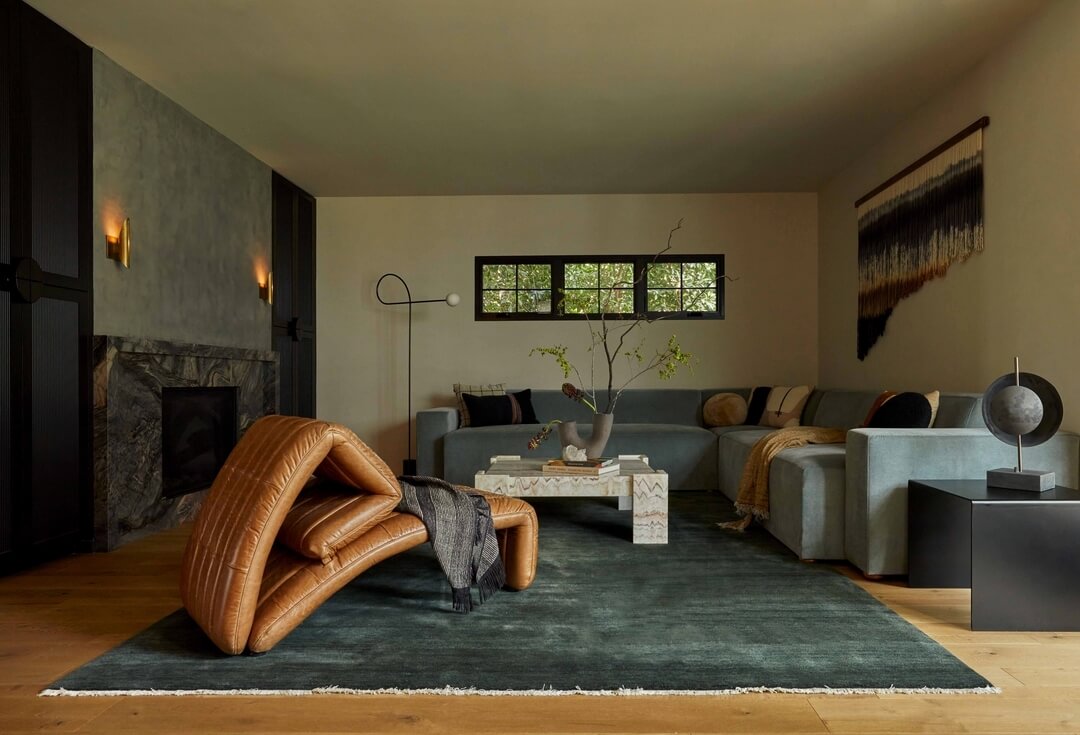
Depth in a moody living room comes from touch as much as tone. Pair a velvet sofa with a stone or wood coffee table for contrast; add a bouclé or nubby wool accent chair to break up the sheen. Leather—especially in tobacco or oxblood—introduces patina that only gets better with time. Mix in a chunky knit throw, ribbed ceramic vases, and a mohair pillow or two for tactile richness. Keep your palette tight—tonal layers of the same hue with varied textures look curated, not cluttered. Choose upholstery that absorbs light (matte weaves, brushed finishes) so your dark walls remain the star. If the room skews very matte, sprinkle in a few reflective moments—smoke glass, lacquered trays, or a polished stone side table—to bounce light and keep the space from feeling heavy. The right fabric mix invites lingering and underscores the cocooning qualities that make moody living rooms irresistible.
Ground the Space with an Oversized Rug and Low Profiles

Scale matters in a dramatic room. Anchor your seating area with an oversized rug that extends at least 8–12 inches beyond furniture edges; it visually expands the room and dampens echo, intensifying the hush that moody spaces do best. Natural fibers in dark, heathered tones conceal wear while adding texture underfoot; patterned vintage rugs in rust, navy, or persimmon can inject a subtle hit of color without breaking the palette. Opt for low-slung seating to elongate sightlines and keep the mood loungey—think deep sofas, wide-arm club chairs, and an upholstered ottoman that doubles as a coffee table. A generous rug unites these shapes, preventing the vignette from floating. If you’re layering rugs, use a flatweave base and a plush top to create dimensional coziness. Finish with floor-length drapery that brushes the rug’s edge to reinforce that grounded, enveloped feeling.
Curate a Tone-on-Tone Gallery Wall

Art reads differently against deep paint—and that’s your advantage. Build a gallery wall that leans into the palette: charcoal frames on navy walls, walnut on deep green, or gilded frames sparingly for a gentle glint. Mix mediums—oil landscapes, abstract prints, graphite sketches—to add rhythm without overpowering the room. Keep mats generous and creamy for contrast, or go matless for a shadowy, collected look. Hang pieces slightly tighter than you would on light walls; the dark backdrop already creates breathing room. Illuminate with picture lights or adjustable sconces to draw out texture and brushwork at night. In a moody living room, art becomes a focal narrative, adding personality and soft drama. If you’re starting from scratch, choose one anchor piece you love and build out with complementary tones, using the wall color as a unifying thread.
Dress the Windows: Weighty Drapes as Architecture
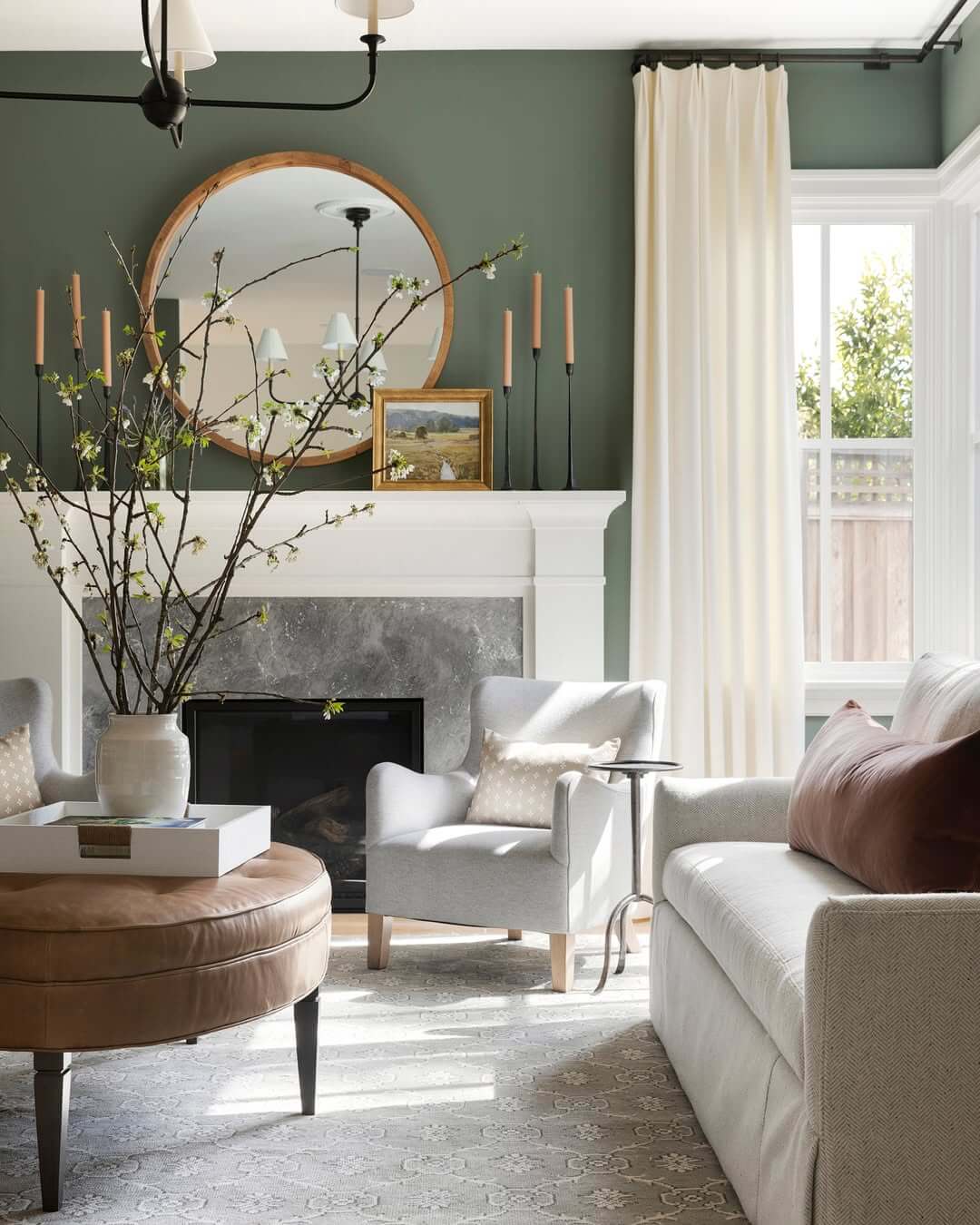
Window treatments are the secret sauce for a cozy, cinematic mood. Full-length, lined drapery in velvet, wool, or heavy linen adds weight and instantly upgrades acoustics. Mount rods high and wide to elongate the wall and keep maximum glass exposed by day; by night, draw the panels to deepen the palette and cocoon the room. If you prefer a tailored look, layer roman shades under drapery for privacy and light control without losing softness. Blackout lining improves color saturation and helps create that late-night lounge vibe any time. Choose hardware in aged brass, matte black, or iron to echo other finishes. Consider matching drapery to wall color for a seamless, enveloping effect, or contrast slightly—think moss drapes against charcoal walls—to introduce gentle movement. Well-dressed windows don’t just block light; they frame it, shaping how your moody living room feels from morning glow to midnight.
Bring Nature In: Moody Greens and Organic Materials
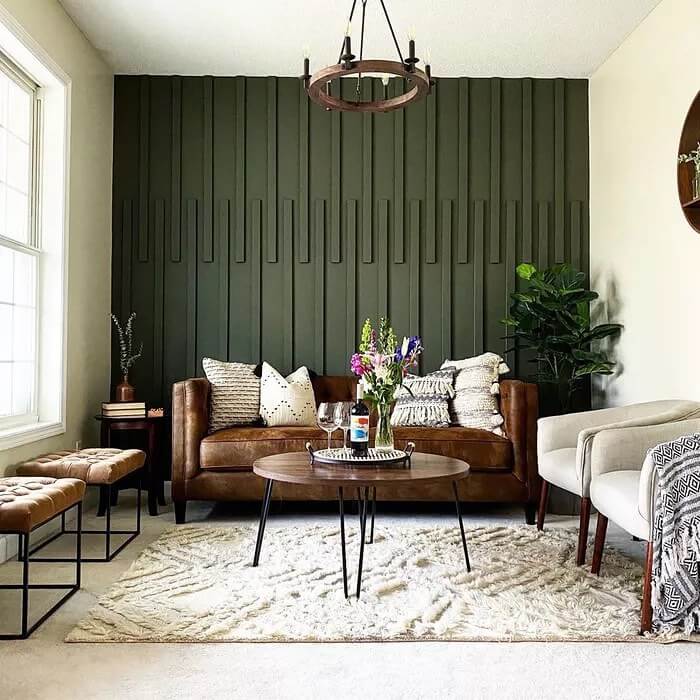
Dark palettes sing when balanced with life. Add plants with sculptural silhouettes—rubber trees, figs, or olive—for soft, matte greenery that breaks up expanses of paint. Terra-cotta, black clay, or stone planters keep the look grounded and textural. Layer organic materials elsewhere: a rough-hewn wood console, travertine or soapstone accents, cane or rattan baskets for warmth without brightness. Even in low-light rooms, hardy species like ZZ plants or pothos thrive and introduce movement. Natural elements keep moody spaces from feeling static and visually connect to any wood finishes in flooring or furniture. If you’re minimal on plants, consider botanical art, herbariums, or dried branches in a large vase to echo nature’s forms. The goal isn’t “jungle,” but a quiet dialogue between shadowy color and organic texture—a timeless combination that feels sophisticated and alive.
Make the Fireplace the Drama Anchor
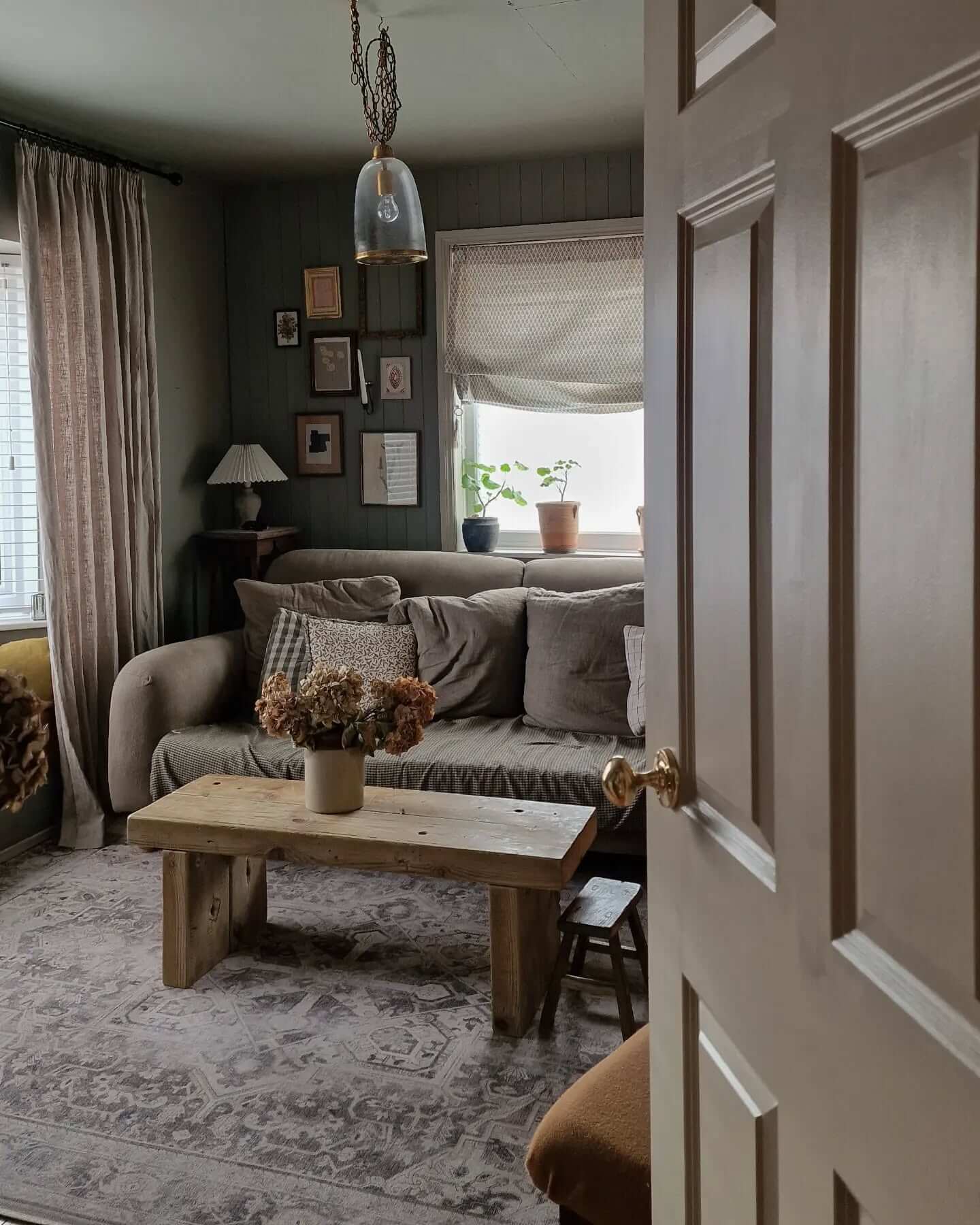
A fireplace—working or not—sets the tone in a moody living room. Paint the surround in a deeper shade than the walls or clad it in dark marble, slate, or plaster for high-impact contrast. Layer a low, substantial mantel arrangement: an oversized mirror to bounce candlelight, stacked art for depth, and a sculptural object to break symmetry. If there’s no fire, fill the hearth with pillar candles, stacked logs, or a matte black candelabra for a warm glow. Flank with sconces for evening ambiance and run a dimmer so the flame remains the brightest element. Keep nearby seating close and plush—a pair of velvet chairs or a chaise—to create an intimate conversation zone. The fireplace becomes a theatrical backdrop that defines the room’s mood, anchoring the palette and guiding your lighting plan.
Subtle Shine: Brass, Bronze, and Smoke Glass

In a sea of matte finishes, a little shine goes a long way. Choose aged brass hardware, oil-rubbed bronze accents, or smoked glass tables to introduce controlled reflectivity. These finishes don’t fight your dark palette; they elevate it, catching lamplight and adding dimensionality after dusk. Repeat metals in small doses—frame edges, lamp bases, cabinet knobs—so the eye reads continuity rather than glitz. Pair with tactile elements like wool rugs and plaster walls to keep the balance sophisticated. Mirrors in antique or foxed finishes are especially effective, amplifying glow without harsh reflections. Think of metallics as the punctuation marks of your moody living room—strategic, restrained, and impactful. They guide the gaze, highlight texture, and ensure the room feels layered rather than flat.
Built-Ins and Shelving that Play with Shadow
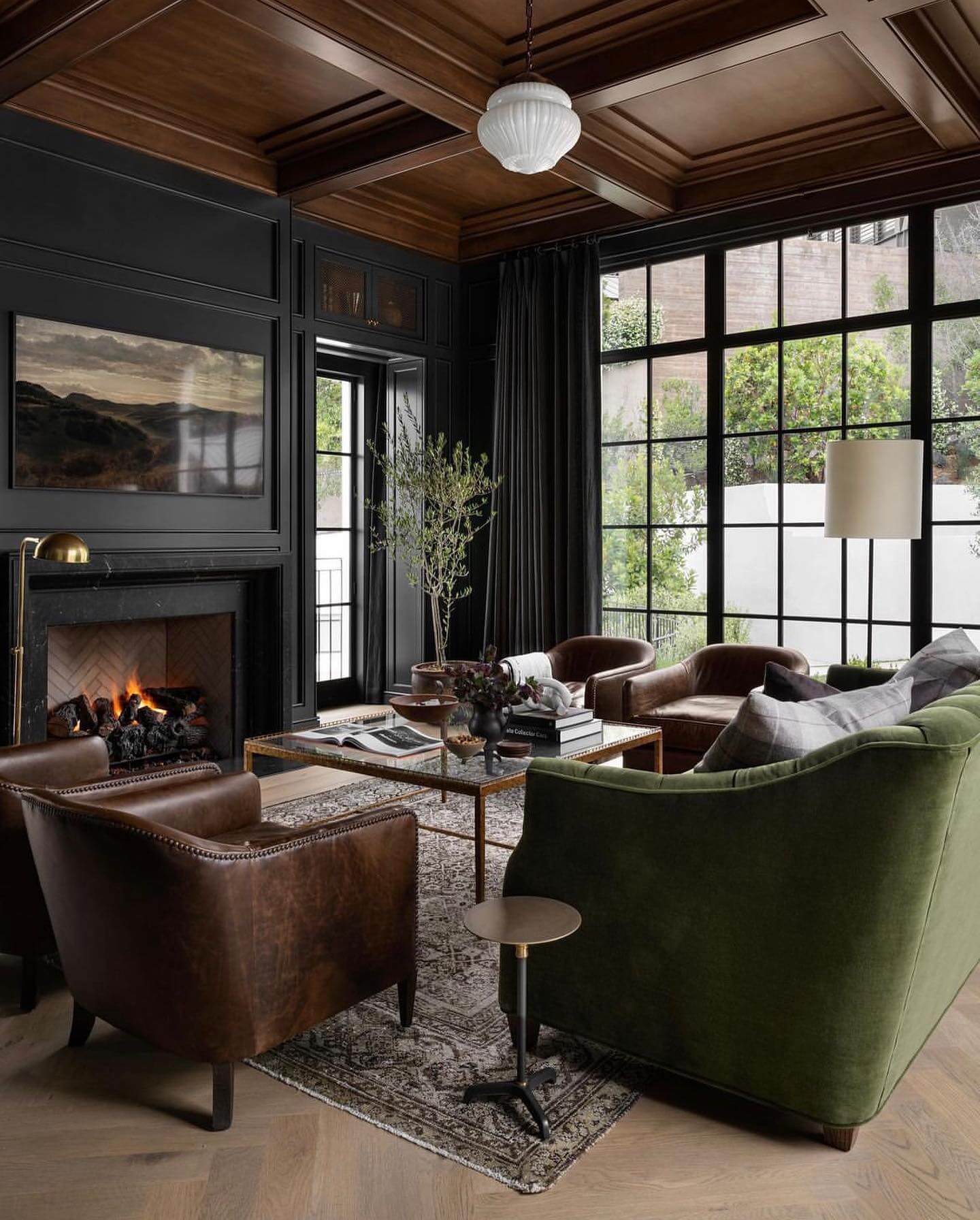
Shelving becomes sculpture in a dark room. Paint built-ins the same color as the walls to let objects float, or go a shade deeper for subtle contrast. Style with intent: stacks of books in tonal jackets, matte ceramics, dark woods, and a few glints of metal. Leave negative space so shadows can do their work; overcrowding kills the effect. Add concealed LED strips or micro picture lights to graze shelves and create depth at night. Closed storage below with glass-front doors above keeps the look refined while hiding clutter. If you don’t have built-ins, freestanding bookcases in a matching finish deliver a similar custom feel. Thoughtful shelf styling tells your story while reinforcing the immersive, cocooning quality that defines moody living rooms—and it’s easily updated with the seasons.
Paint the Fifth Wall: Go Dark on the Ceiling
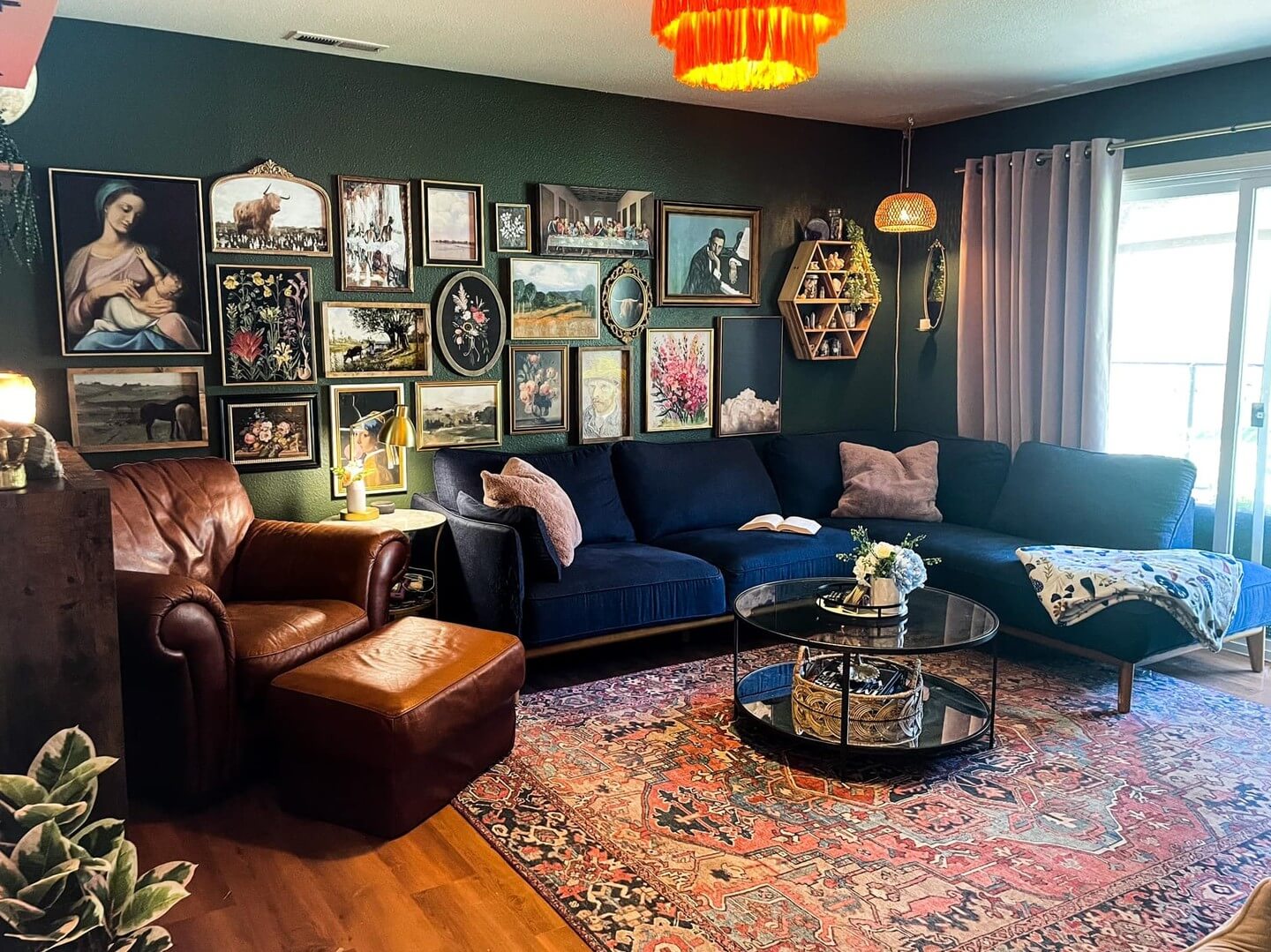
If you’ve already color-drenched your walls, carry that mood overhead. A dark ceiling collapses visual height just enough to make a living room feel intimate and enveloping—like slipping into a velvet-lined cocoon. Choose a low-sheen or matte finish to keep light soft and flattering; satin can work if you want the faintest glow from sconces and floor lamps. For a tailored look, paint the crown and ceiling the same hue so the transition disappears, or go a shade deeper than the walls to create a subtle “lid” that intensifies the atmosphere. The trick is balancing darkness with diffusion: add uplighting behind a sofa, wall washers that graze plaster, and warm bulbs (2700–3000K) to bounce light into that inky plane. If your room has beams or coffered details, lean in—painting them out in one tone emphasizes shape and shadow without visual clutter. A dark ceiling also makes brass, smoked glass, and candlelight read extra luminous. It’s one of the simplest moody living room ideas to transform a bright box into a cinematic retreat—no renovation required.
Limewash and Plaster: Soft Shadow for Moody Walls
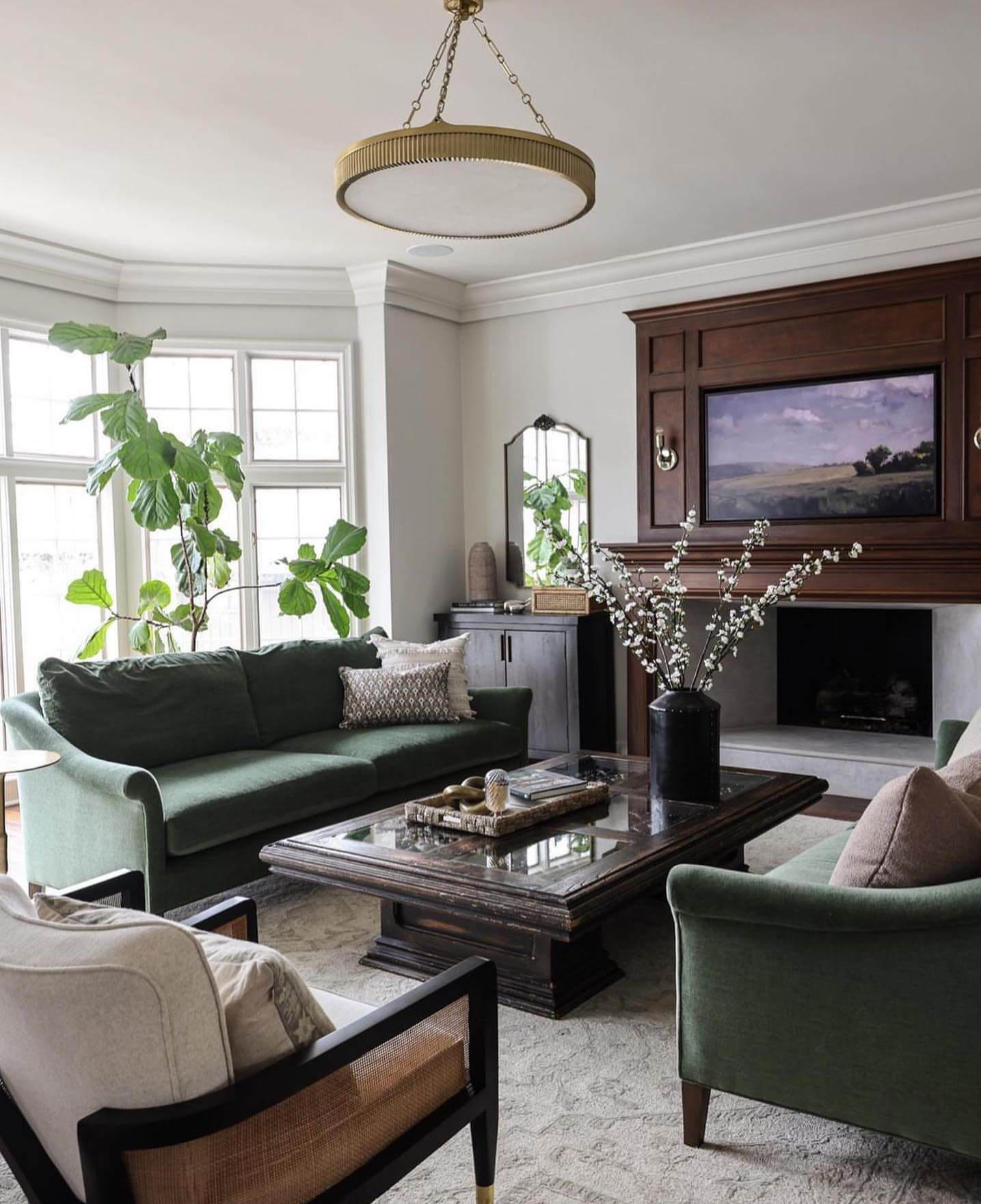
Moody doesn’t have to mean flat. Limewash and plaster add nuanced movement that catches every flicker of ambient light, wrapping the room in soft shadow. These mineral-rich finishes diffuse glare, mute saturated colors, and create depth even in a monochrome palette. Choose an undertone that supports your scheme—charcoal with blue-gray for cool drama, olive-black for earthy warmth, aubergine for jewel-toned richness. Keep art and styling edited so the walls remain the star: a single oversized canvas, a low wood credenza, and a sculptural lamp are enough. Because textured walls are visually active, lean into tactile contrast—velvet seating, a chunky wool rug, and matte black hardware—rather than busy patterns. Practical tip: specify a sealer appropriate for living rooms so the surface spot-cleans without adding sheen. If full limewash isn’t in the cards, a tinted plaster-look paint or fresco technique achieves a similar effect on a budget. Pair with dimmable sconces that skim the surface, and you’ll get a moody living room that feels handmade, layered, and timeless from day to night.
Ebonized Wood and Walnut for Grounded Warmth
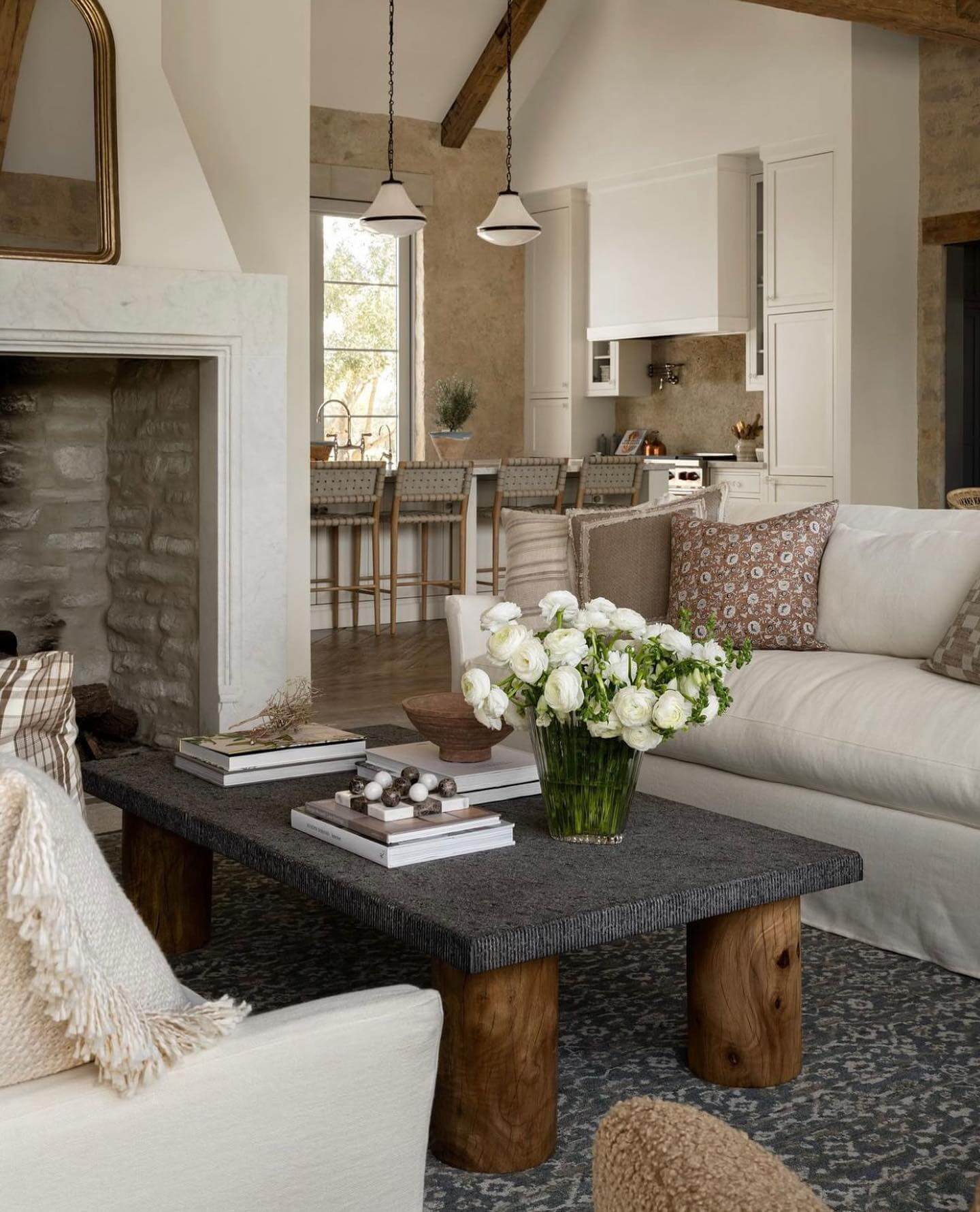
In a dark palette, wood is your warmth engine. Ebonized oak, smoked ash, and rich walnut ground the room and prevent moody from turning cold. Use darker woods for weighty pieces—coffee tables, media consoles, built-ins—and let their grain read through a matte oil or wax finish. Mix with mid-tone walnut on arms, frames, or accent chairs to keep the composition from feeling heavy; the shift in value adds depth without introducing new colors. Stone loves this combo: veined marble, soapstone, or travertine brings a cool counterpoint that highlights wood’s warmth. Repeat wood tones three times in the space (shelves, frame, table) for cohesion, and keep hardware quiet—blackened steel or patinated bronze—so the wood remains the hero. On floors, a dark stain narrows the focus and allows rugs to float like islands of texture. This material strategy dovetails with other moody living room ideas: it enhances brass glints, softens black walls, and plays beautifully with olive, oxblood, and inky blue textiles. The result is a cocoon that feels sophisticated, not somber.
Jewel-Tone Sofa as the Room’s Anchor
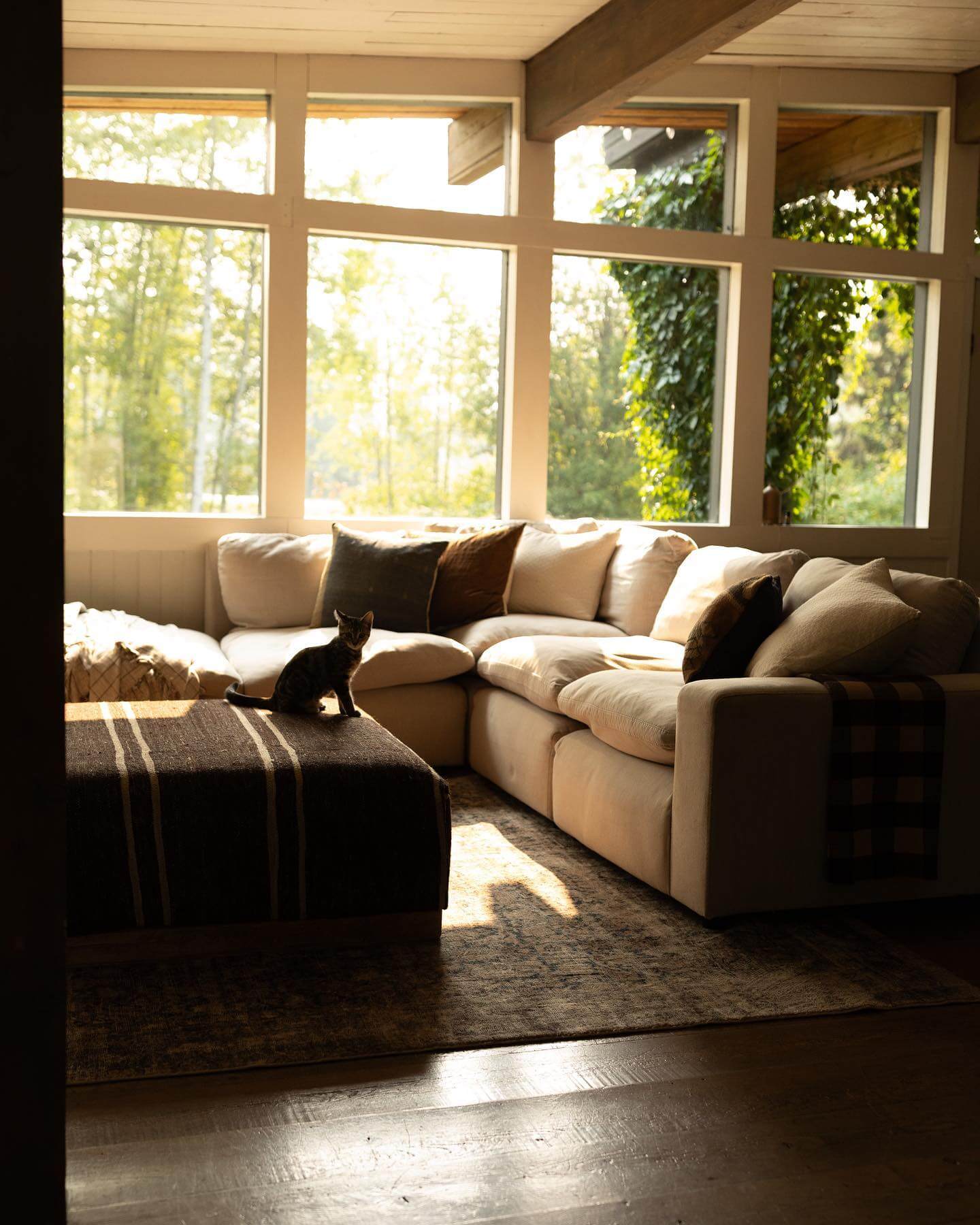
When you’re building a moody palette, a saturated sofa can do the heavy lifting. Think aubergine velvet, deep teal, merlot, or bottle green—tones that read luxurious under low light and invite lingering. Let the sofa be the color statement and keep the envelope tonal: darker walls, tonal drapery, and an oversized rug in a desaturated shade create a quiet stage. Echo the sofa’s hue in small, strategic ways—book spines, a ceramic bowl, or a single cushion—to weave the color through the room without clutter. Balance all that plushness with structure: a blackened steel side table, a walnut arm detail, or a limestone plinth for contrast. Lighting matters here; warm, layered sources will caress color rather than wash it out. If you already have a neutral sofa, slipcovers in a jewel tone can shift the mood seasonally. This anchor approach simplifies decisions and amplifies impact—one confident color choice turns a standard sitting area into a richly composed, moody living room you’ll never want to leave.
Pattern, But Make It Moody
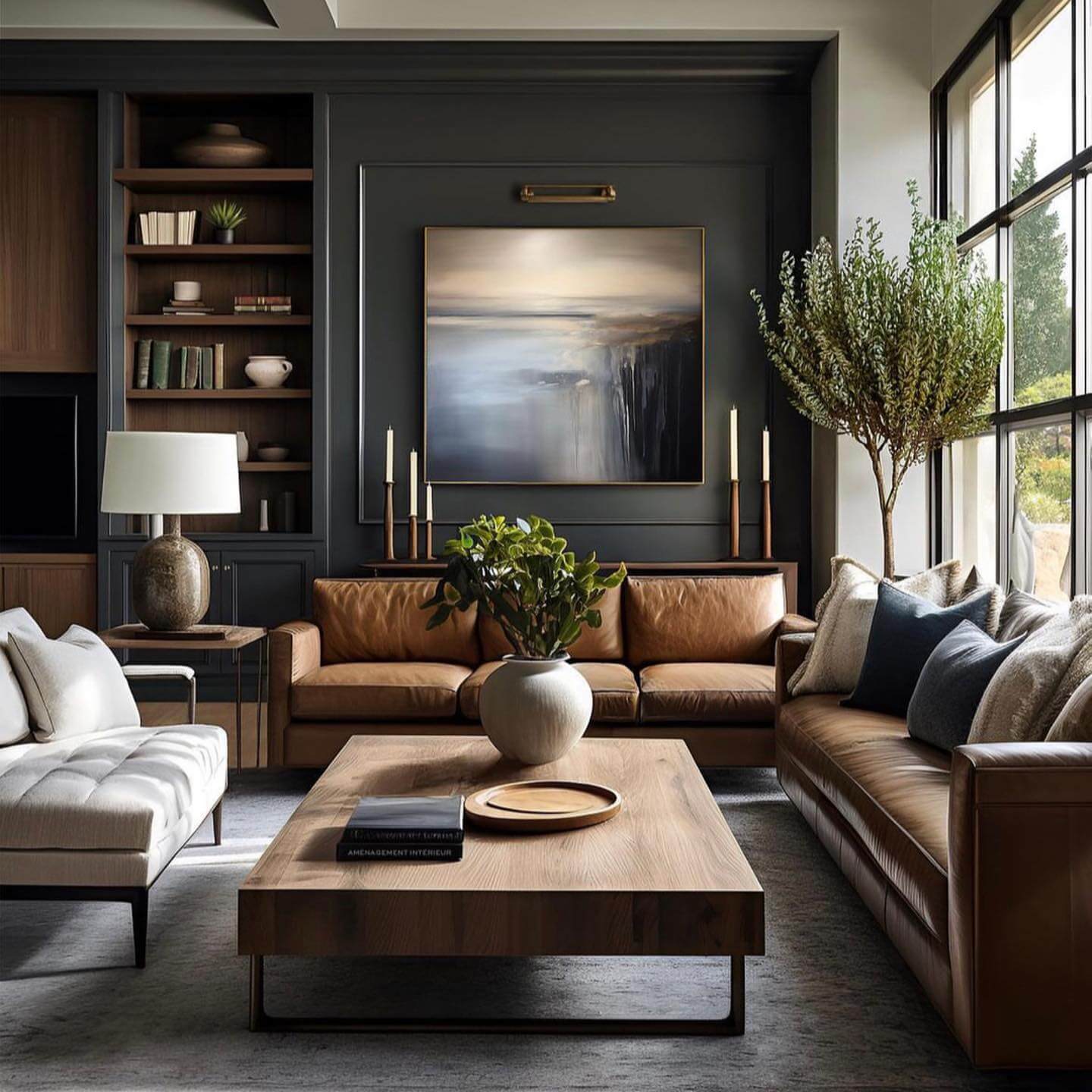
Pattern in a moody living room should whisper, not shout. Swap high-contrast prints for dark florals, shadowy botanicals, charcoal plaids, and tone-on-tone herringbone. The secret is scale and saturation: pair one large, soft-focus pattern (curtains or a rug) with smaller geometrics (pillows or throws) in the same color family. Keep backgrounds in deep neutrals—ink, espresso, black-brown—so patterns melt into the palette and read as texture from across the room. If you’re mixing multiple prints, vary the texture too: bouclé with velvet, felted wool with linen, leather with a mohair check. This layered, low-contrast approach adds visual interest without breaking the cocoon effect you created with color-drenched walls and heavy drapery. Patterns also help bridge eras—vintage Persian with modern stripe, classic windowpane with contemporary abstract—so the space feels collected, not themed. Finish with a solid, oversized throw to calm the composition. The outcome is depth and personality that reward a second look, especially under candlelight and dimmed sconces.
Hide the TV, Keep the Mood

Screens are the fastest way to break a moody spell. Design your living room so media disappears when not in use. The simplest trick is paint: mount the TV on a near-black wall so it visually recedes. For a cleaner read, recess it into built-ins with pocket doors, or use fabric-fronted cabinetry that hides speakers and components while keeping sound clear. A frame-style display set to art mode can double as wall decor—choose imagery with deep tones to harmonize with your palette. If layout allows, consider a short-throw projector and ceiling-mounted screen that drops only at showtime. Cable management is non-negotiable; route everything through a single chase and corral remotes in a lidded box. Then layer ambient light around, not behind, the screen—sconces on dimmers, low table lamps—to avoid glare and preserve contrast. By concealing tech and curating light, you maintain the drama you worked so hard to build while still enjoying movie night in your cocooned, sophisticated space.
Monochrome Vignettes: Styled Surfaces with Restraint
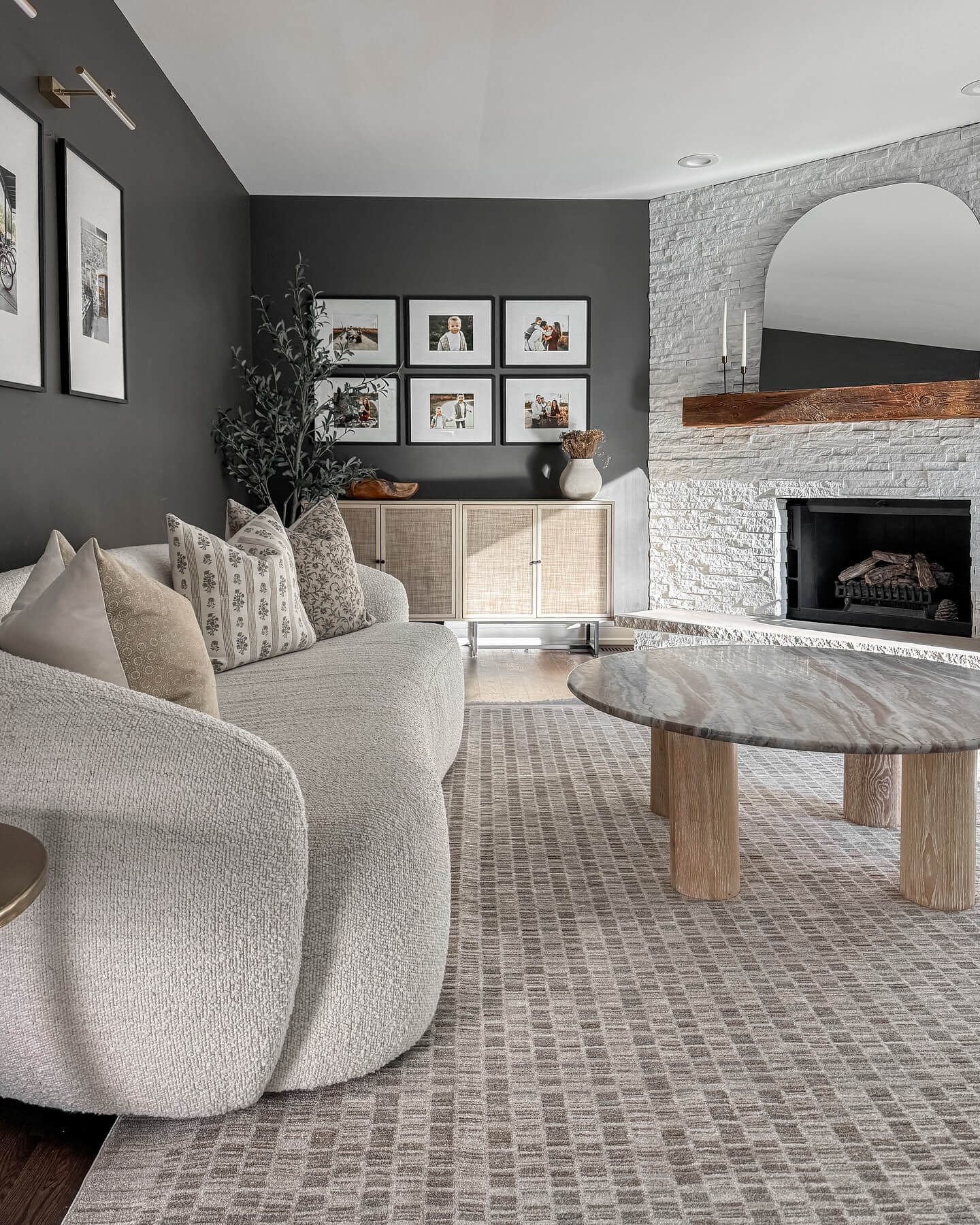
Moody rooms thrive on edited styling. Build monochrome vignettes on coffee tables, consoles, and mantels using objects in the same tonal family—charcoal books, a blackened bowl, a smoked glass cylinder, a dark-stained tray. This tight palette calms the eye and lets form and texture do the talking. Aim for three heights (low, mid, tall) and three textures (matte, soft, faintly reflective) to keep arrangements dimensional without adding visual noise. Organic elements—burnt branches, seed pods, a single dramatic leaf—bring life without bright color. Negative space is your friend; resist the urge to fill every inch so shadows can pool and objects can breathe. Swap in seasonal layers like a heavy knit throw or a stack of rich-toned magazines to refresh without breaking the scheme. This restrained approach complements other moody living room ideas—dark ceilings, plaster walls, heavy drapes—by reinforcing the cocoon with thoughtful, quiet moments that feel collected and intentional.
Curves and Soft Edges to Deepen the Cocoon
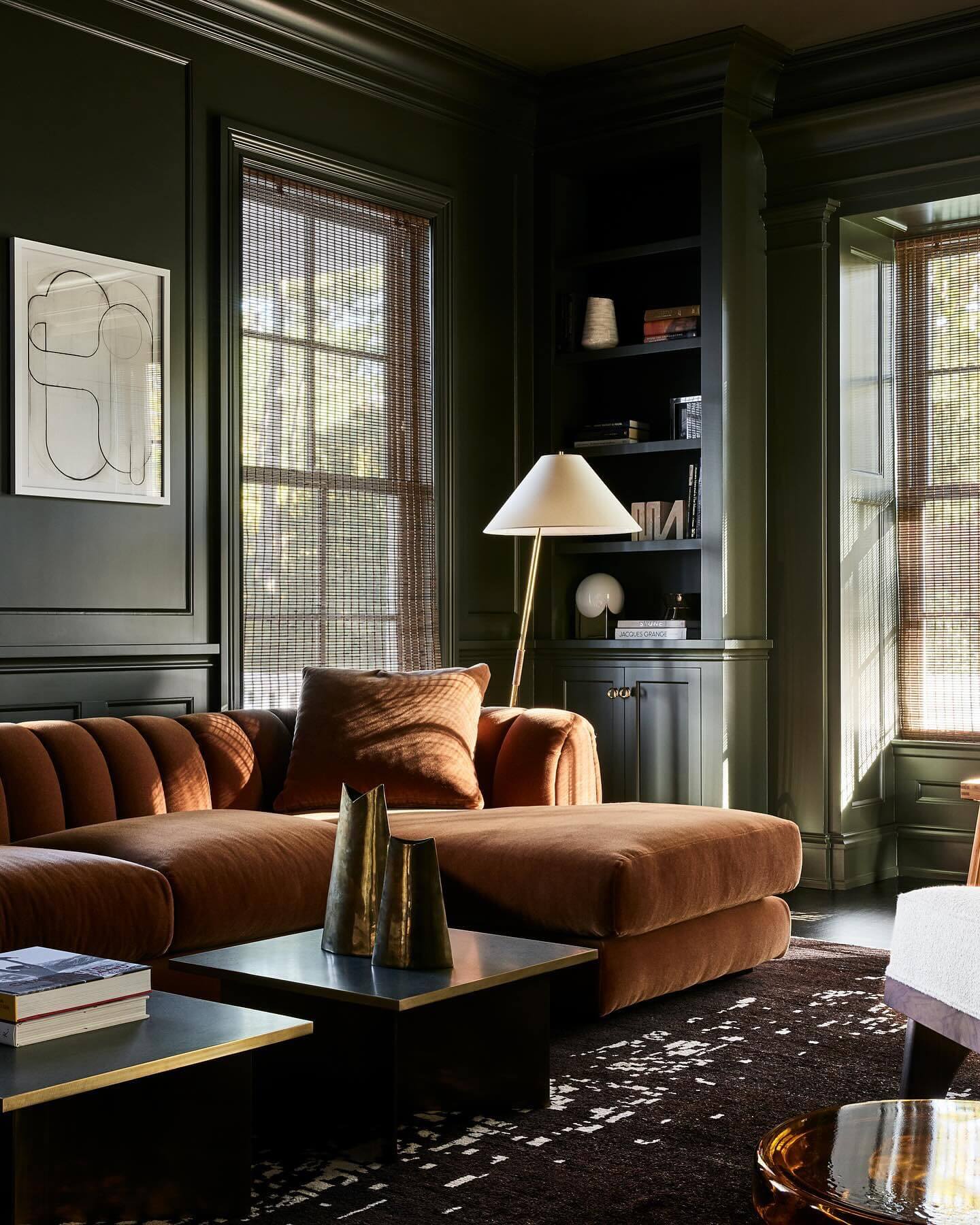
Curved lines soften shadows and make a moody living room feel even more inviting. Trade sharp corners for rounded silhouettes: a crescent sofa, a barrel chair, a drum side table, an elliptical coffee table. These shapes encourage conversation, hug the body, and visually smooth the room’s flow—especially important when walls and ceilings are dark. Curves pair beautifully with plush textures (bouclé, mohair, chenille) and create a gentle contrast with linear elements like bookshelves or paneling. If you’re working with a small space, a curved sofa against a color-drenched wall can read custom and architectural. Ground the arrangement with an oversized rug that echoes the shapes—think oval or a soft-edged rectangle—and layer in mushroom lamps or globe sconces for diffused, flattering light. The result is a space that feels cocooned yet modern, dramatic yet soft, proving that form can be as mood-setting as color.
Scent, Sound, and After-Dark Rituals

Mood is multisensory. After you’ve dialed in paint, lighting, and texture, finish the experience with scent and sound. Choose a signature fragrance—smoked vanilla, black tea, vetiver, cedar—that complements dark woods and plush textiles. Use candles in clusters for visible flame and diffuse glow, or a discreet diffuser for an even, lingering scent. Calibrate your soundscape too: a small amp and warm bookshelf speakers, thick drapes that double as acoustic treatment, and a playlist that leans downtempo after sunset. Program lighting scenes—pre-dinner, movie, nightcap—so the room shifts with a tap, dimming overheads and favoring low lamps and sconces. Keep a tray ready with matches, a wick trimmer, coasters, and a soft throw to make the ritual effortless. These finishing touches don’t just decorate; they deepen the cocooning quality of your moody living room and make every evening feel intentional, restorative, and just a little bit cinematic.
Layered Lighting, Textiles, and Styling to Elevate Moody Living Room Ideas
Lighting is the throttle of a moody living room, shaping contrast and intimacy. Build layers: ambient, task, and accent, each on dimmers to fine-tune the vibe from dusk to late night. Favor warm 2200–2700K bulbs to preserve richness in dark paints and fabrics. Opaque or pleated shades create directional pools of light that dramatize texture without flattening walls. Use wall washers or art lights sparingly to spotlight focal pieces, letting surrounding areas recede into softness. Hide LED strips in shelves or behind crown to graze surfaces; indirect glow reads luxurious and avoids glare.
- Place a dimmable floor uplight behind a plant or curtain; the vertical glow exaggerates height, adds mystery, and keeps corners from looking dead without flooding the room.
- Choose lamps with linen or pleated shades; their softly opaque walls diffuse edges, casting gentle scallops of light that flatter limewash, grasscloth, and velvet while maintaining the mood.
- Cluster candles in hurricanes on a mantle or low tray; safe, flickering points create layered brightness, charming reflections on brass, and a cinematic, evening-ready atmosphere.
- Hang interlined, floor-kissing curtains in charcoal or espresso; heavier fabrics block glare, deepen color, and allow precise light control without sacrificing softness or acoustic comfort.
- Layer rugs: start with chunky jute, add a dense wool or mohair rug on top; tonal patterns ground furniture groupings and add underfoot depth, warmth, and shadow.
- Mix tactile upholstery—bouclé, mohair, distressed leather, and heavy linen; matte textures absorb light beautifully while one glossy accent, like a lacquered tray, adds sparkling counterpoint.
- Style vignettes with large-scale art, black or walnut frames, and negative space; fewer, bigger gestures feel intentional and dramatic, avoiding clutter that undermines the moody atmosphere.
- Introduce living green with rubber plants, zz, or philodendron; glossy leaves reflect pinpoint highlights, soften corners, and contrast beautifully with charcoal walls and dark stone surfaces.
Group seating tightly around a substantial, low table to concentrate light and conversation. Choose low-slung silhouettes with generous arms; dark rooms thrive on grounded, horizontal lines that feel restful. Balance soft upholstery with one or two hard, cool surfaces—honed marble, soapstone, or patinated metal—to keep the palette from reading too plush. Opt for closed storage and concealed cord management, allowing shadows to read uninterrupted across floors and walls. Echo metal finishes across the room—aged brass with blackened steel—so highlights feel cohesive, not scattered. Finish with layered scent and soundtrack; woodsy candles and warm jazz reinforce the immersive mood your design already expresses.
Fast Answers for Crafting a Cinematic Living Room Mood
What paint finish works best for moody living rooms?
Matte or eggshell on walls reduces glare and hides imperfections, deepening color. Use satin or semi-gloss only on trim and doors to add subtle definition without stealing light.
How do I keep a dark room from feeling small?
Color-drench walls, trim, doors, and radiators so edges disappear, making boundaries feel farther away. Use oversized art, large rugs, and fewer pieces to reduce visual noise and expand perceived scale.
Which bulb temperature should I use to maintain a moody vibe?
Warm 2200–2700K LEDs preserve richness in dark paints and fabrics while flattering skin tones. Put every layer on dimmers to shift from conversational glow to cinematic evening ambiance effortlessly.
Can moody style work in small rentals or apartments?
Absolutely—try removable peel-and-stick paintable panels, charcoal curtains, and dramatic lighting to create depth without renovation. Add portable uplights, large rugs, and art to transform scale while protecting walls and floors.
Final Verdict: Cozy Drama Comes from Contrast, Layering, and Restraint
A moody living room succeeds when every element supports the atmosphere: a color-drenched envelope (yes, include the ceiling), lighting that glows in layers, and tactile textures that beg to be touched. Pair matte walls with subtle shine—brass, bronze, smoked glass—then ground it all with ebonized or walnut woods, an oversized rug, and low-profile seating. Weighty drapes become soft architecture, tone-on-tone art deepens the story, and built-ins or a fireplace anchor the drama while tech remains discreet to keep the mood intact.
Start with the fundamentals—paint and light—then build deliberately. Test deep hues across different exposures, add dimmers and warm bulbs, and choose one hero piece like a jewel-tone sofa to set the pace. Layer velvet, leather, and bouclé; bring in moody greens and stone; style restrained monochrome vignettes; and let scent and sound complete the after-dark ritual. With edited palettes, thoughtful contrast, and a few well-placed statements, you’ll craft a cocooning, sophisticated space that feels intentional, timeless, and irresistibly livable.
