
Single Vanity Bathroom Ideas That Maximize Style

A single-sink vanity can be the small bathroom’s secret superpower—streamlining the footprint while dialing up function and design. Whether you’re renovating a tight ensuite or refreshing a powder room, the right vanity choice can make the space feel bigger, brighter, and more luxurious.
From floating silhouettes that free up floor area to slim profiles with hidden storage, there are countless ways to optimize a single vanity. Smart mirror pairings, layered lighting, and thoughtful hardware can instantly elevate even budget-friendly bases.
Ahead, explore space-saving layouts, material combos, and finishing touches that deliver spa-level polish without the bulk. These ideas balance practicality and personality so your bathroom feels intentional, clutter-free, and effortlessly stylish.
Space-Savvy Single Vanity Bathroom Ideas for Small Bathrooms
Designing a compact bath around a single vanity requires disciplined planning and scaled components. Choose a floating cabinet between 24 and 36 inches wide with 18 to 21 inches of depth. Wall-mount the faucet to reclaim counter space and keep splashes contained in a shallower basin. Recess a mirrored medicine cabinet and build niche shelves to relieve pressure on the countertop. Switch to a pocket or barn door to recover clearance otherwise lost to swing arcs. Finish with light-reflective materials that visually stretch the footprint without sacrificing function.
Smart Storage Upgrades
- Recessed Medicine Cabinets: Set cabinets within wall framing to recover counter space, add mirrored interiors, and include integrated outlets for toothbrushes and shavers, keeping cords concealed and surfaces clear.
- Drawer Organizers: Use tiered trays, dividers, and heat-resistant bins for styling tools, separating everyday essentials from backups, minimizing rummaging, and preventing cords from tangling in deep drawers.
- Under-sink Pull-outs: Install U-shaped pull-outs around plumbing to cradle cleaners, spare tissue, and microfiber cloths, making every inch accessible without removing baskets from cramped cabinetry.
Materials, Finishes, and Fixtures
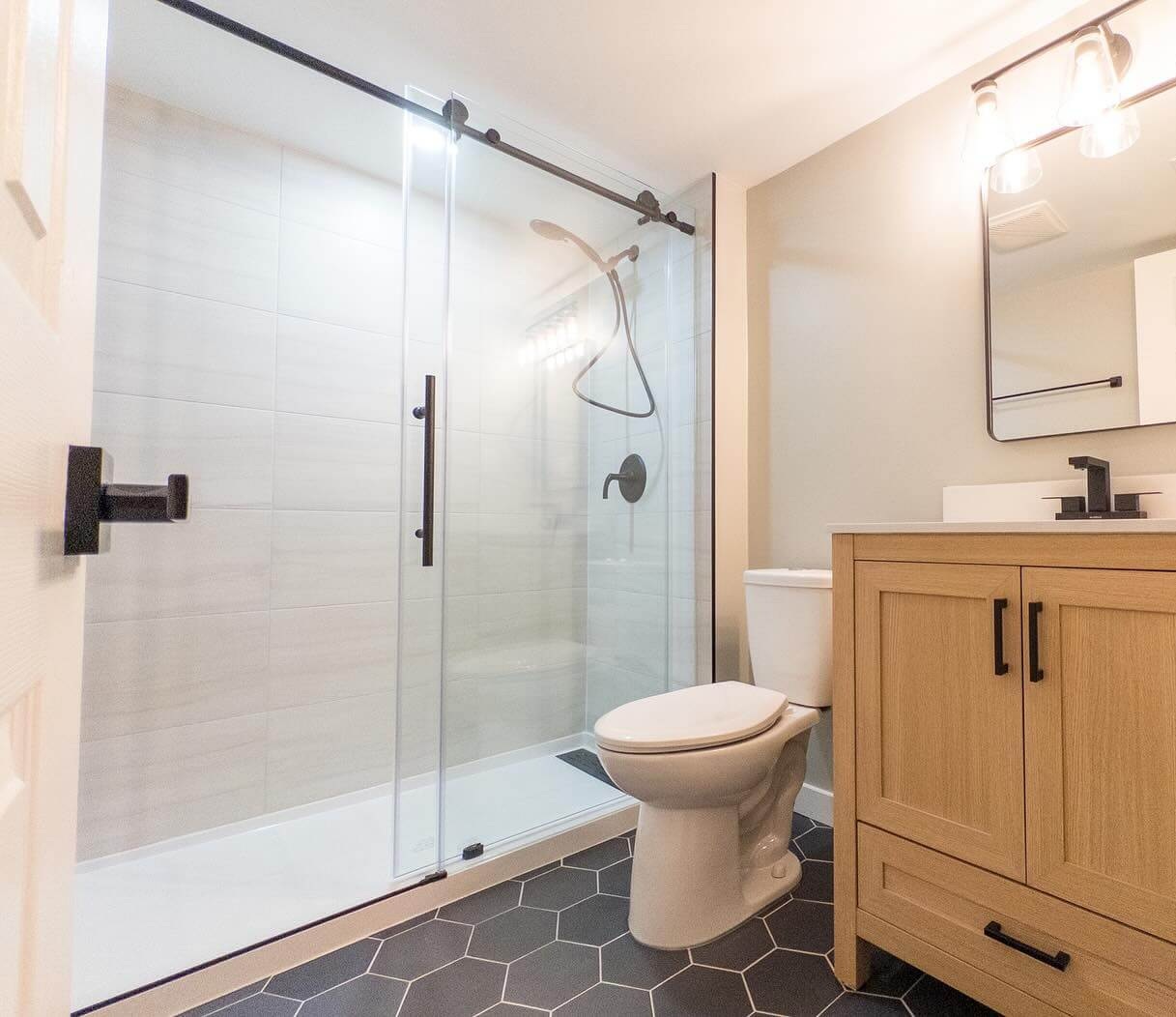
- Light-Toned Vanities: Opt for matte white, light oak, or maple finishes that bounce light, hide water spots, and pair naturally with warm brass or polished nickel for inviting, timeless contrast.
- Large-Format Tile: Use 12×24 or larger floor and wall tiles with tight grout joints to elongate sightlines, reduce visual clutter, and simplify maintenance in compact, high-traffic baths.
- Slim Profile Faucets and Sconces: Choose narrow spouts, low-projection escutcheons, and shallow sconces with frosted diffusers to preserve counter depth, reduce glare, and flatter skin tones near makeup and shaving zones.
Lighting multiplies perceived space, so flank the mirror with sconces at eye level and supplement with a dimmable overhead fixture. Aim for 2700–3000K color temperature and 90+ CRI to render skin tones accurately. Choose large-format tile and minimal grout to quiet visual noise, then continue flooring under the vanity for an uninterrupted plane. Keep sightlines open with a frameless glass panel instead of a full-height shower curtain or wall. Add a toe-kick nightlight and a backlit mirror to guide late-night trips without harsh glare. Coordinate hardware profiles and faucet silhouettes to maintain a cohesive, streamlined look.
Go Floating to Steal Back Floor Space
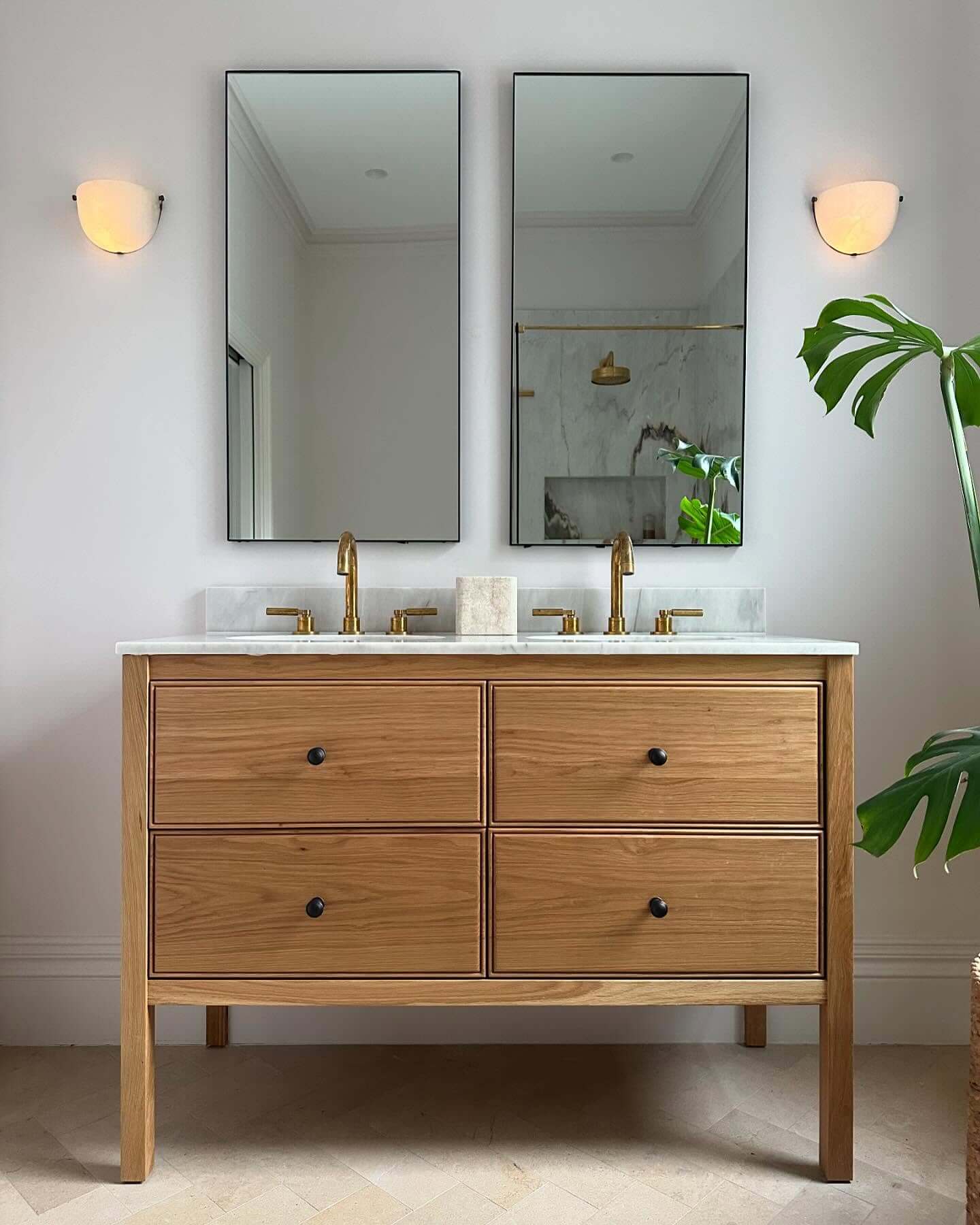
For a small bath or powder room, a floating single vanity instantly frees up visual and physical square footage. By lifting cabinetry off the floor, the eye reads more tile and more negative space—two tricks that make tight rooms feel bigger. Choose a wall-hung vanity with a slim profile, then run the floor tile uninterrupted beneath it to elongate the sightline. Add a low-glow LED strip to the underside for a hotel-style nightlight that looks luxe and helps with midnight navigation. Pairing a floating vanity with a wall-mounted faucet keeps the countertop clean and allows for a shallower cabinet, which matters in narrow rooms or tight hallways. Round out the setup with a large mirror to bounce light and a pair of vertical sconces for even, shadow-free illumination. If you’re worried about storage, opt for full-extension drawers with organizers or tuck a pair of lidded baskets below for towels and paper goods. The result: a modern, easy-to-clean single vanity that maximizes space without sacrificing style.
Slim-Depth Vanities + Wall-Mount Faucets for Narrow Baths
When every inch counts, a slim-depth single vanity (think 16–18 inches deep) can be a game changer. The trick is to coordinate plumbing early so you can use a wall-mounted faucet and an integrated sink/countertop, minimizing protrusions and keeping the walkway clear. A coved or 4-inch backsplash protects the wall without visual clutter, while a short projection spout prevents splashback. Consider a vanity with a tall, narrow drawer stack to capitalize on vertical storage; dividers corral grooming essentials so nothing slides to the back. For durability, choose quartz or porcelain for the top—it mimics marble’s veining but resists stains and etching, making it perfect for busy family baths and rental-friendly upgrades. A frameless, recessed medicine cabinet above the sink adds hidden capacity without increasing depth, and its mirrored interior keeps items visible. Keep the palette light and reflective—soft whites, pale greiges, or watery blues—to broaden the feel of the room while your single vanity quietly does the heavy lifting.
Make the Mirror Work: Recessed Medicine Cabinets with Task Lighting
In a single-vanity bathroom, the mirror can double as your smartest storage. A recessed medicine cabinet delivers shelves for daily essentials while sitting flush with the wall for a clean, custom look. Choose a cabinet as wide as the vanity’s sink base or go taller to exploit vertical real estate. Inside, look for adjustable shelves and an interior outlet for charging toothbrushes or trimmers—goodbye countertop clutter. To avoid unflattering shadows, flank the cabinet with vertical sconces at face level rather than relying on a single overhead fixture. Soft, warm bulbs (2700–3000K) with a high CRI (90+) render skin tones accurately for makeup and grooming. Frame finishes can match or contrast your faucet and hardware: warm brass warms up white oak, while polished nickel plays well with cool grays. With thoughtful lighting and a storage-savvy mirror, a compact single vanity can feel bigger, brighter, and more organized—no bulky towers or extra cabinetry required.
Drawer-First Storage Beats Doors Every Time
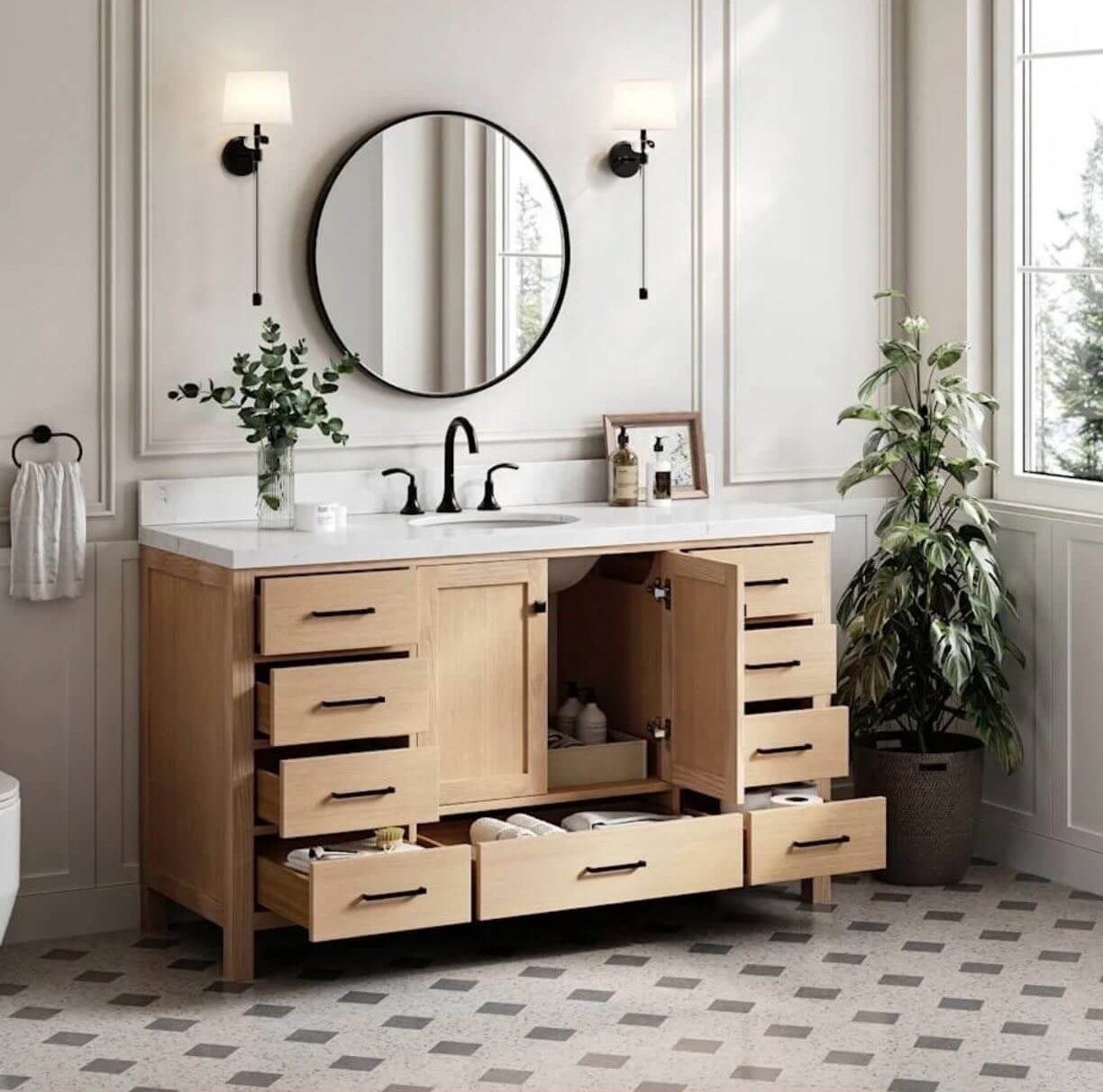
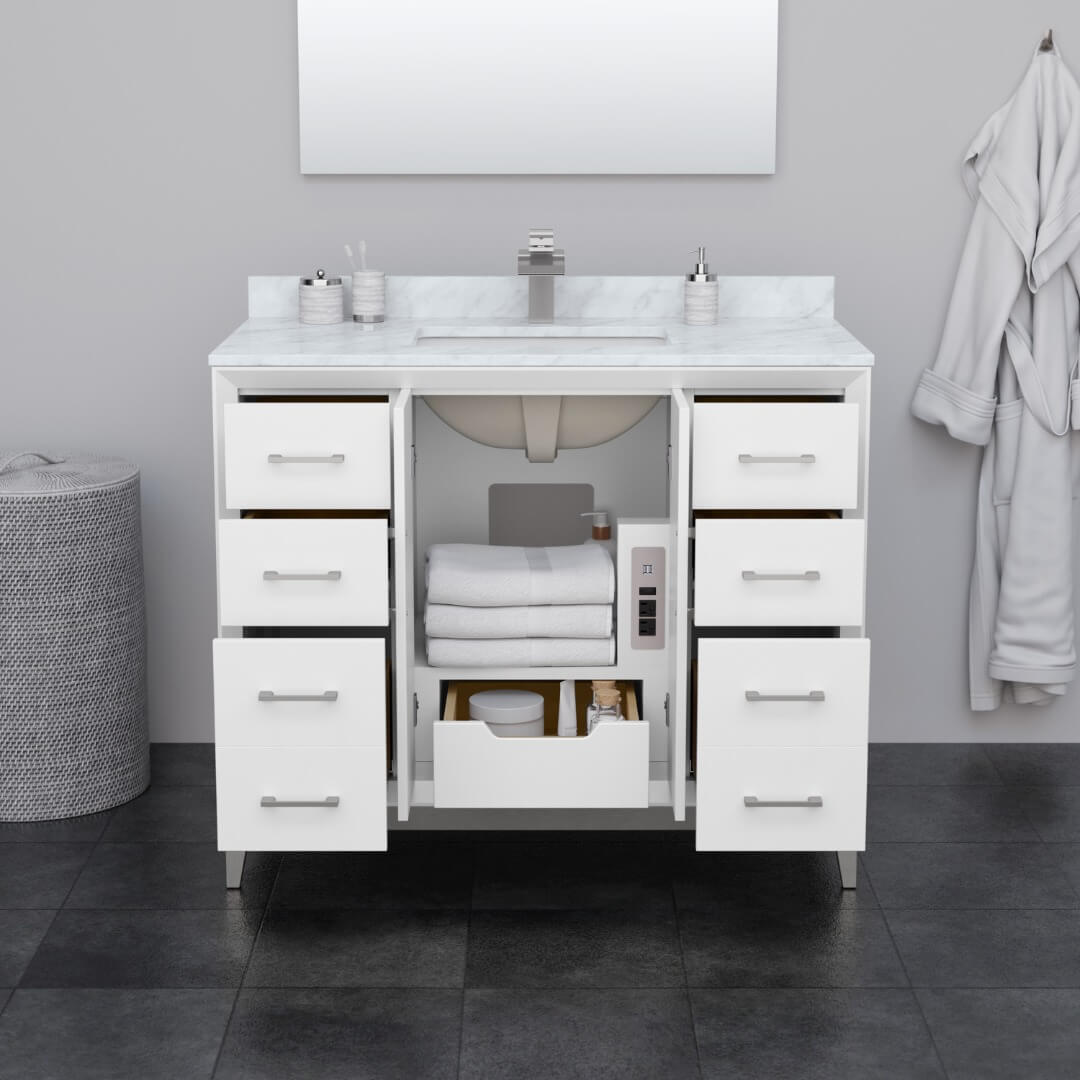
For everyday usability in a single vanity, drawers outperform doors. Full-extension drawers bring contents to you—no crouching or rummaging. Start with a U-shaped top drawer that wraps the plumbing, preserving valuable shallow storage for cosmetics and small tools. Below, deep drawers with adjustable dividers keep bottles upright and hair tools tangle-free; add a heat-proof bin for hot styling wands. Consider a toe-kick drawer for spare paper goods or guest kits, and a slim pull-out on the side for vertical tray storage (think brushes and flat irons). Soft-close glides protect finishes and reduce noise, while lined compartments prevent sliding. Inside the cabinet, a simple tilt-out tray at the sink hides sponges or floss picks. The goal is a place for everything—so the countertop stays clear and the room reads serene. With the right internal organization, even a petite single vanity rivals larger vanities for capacity, all while maintaining a streamlined, spa-calm look.
Light Wood + White Tops for Airy, Spa-Like Warmth
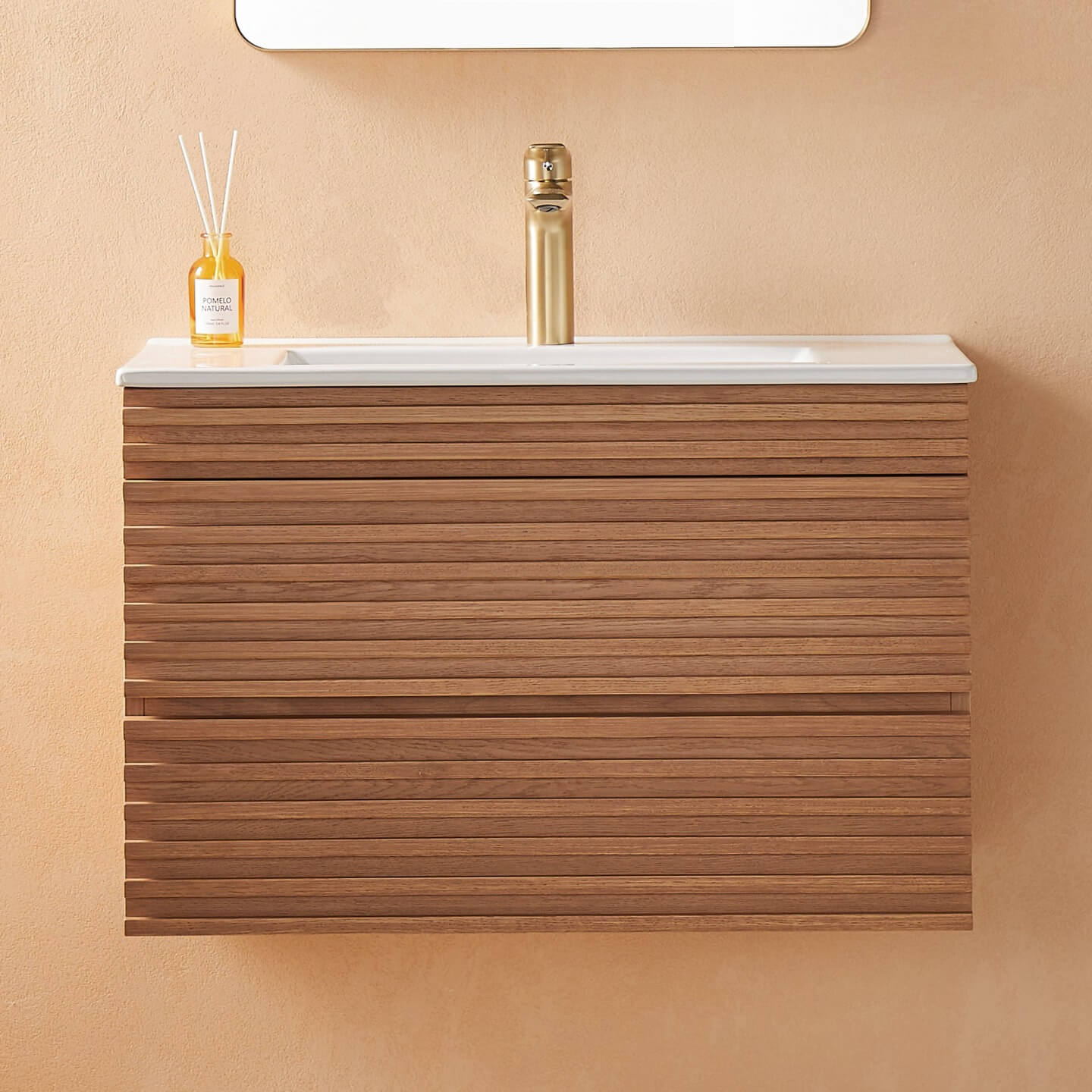
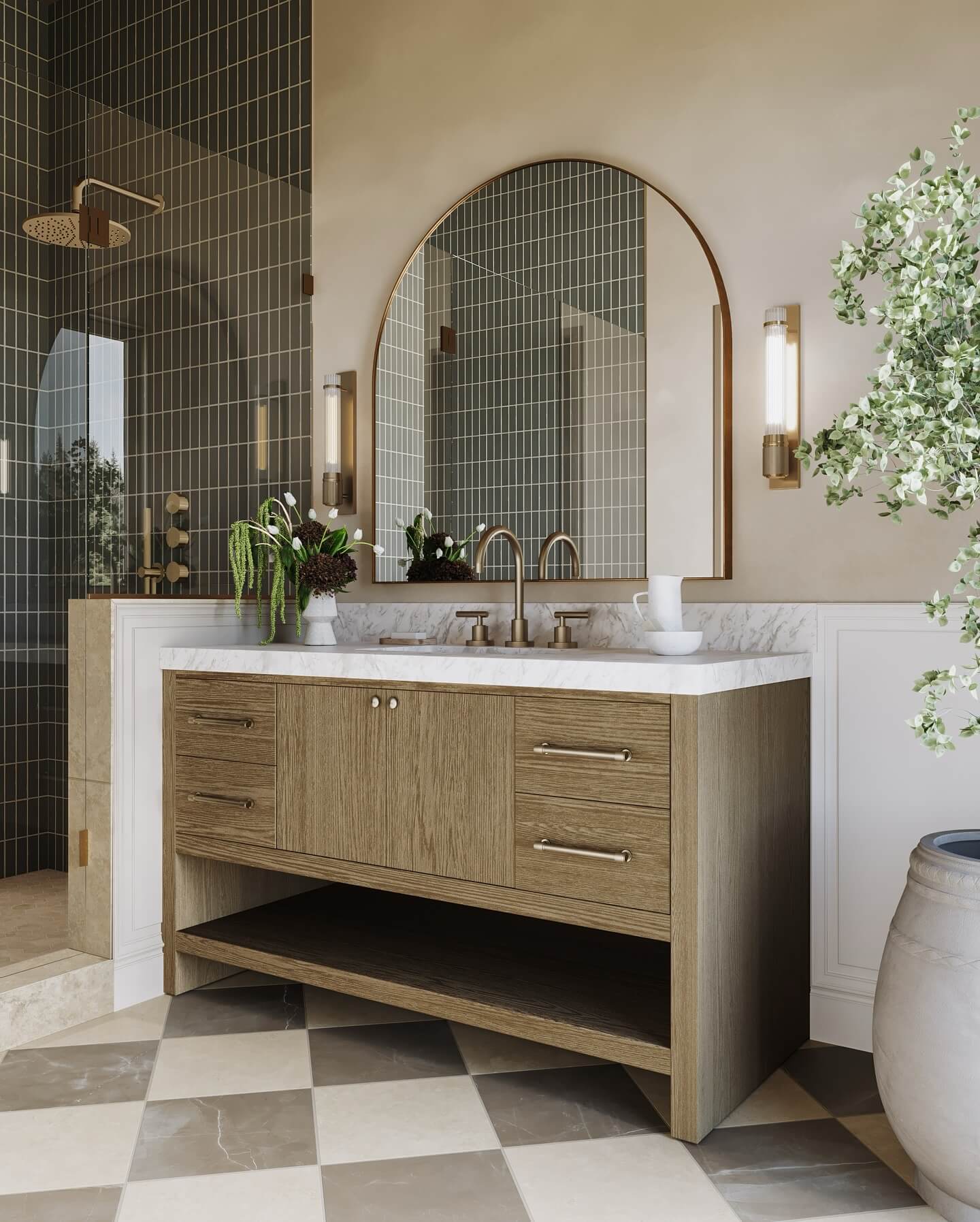
If you want a bathroom that feels bright but not sterile, pair a light wood single vanity—like white oak or ash—with a crisp white countertop. The natural grain adds warmth and texture, softening all the hard surfaces. Choose slab-front or subtly fluted drawers for quiet detail, then repeat the tone with a slim wood-framed mirror to tie the composition together. For the counter, stain-resistant quartz delivers a clean look with minimal maintenance, ideal for family routines. Balance the palette with soft white or pale clay walls, and introduce tactile tile—zellige, stacked subway, or micro-mosaic—to add shimmer without visual weight. Hardware finish sets the mood: warm brass complements oak’s honey tones; matte black injects modern contrast. Finish with linen-look hand towels and a small plant to bring life to the vignette. This combo makes a compact single vanity read fresh and expansive, adding personality without overpowering a small footprint.
Go Moody: Dark Vanities with Statement Stone
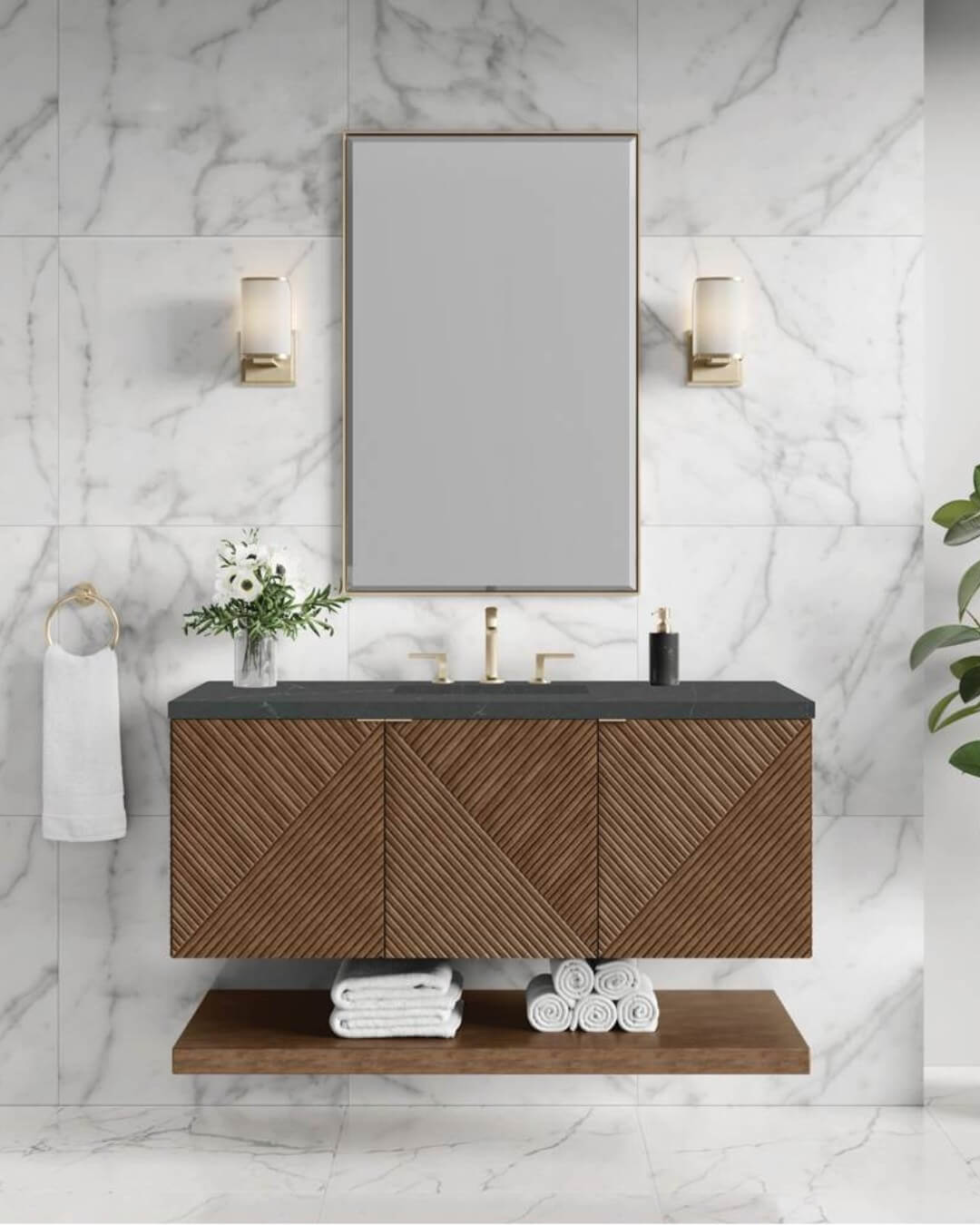
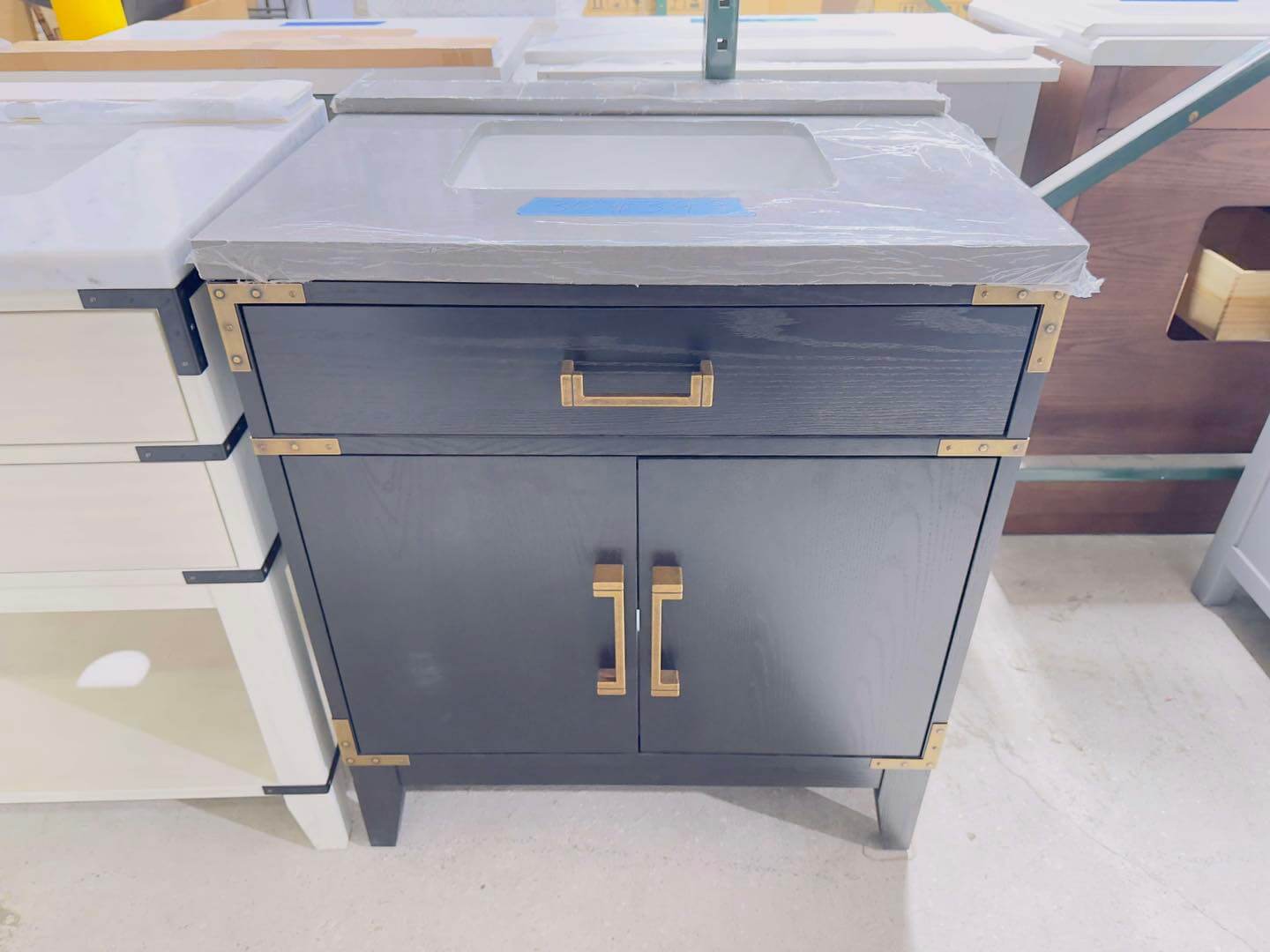
A small bathroom can handle drama—especially when the single vanity wears it well. Choose a deep, inky finish (charcoal, espresso, midnight blue) and top it with a veined marble or marble-look slab. The contrast creates instant boutique-hotel polish, and a taller backsplash or slab upstand doubles as art while protecting walls from splashes. Keep the room balanced by lightening surrounding surfaces: soft white walls, pale floors, or a luminous mirror to bounce light. Metals matter here—polished nickel and unlacquered brass both add depth; matte black keeps the look graphic. Ensure the vanity’s storage works as hard as its style with concealed drawers and organizers so the countertop stays minimal. Add layered lighting—a pair of sconces plus a dimmable overhead—to tune the mood from task-ready to ambient. Done right, a moody single vanity doesn’t shrink a space; it sharpens the architecture and turns a compact bath into a standout moment.
Soften the Box: Arched and Round Mirrors Over a Single Sink
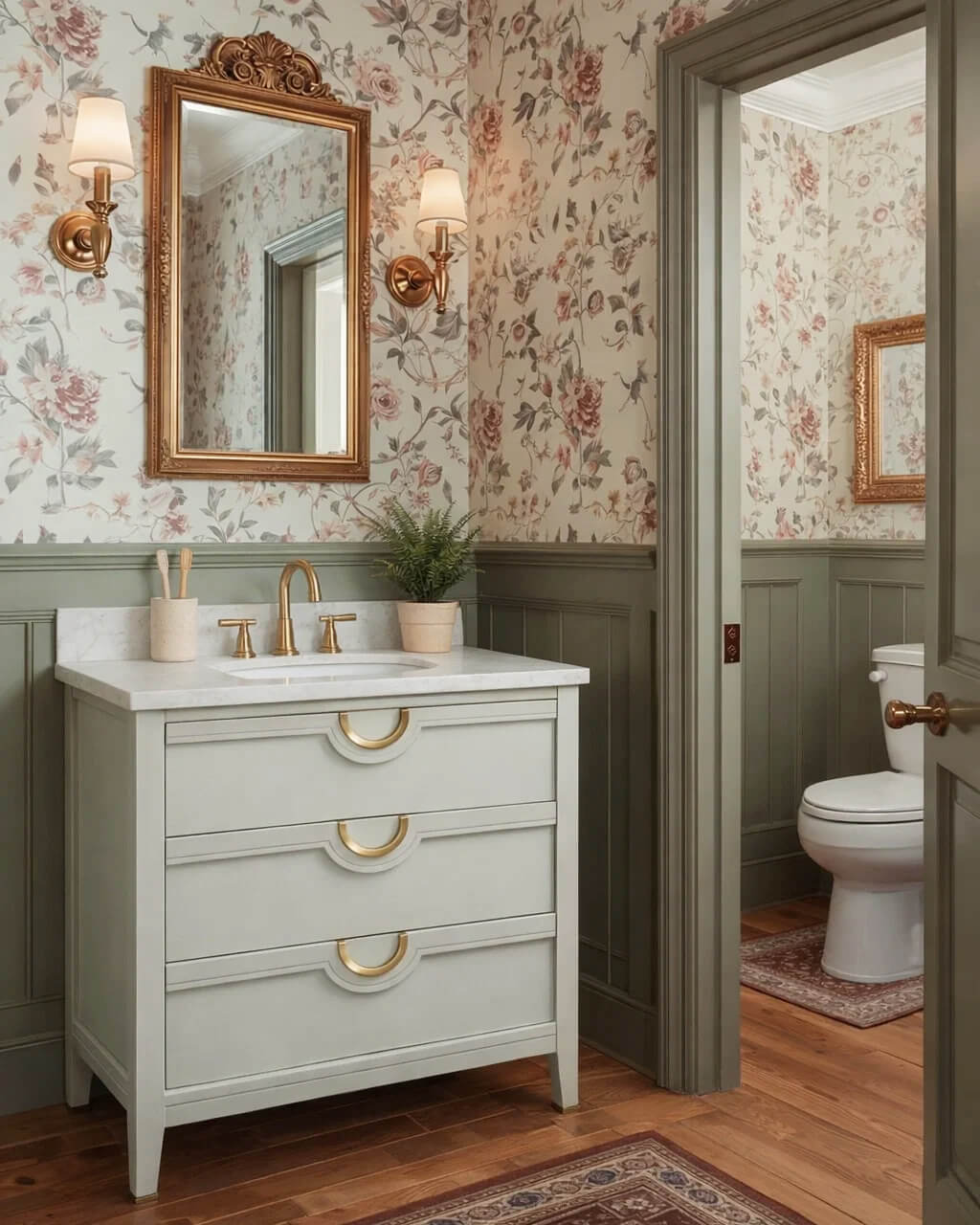
Curves are a powerful counterpoint to the straight lines of tile and cabinetry. An arched or round mirror over a single vanity softens the vignette, improves flow, and draws the eye upward—great for low ceilings. For proportion, aim for a mirror that’s 70–80% the width of the vanity, mounted so the center sits around eye level. Curved silhouettes also play nicely with vertical textures like beadboard, fluted drawer fronts, or stacked tile, creating rhythm without clutter. Sconce shapes can echo the curve—globes or half-domes—while slim linear lights keep it contemporary. If storage is a must, look for arched medicine cabinets that recess into the wall for a bespoke feel. Finish with rounded accessories (a dome canister, a curved tray) to reinforce the soft geometry. The result is a single-vanity bathroom that feels more inviting and intentionally designed—no square footage required, just thoughtful shapes and scale.
Custom Fits for Corners, Alcoves, and Awkward Nooks
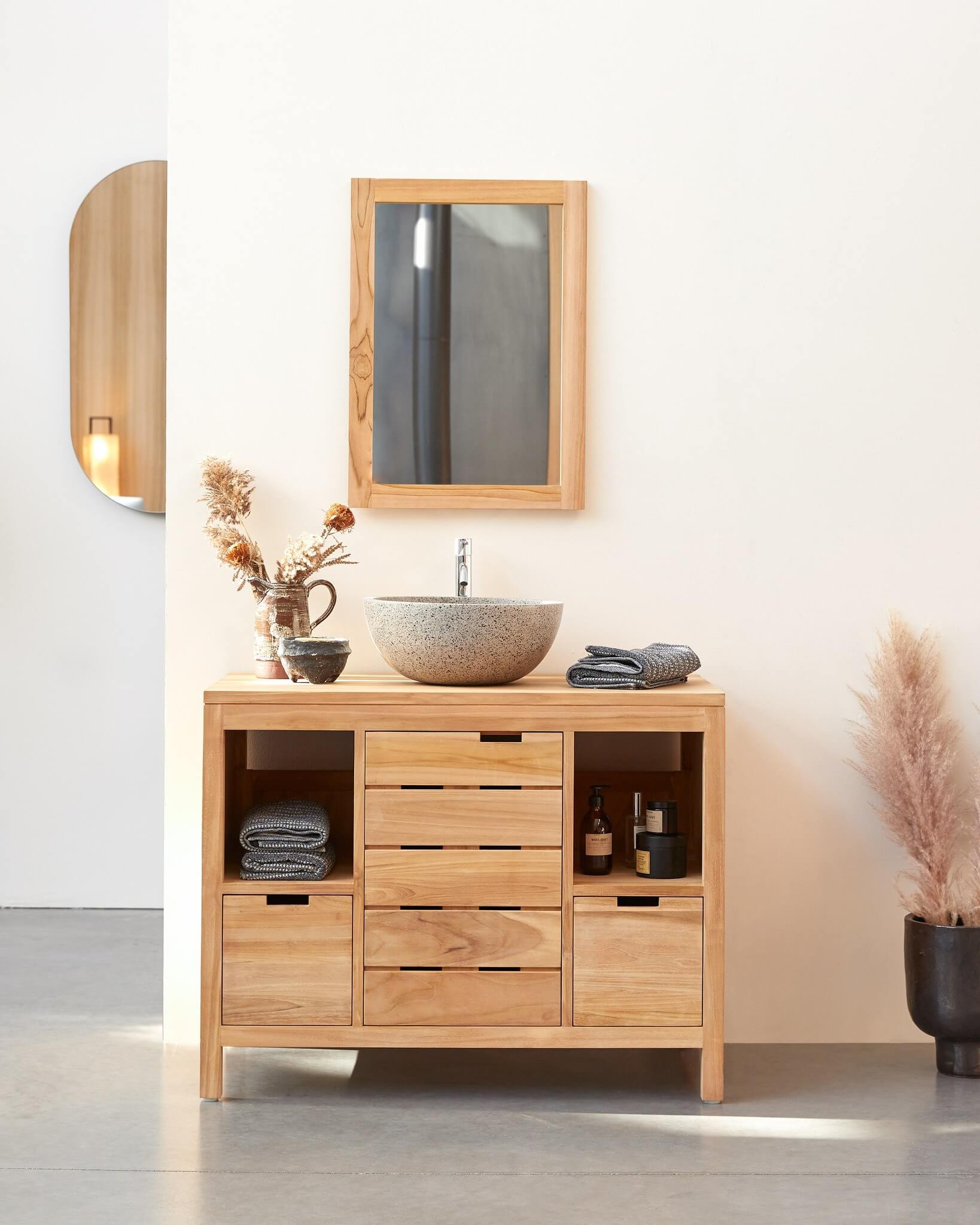
Not every bathroom offers a perfect straight run. When space is quirky, a custom or semi-custom single vanity can unlock inches you didn’t know you had. Tuck a vanity into an alcove with a wall-to-wall top for a built-in look, or angle a corner cabinet to ease traffic flow. Offsetting the sink to one side creates valuable landing space for soap and skincare while clearing the swing of a door. Integrate smart details: a shallow side cabinet for extra paper rolls, a towel bar mounted to the vanity’s gable, or an inset niche above the counter to hold daily-use items without eating surface area. If doors collide, swap to a pocket or barn door to reclaim clearance. Keep finishes cohesive with the rest of the room—matching stone, continuous backsplash, and aligned grout lines—so the custom shape reads intentional. With tailored sizing, a single vanity can make the trickiest footprint feel effortless.
Open Shelf Styling That Actually Works
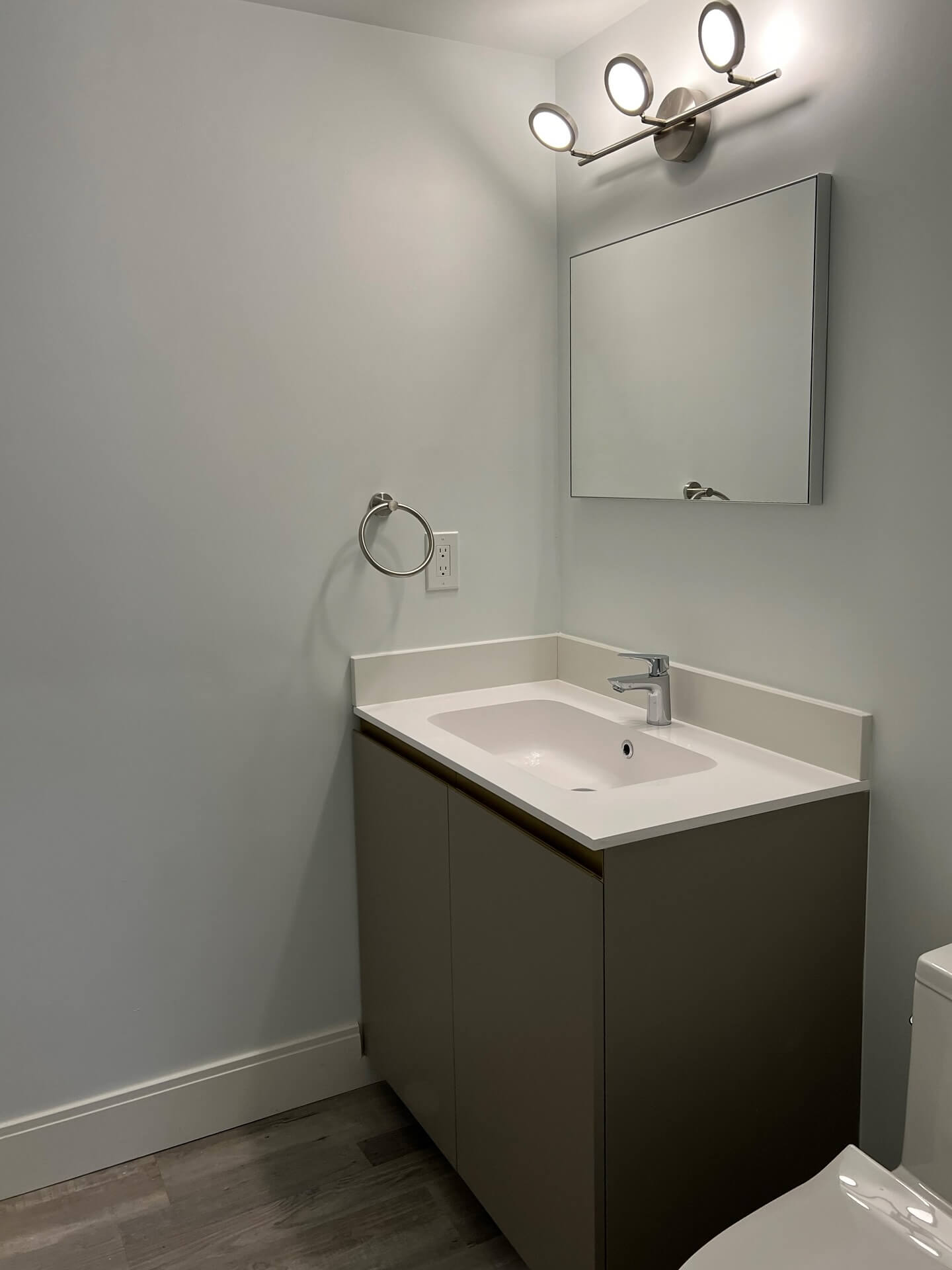
Open shelving under a single vanity looks airy, but it has to function. The key is a mix of closed and open storage: drawers for the messy stuff, a lower shelf for grab-and-go items. Corral everything in lidded baskets or bins to protect from moisture and dust; choose materials that can handle humidity, like coated rattan or washable fabric. Rolled hand towels, extra TP, and a small tray for daily essentials keep the display cohesive and practical. A slatted shelf improves airflow and dries damp towels faster, while a slight overhang on the countertop helps shield items from splashes. Keep the palette tight—two to three tones—and repeat textures from elsewhere in the room so the open shelf feels curated, not cluttered. With thoughtful containment and repetition, you get the lightness of an open vanity and the usability of a fully closed cabinet—a win for small bathrooms that need both style and storage.
Hotel-Worthy Lighting Layers Over a Single Vanity
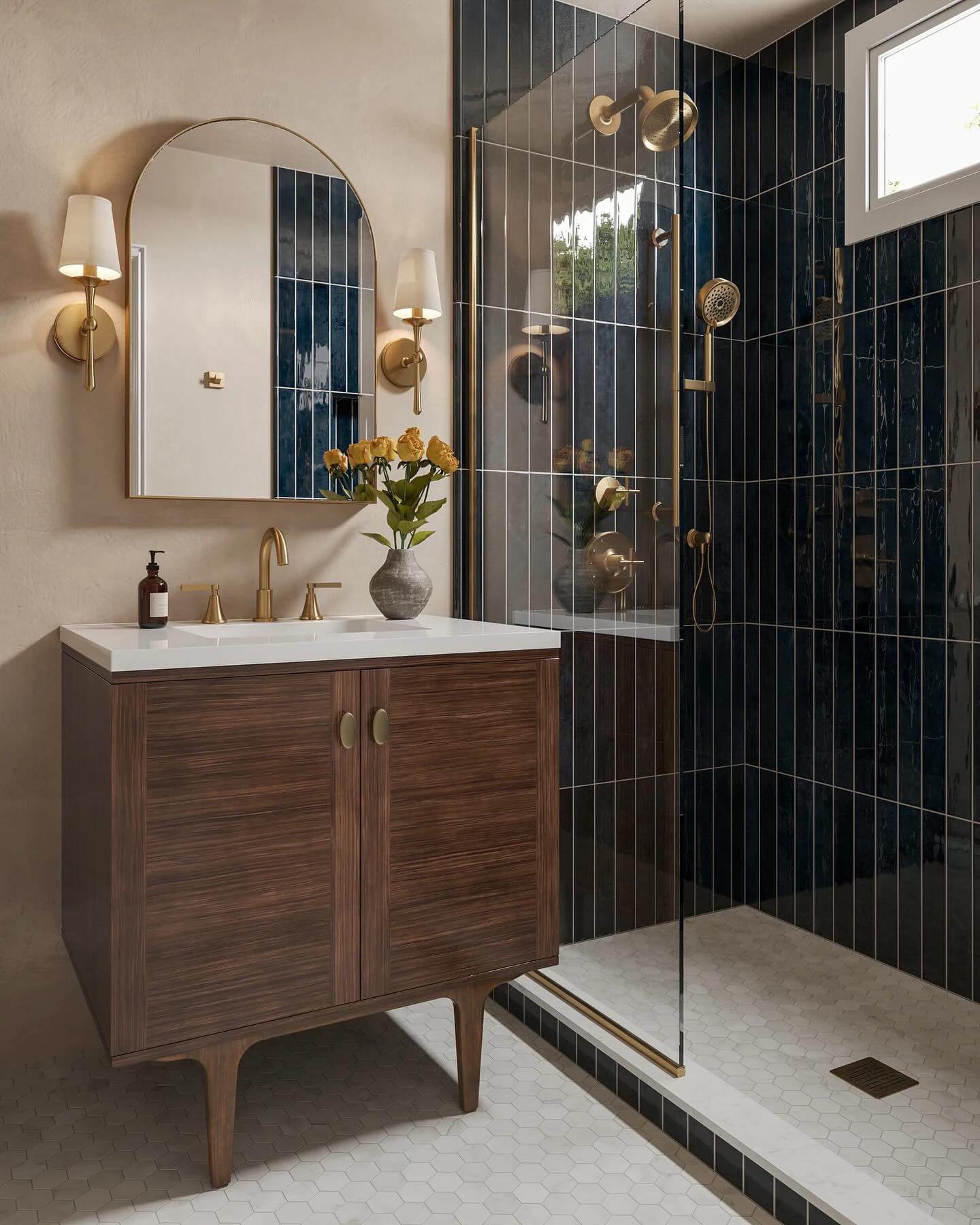
Great lighting makes a compact bathroom feel bigger and more luxe. Start with task lighting at the face: a pair of sconces flanking the mirror, or a vertical bar on either side, mounted so the center of the light sits near eye level. Add ambient lighting overhead, ideally a dimmable fixture to shift from bright morning routines to softer evening baths. Backlit mirrors or an under-vanity LED strip add depth and act as a nightlight without glare. Aim for warm white bulbs (2700–3000K) with a CRI of 90+ for true-to-life color, and keep finishes consistent with your faucet and hardware for a cohesive look. If the room is windowless, consider a higher lumen ceiling fixture and reflective finishes—glossy tile, light counters—to bounce illumination. With layered lighting, your single vanity becomes a flattering focal point, and the entire bathroom reads clean, intentional, and inviting.
Shift the Sink Off-Center to Unlock More Counter Space
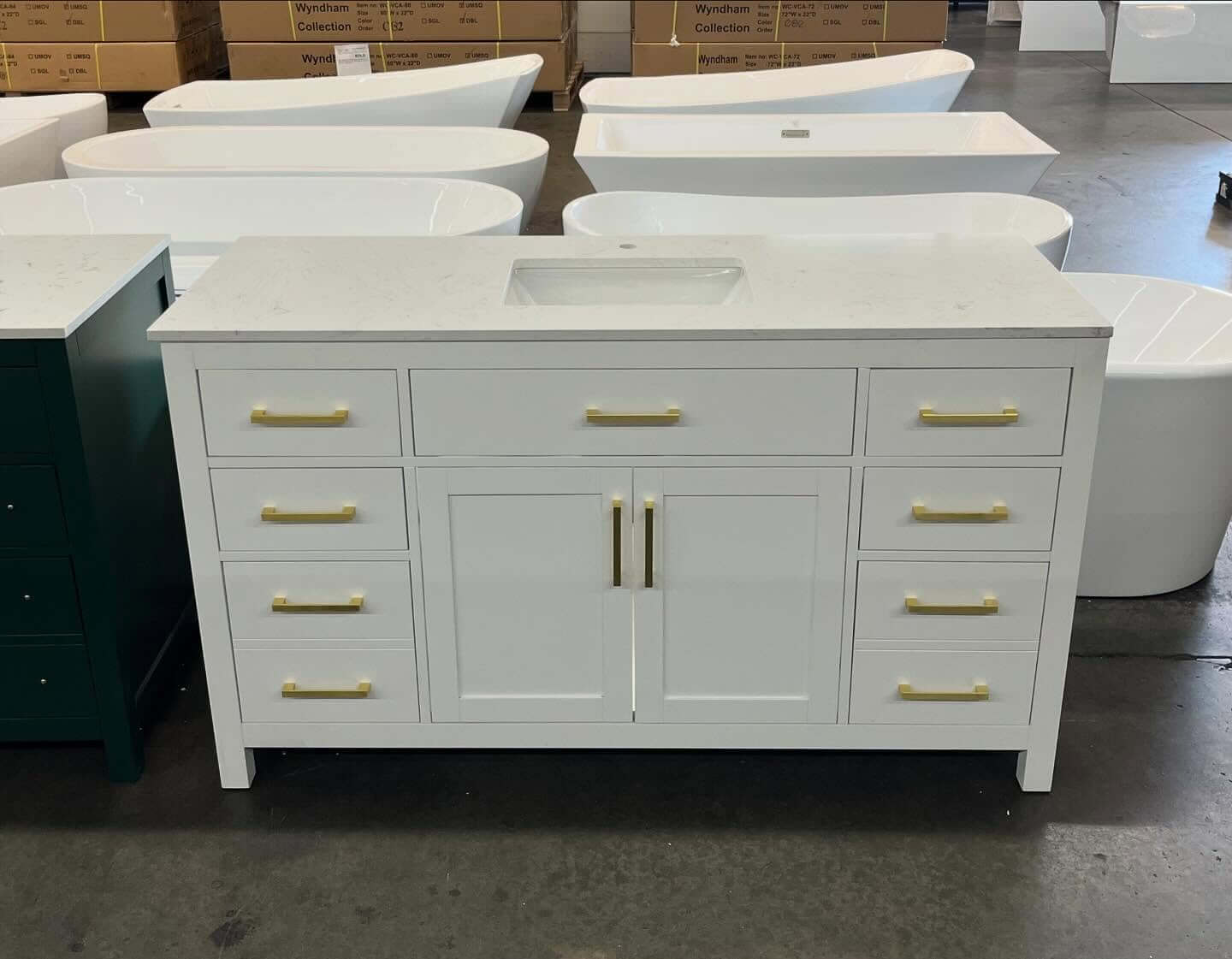
Beyond layout and mirrors, a simple tweak can dramatically improve daily function: shift the sink to one side of your single vanity. An off-center basin frees up a generous landing zone for skincare, a tray, or a small vase—without increasing the vanity’s overall width. It also helps tight bathrooms feel calmer by creating one clear “work zone” instead of clutter spread edge to edge. To pull it off, align plumbing early so you can maximize drawer storage beneath the larger countertop section. Balance the asymmetry with a centered mirror and a pair of sconces, or lean in with an offset mirror and a single vertical light. If you choose wall-mount faucets, double-check reach to avoid splashback on the wider counter. In wood tones, this look reads organic and spa-like; in lacquered or painted vanities, it feels crisp and contemporary. The result? A small bathroom that looks styled, not cramped, and a single sink that feels anything but limiting.
Add Fluted or Reeded Fronts for Quiet Texture
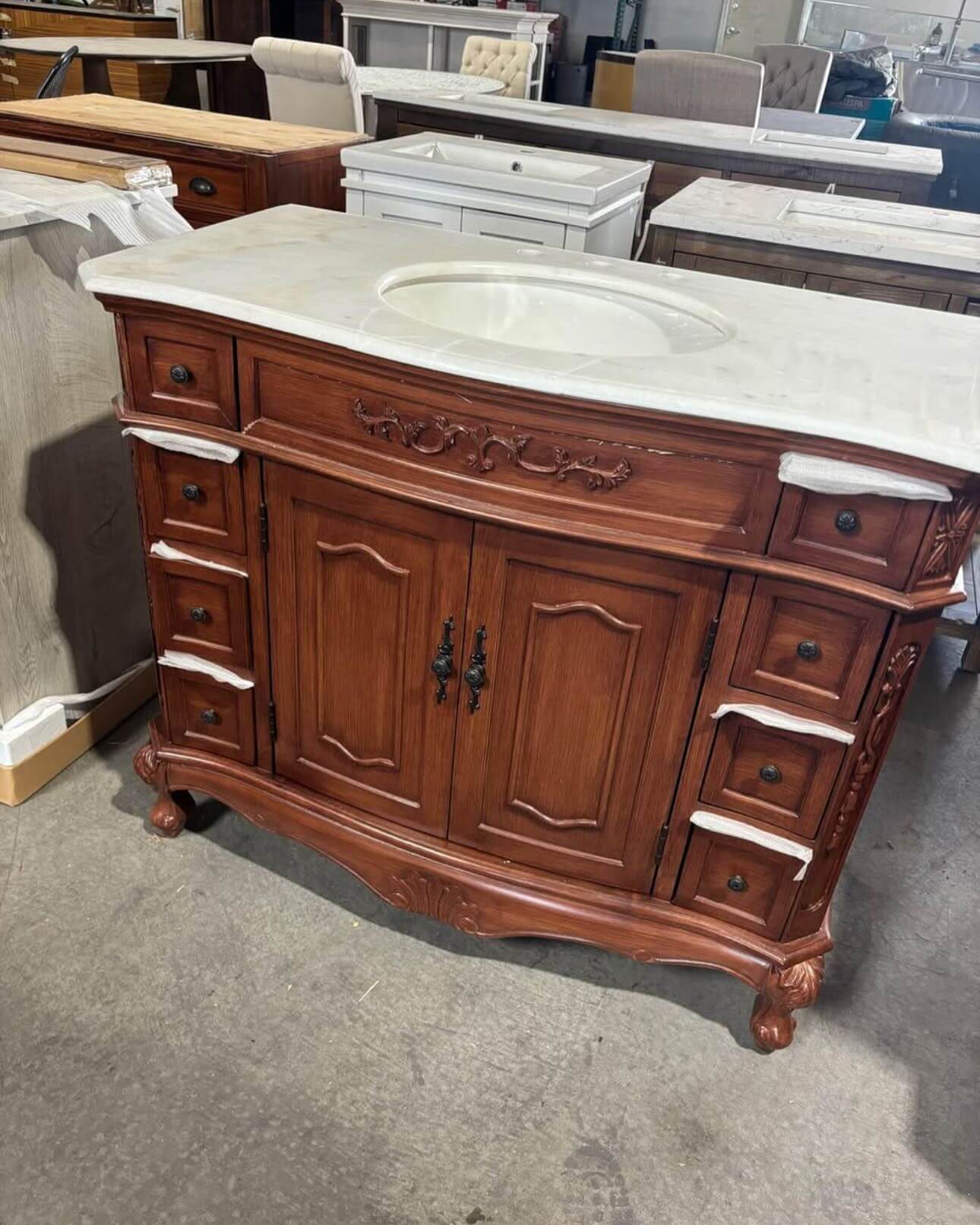
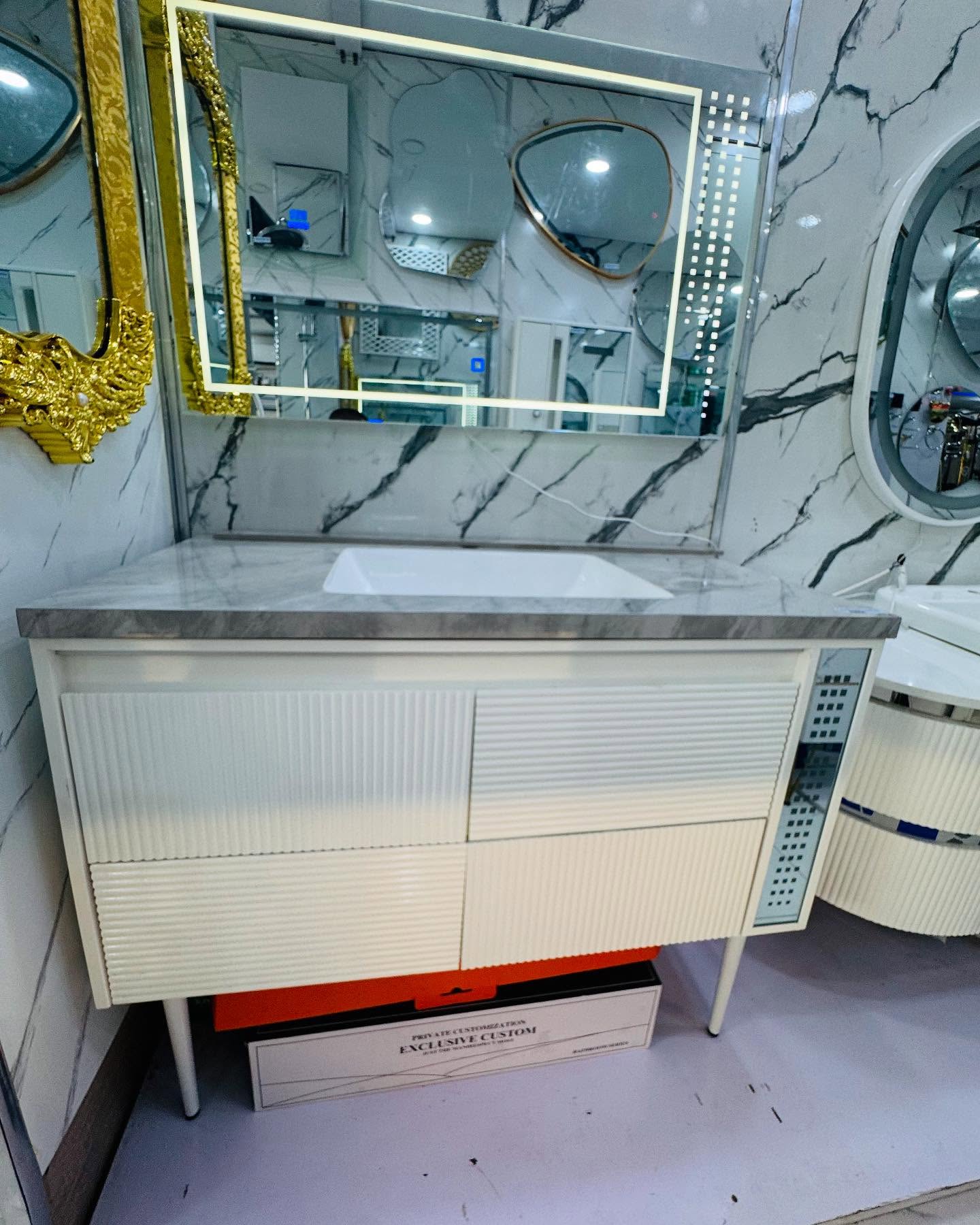
If your bathroom skews simple—white walls, pale stone—a textured vanity face can supply depth without visual noise. Fluted or reeded drawer fronts introduce shadow lines that read refined, not busy, lending custom character to a compact single vanity. Vertical flutes make a narrow bath feel taller, while horizontal ribbing can widen a petite niche visually. Keep the palette restrained—natural oak, walnut, or a muted paint—so the texture does the heavy lifting. Consider integrated finger pulls or slim edge pulls to avoid interrupting the rhythm. Because grooved profiles catch light, pair them with a soft-gloss stone or quartz top and a matte faucet to create layered contrast. Cleaning is easier than you’d think: choose shallow, evenly spaced flutes and seal wood properly. This is a high-style move that still supports storage-forward interiors, especially when you prioritize deep, full-extension drawers inside. It’s tactile, timeless, and a clever way to make a single-sink vanity feel bespoke on a manageable budget.
Build a Slab Backsplash Ledge for Everyday Essentials
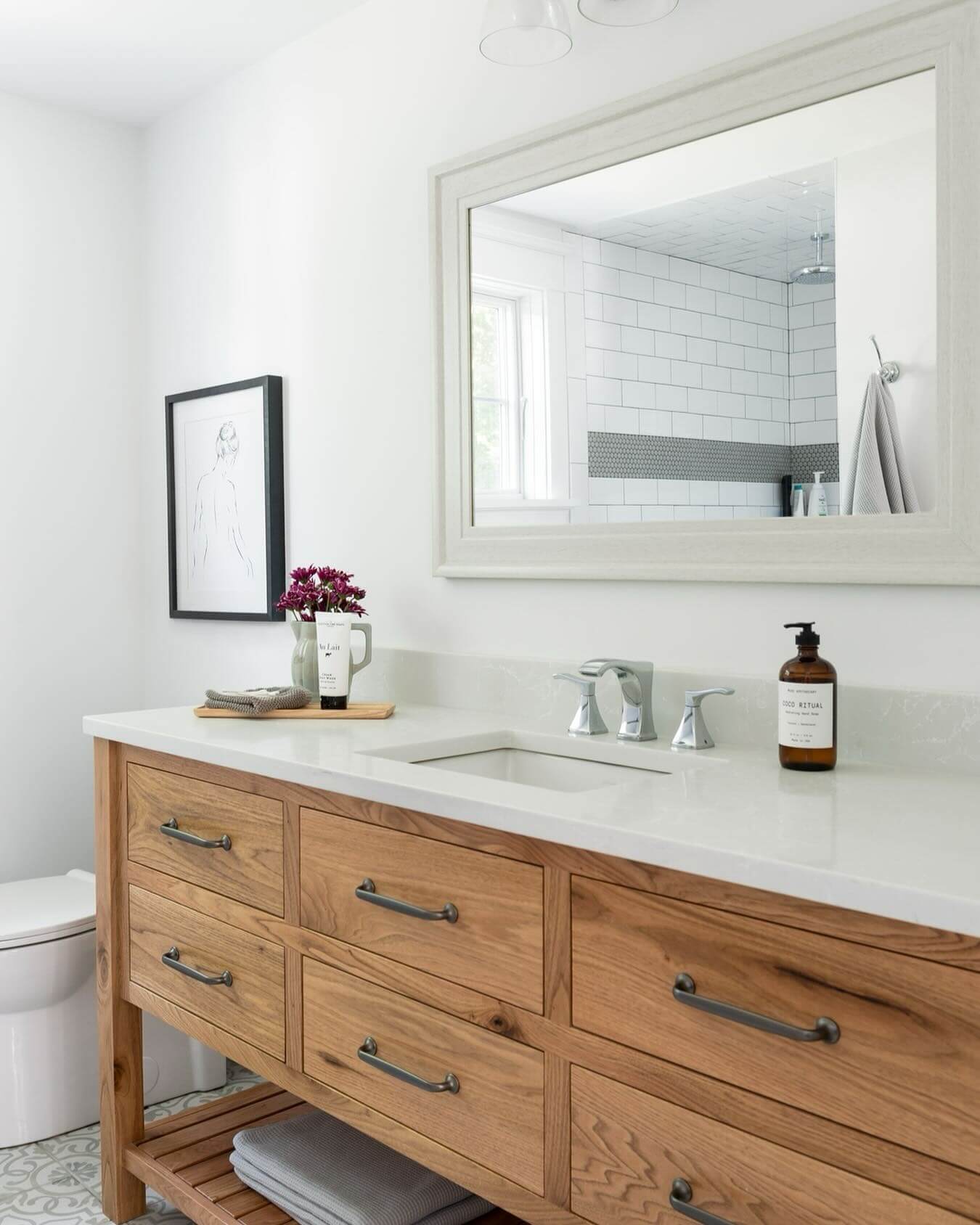
When counter space is precious, add a slim shelf where you already need protection: the backsplash. A stone or quartz slab with a built-in ledge (typically 3–5 inches deep, 6–12 inches high) keeps daily items upright and off the main counter. It’s perfect for hand soap, a candle, and a small cup, leaving the vanity top clean for actual use. The ledge doubles as a visual datum—run the mirror to sit on it, or overlap slightly for a tailored, hotel-level detail. Wall-mount faucets become even more functional here; the ledge guards drips while simplifying wipe-downs. Choose the same material as your countertop for a seamless look, or contrast marble veining against a painted vanity for subtle drama. In tight ensuites, continue the slab a few inches past the vanity width to protect side walls from splash. This simple architectural move elevates a single vanity from basic to custom while quietly solving storage, styling, and maintenance.
Choose a Low-Profile Vessel Sink to Slim the Base
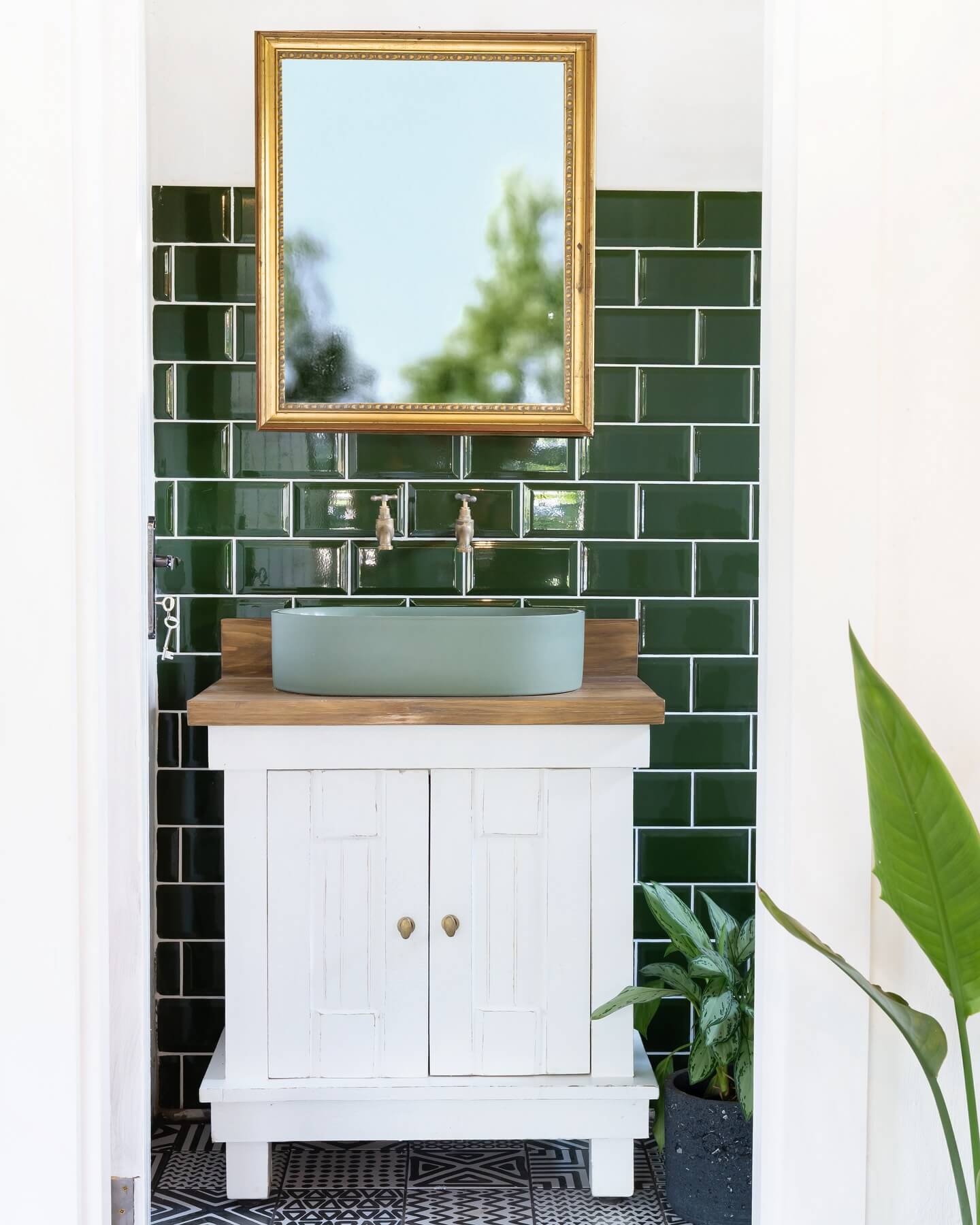
Vessel sinks aren’t just sculptural—they can help you shrink the vanity footprint while keeping a comfortable basin depth. A low-profile vessel allows a slimmer cabinet below because part of the bowl’s volume sits above the counter. That means more floor clearance in a tight bath and a lighter, gallery-like vibe. To make it practical, choose a shallow-rim design (3–4 inches) and a gentle interior slope to curb splash. Pair with a tall single-hole or wall-mount faucet, ensuring 1.5–2 inches of clearance between spout and rim. Oval or soft-rectangular vessels soften hard tile lines and mirror curves elsewhere in the room. Keep the countertop simple—solid quartz or honed marble—so the sink reads as the focal point. Storage still matters: integrate deep drawers and a top organizer around the drain cutout. Done right, a vessel sink turns a single-sink vanity into a standout feature without sacrificing function or precious inches.
Mix Metals with Intention (the 70/30 Finish Rule)
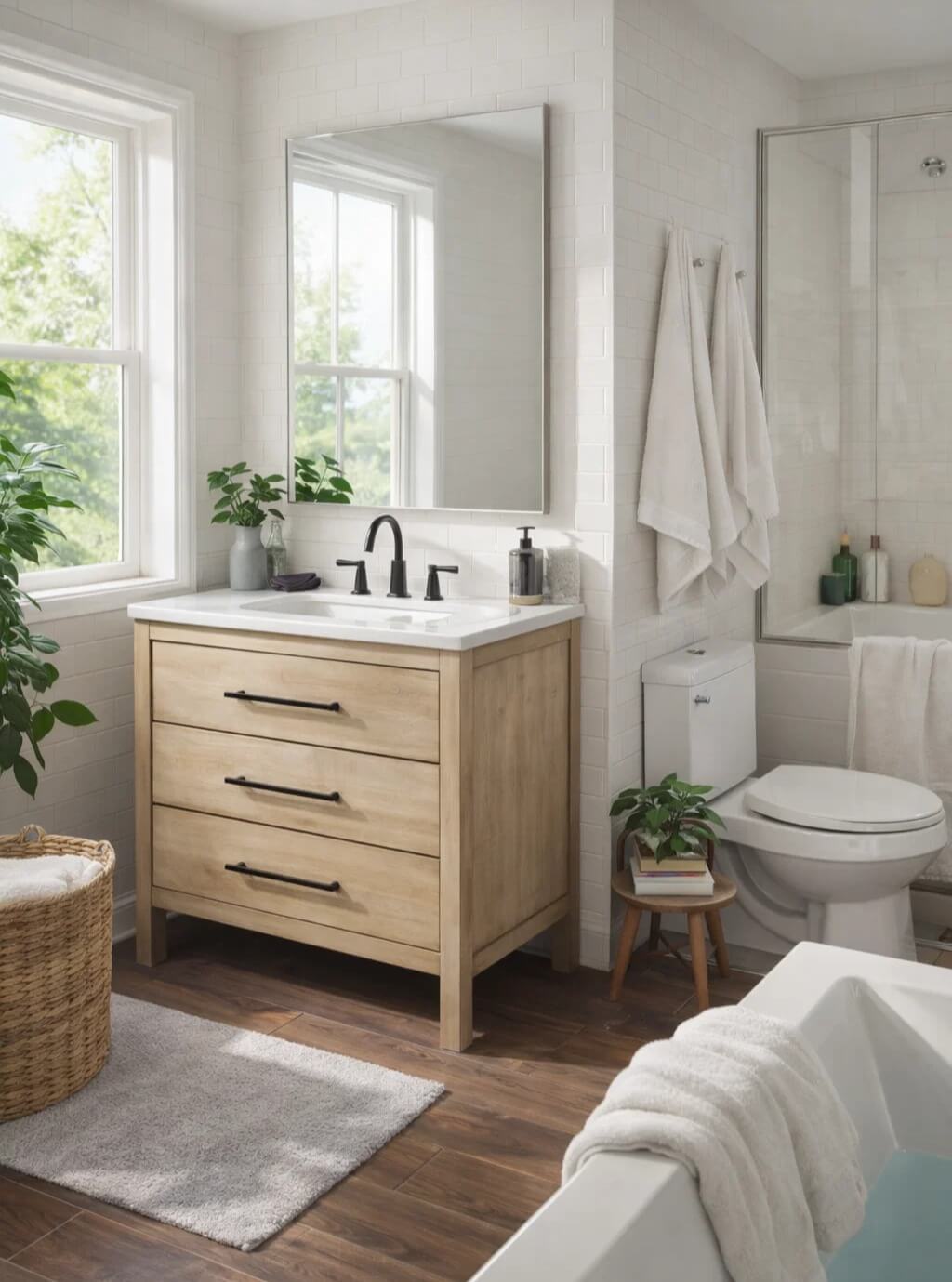
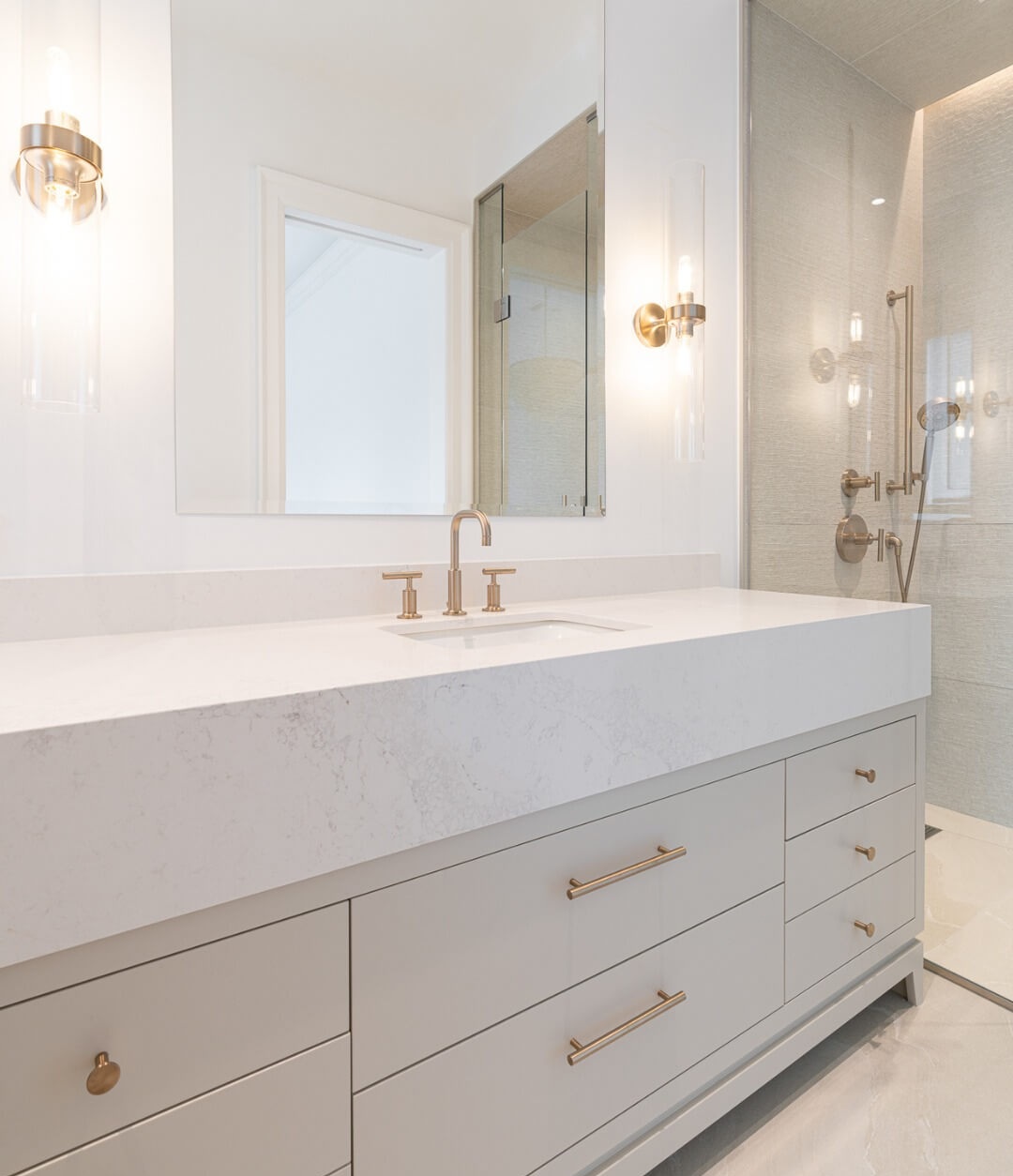
A small bathroom benefits from layered finishes, but too many metals can feel chaotic. Use the 70/30 rule on a single vanity: select one dominant finish (say, satin brass) for faucet and hardware, then introduce a secondary finish (matte black or polished nickel) in smaller doses—mirror frame, sconce backplates, or a towel bar. Repeat each at least twice so the mix looks intentional, not accidental. Warm metals flatter natural woods and creamy stones; cooler metals sharpen gray tile and crisp whites. If your countertop stone has bold veining, let it be the star and keep finishes muted. Conversely, in minimalist spaces, a luminous brass faucet can supply the jewelry-like hit of color. Mind reflectivity: pair a brushed primary finish with a polished accent for subtle contrast. Mixed metals add dimension to a single vanity, make budget-friendly pieces look elevated, and tie disparate elements—mirror, lighting, accessories—into one cohesive, designer-coded story.
Sneak In a Slim Linen Tower Beside the Vanity
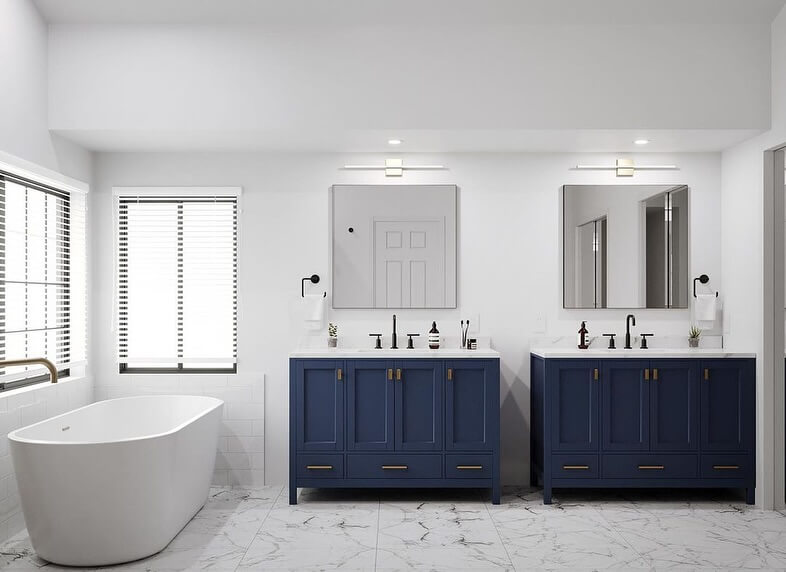
When a full double vanity won’t fit, a slender tower can do the heavy lifting. Tuck a 12–18 inch-wide cabinet beside your single sink to house towels, skincare, and cleaning supplies vertically. Match the vanity finish for a built-in look, or go slightly darker for a furniture-like contrast. Glass-front uppers with reeded or clear panes lighten the mass; closed lowers keep visual calm. Inside, mix fixed shelves with a couple of shallow drawers or a pull-out for small items. If space allows, align the tower face with the vanity front and wrap both with a continuous toe-kick or floating reveal so they read as one unit. Add an outlet inside for charging toothbrushes out of sight. This move clears counters, reduces visual clutter, and makes a compact bathroom feel organized and luxe—proof that a single-sink layout can still deliver family-ready storage.
Design Smart Interiors: Hampers, Heat-Proof Tool Trays, and Charging
The best single vanities work as hard inside as they do outside. Plan interiors around routines: a pull-out hamper with a ventilated panel, a heat-proof drawer insert for hair tools, and a shallow top drawer with removable dividers for daily essentials. Add a UL-rated outlet inside a drawer or behind a flip-down to charge razors and toothbrushes while keeping cords concealed. Opt for full-extension, soft-close slides and notch drawers around plumbing with U-shaped organizers so no inch goes to waste. Moisture-resistant materials matter—laminated or sealed maple boxes hold up in steamy baths. Label the interior of drawers subtly or use modular trays to keep everything where it belongs. With smart compartments doing the organizing, the countertop can stay serene, which is key to making a small, single-sink bathroom feel polished and purposeful every day.
Run Tile to the Ceiling for a Polished, Taller-Looking Wall
A single vanity gains presence when its backdrop goes full height. Tiling to the ceiling behind the sink elongates the wall, bounces light, and frames the mirror like art. It’s especially effective in narrow rooms where visual verticality matters. Choose a slim, stacked-bond tile for modern lines, a handmade zellige for soft shimmer, or a large-format slab for quiet luxury. Keep grout tight and color-matched for a seamless plane that makes the space feel bigger. If you’ve gone with light wood cabinetry and a white top, a tonal tile keeps it airy; if your vanity is dark, a luminous glaze adds contrast without heaviness. Run the tile past the vanity edges a few inches to protect paint from splash. Finish with sconces mounted on the tile for a boutique-hotel look. This simple upgrade transforms a single-sink station into a focal wall with height, light, and polish.
Add Toe-Kick or Under-Vanity Lighting for Nighttime Ease
You’ve layered sconces and overheads—now add a subtle glow at floor level. LED tape tucked under a floating vanity or behind a recessed toe-kick creates a soft nightlight that guides sleepy feet without waking the room. Choose warm-dim strips (2700–3000K) on a motion sensor so the light appears only when needed. This trick also visually lightens a solid-base vanity, making small bathrooms feel airier after dark. Coordinate with your mirror and ceiling lights on separate dimmers for full control. If your vanity floats, run the lighting along the back and sides for an even halo; if it’s furniture-style, recess the toe-kick slightly to hide the diode line. Under-vanity lighting is practical, hotel-chic, and a safety boost—proof that small, detail-first decisions can elevate a single vanity from everyday to exceptional.
Scale Up Hardware for Style and Ergonomics
In a compact bath, hardware is a major style cue—and a usability upgrade. Oversize pulls (8–12 inches) on vanity drawers read tailored and make heavy, storage-rich drawers easier to open. Appliance-style pulls feel substantial without visual clutter when you keep the finish consistent with the faucet. For a minimalist look, consider long edge pulls or continuous finger rails that span the drawer width, which also helps align with clean-lined mirrors and slab backsplashes. Use backplates if you’re mounting on textured or fluted fronts to protect the finish and keep lines crisp. Place top-drawer pulls lower than you think to clear the counter overhang; keep a consistent centerline on lower drawers so everything looks intentional. Scaled-up hardware telegraphs quality, improves daily function at the sink, and delivers a big design hit for a relatively small investment in a single vanity bathroom.
Choose a Wall-Mounted Faucet to Free Up Precious Counter Space
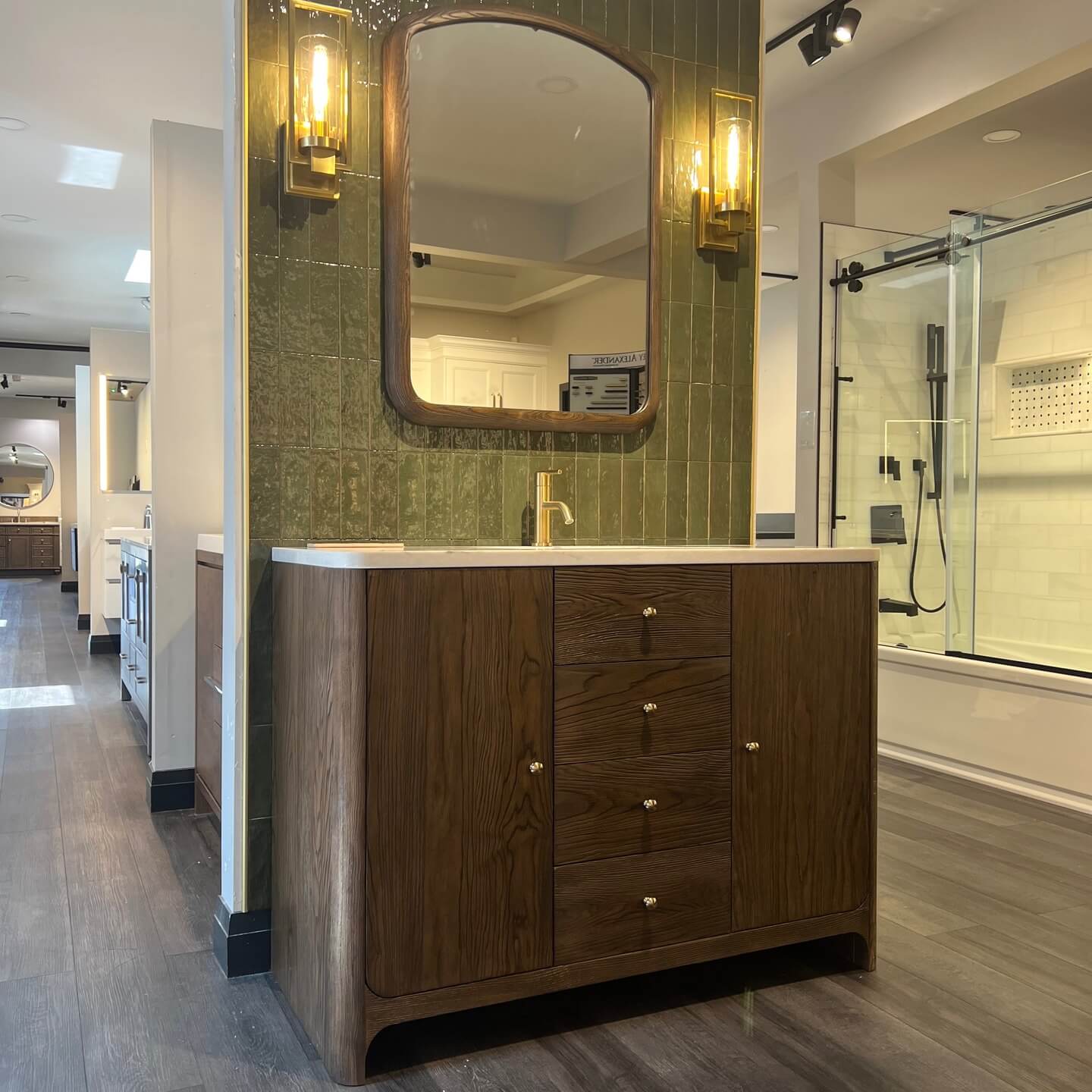
When every inch matters, relocating the faucet to the wall is a small bathroom power move. A wall-mounted faucet clears the vanity deck, instantly creating more set-down space for skincare and guest essentials while making wipe-downs faster. It also lets you choose a shallower, single-sink vanity—great for tight walkways—without sacrificing basin size or storage in the drawers below. For comfort, aim to center the spout 6–7 inches from the wall to the drain and mount it roughly 8–10 inches above the sink rim; confirm rough-in specs with your plumber and align the outlet with grout lines or a slab seam for a tailored look.
Design-wise, this streamlined setup reads modern yet timeless, pairing beautifully with framed or arched mirrors and layered sconces. If you’re mixing metals, keep your main finish consistent across the faucet and hardware, with a secondary accent on lighting for cohesion. A continuous tile or stone backsplash protects the wall and visually extends the vanity width, which helps the small bathroom feel bigger. Whether you’re working with a floating base, a compact furniture-style piece, or an off-center basin, a wall-mounted faucet maximizes function and style in one elegant move.
Modern Single Vanity Bathroom Ideas with Lighting, Faucet, and Mirror Styling
Modern single vanity styling starts with layered, flattering light and crisp faucet geometry. Vertical sconces paired with an overhead ambient source reduce shadows while an integrated backlit mirror eliminates hot spots. Choose 2700–3000K LEDs with a 90+ CRI so makeup colors and skin read true. Select a faucet configuration—centerset, widespread, or wall-mount—based on counter width, spout reach, and splash control. Match spout height to basin depth so water lands near the drain, minimizing spray and wiping. Finish with durable quartz or porcelain slab countertops and an undermount sink for a clean, easy-wipe deck edge.
Key Styling Moves:
- Mount vertical sconces at 65–70 inches to flank the mirror, add a ceiling ambient fixture, and dim all layers to transition effortlessly between task precision and spa-like ambiance.
- Run a wall-to-wall mirror above a single vanity to bounce light across the room, drop sconces slightly inward, and widen the reflected field without adding bulk or depth.
- Mix metals deliberately—perhaps warm brass faucets with matte black pulls—repeating each at least twice, and cap the palette at two finishes plus one natural texture for cohesion.
- Choose pulls between five and seven inches for slab drawers, align them consistently, and use 1.5-inch knobs on doors to ensure modern lines and comfortable, ergonomic grip.
- Specify an eased or micro-bevel edge on quartz or porcelain to prevent chipping, streamline the silhouette, and make quick wipe-downs easier around the faucet and sink rim.
- Layer a compact plant, a low-profile tray, and a framed print; keep cotton rounds in lidded jars, and hide backups in woven bins to reduce clutter without sacrificing personality.
Performance details sustain the look day-to-day. Choose WaterSense faucets with 1.2 GPM aerators for primary baths or 0.5 GPM for powder rooms to minimize splash. Pair compatible pop-up or grid drains with basin overflows and match finishes to the faucet for a tailored effect. If the vanity has open shelving, specify a decorative P-trap in the same metal. Mount a towel ring within arm’s reach of the faucet and line drawers with removable mats for easier cleaning. Seal grout, squeegee glass, and wipe counters nightly to preserve that crisp, modern sheen.
Your Quick Guide to Nailing a Single Vanity
What is the best width for a single vanity in a small bathroom?
In tight baths, 24–30 inches works; narrow 18–21-inch depths keep clearance. If plumbing allows, stretch to 36 inches for added drawers without overwhelming circulation.
Is a wall-mounted or freestanding single vanity better?
Wall-mounted vanities free floor space, ease cleaning, and feel lighter—ideal for small rooms. Freestanding options offer larger drawers and simpler installation, especially when walls are uneven or storage needs dominate.
What lighting temperature and CRI should I use around the mirror?
Use 2700–3000K LEDs with a 90+ CRI to render skin and makeup accurately. Pair vertical sconces with a dimmable overhead source to balance task clarity and relaxation.
Which countertop material is most durable for a single vanity?
Engineered quartz and porcelain slabs resist staining, etching, and heat, making maintenance easy. Sealed marble or quartzite offers natural beauty but needs periodic sealing and gentler cleaners.
Final Verdict: Small Footprint, Big Payoff
A single-vanity bathroom can deliver outsized function and polish when every element earns its keep. Prioritize a space-savvy layout—think floating bases, slim-depth profiles, and an off-center sink to widen landing zones—then layer in storage that works as hard as it looks. Drawer-first interiors, a recessed medicine cabinet, and a slim linen tower keep daily essentials streamlined, while smart lighting and a right-sized mirror elevate the experience. From light wood and crisp stone to moody finishes with subtle texture, a cohesive palette and considered hardware tie the room together without visual clutter.
Set yourself up for long-term ease by planning utilities and details with intention. Pair a wall-mounted faucet with a low-profile vessel to free counter space, build a backsplash ledge for grab-and-go items, and run tile to the ceiling to stretch the walls. Toe-kick or under-vanity lighting adds nighttime comfort, and interiors with charging, heat-proof trays, and hidden hampers tame the morning rush. Stick to the 70/30 metal mix, scale up pulls for ergonomics, and choose moisture-smart finishes. Start with the upgrades that solve your biggest pain point, and the rest will fall into place—delivering a bathroom that feels bigger, calmer, and effortlessly stylish.
